



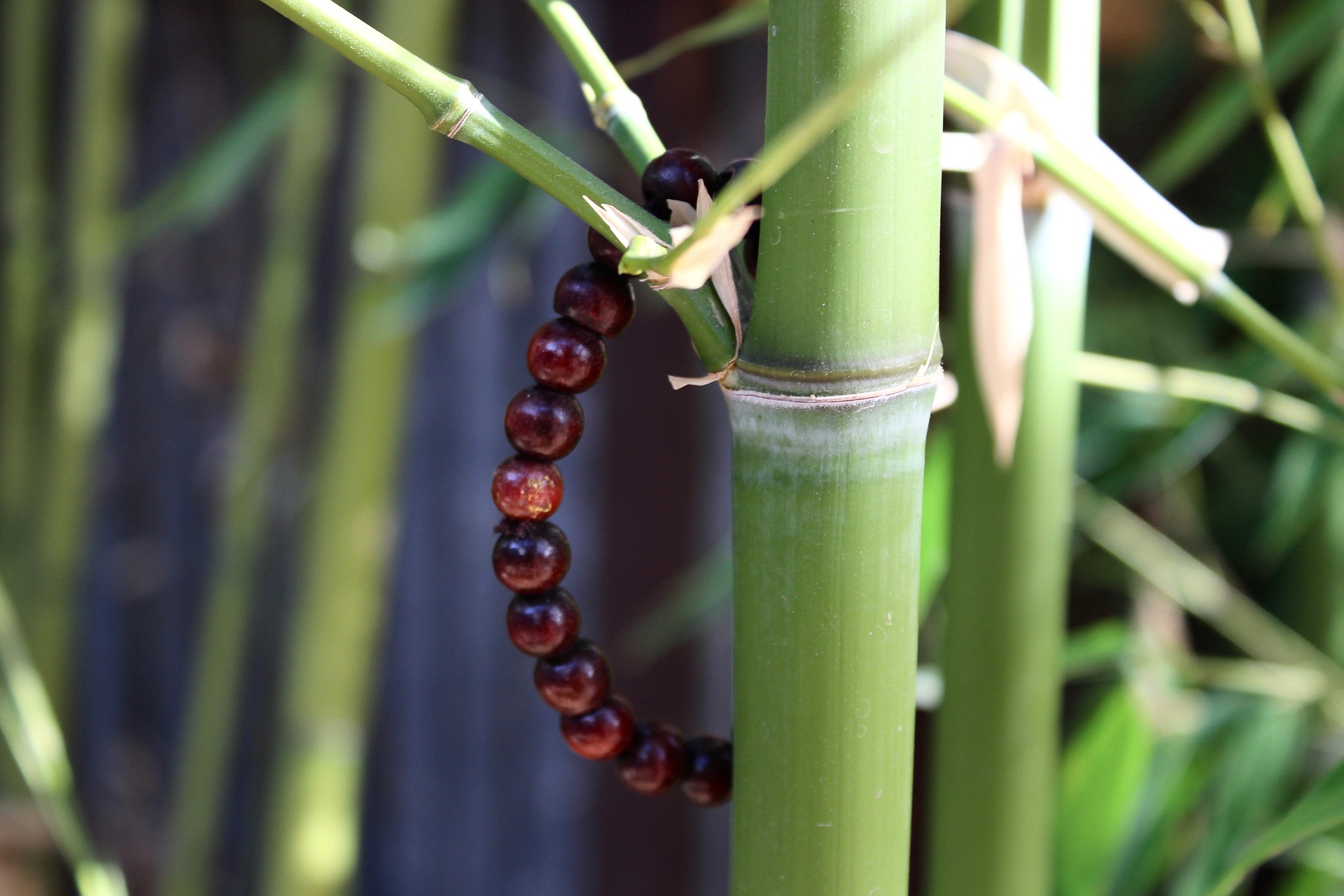
The word mala usually has negative connotations in most Romance languages because it comes from the Latin word malus, the opposite of the good, bonus.
All that negativity that the word implies in the Latin languages and culture disappears entirely in the oriental culture, in which the word mala designates an object similar to a necklace, which is used regularly in Buddhist meditation. Some even consider it an element of surprising global unanimity because it is also present in Christian culture through the rosary and Islam through the dhikr. The second is NO / AN, a small global village in itself since it is a Belgian company with a Finnish designer and employees of various nationalities that manufactures in Portugal (in Benedita, in the area between Rio Maior and Alcobaça). Its high-quality designs are aimed at a more sophisticated fashion level, with prices on many occasions over 1,000 euros and a cosmopolitan audience that appreciates its originality and quality. Its differentiating bet begins with an explicit declaration of intention from its slogan “slow brand fashion bag”; moving it clearly away from fast fashion consumption to focus more on timeless products. So our proposal today is a clear win-win. If we want to get away from the negativity that the word mala usually implies, from now on we have two much more exciting options. First, we can opt for the passionate concept of international design championed by companies like Toino Abel or NO/AN; or secondly, we can follow the way of spirituality, the tranquility and calming presence of those who use such beads for meditation. Indeed, there are more ways to do so; as always, additional ideas are appreciated. And, if someone wants to know more about this topic or even buy a basic meditation kit, check the Mala Prayer website where you can see different models of malas and also inspiring ideas to learn more about these issues and help improve your connection with the world that surrounds us, regardless of the religion that you profess.
From another origin but not so different in the end as we will see, we have the Portuguese word mala, which derives from the French malle and links to the English word mail, as an object with which the mail was transported. From there it has derived to the current use in Portuguese for a handbag, the accessory in which people usually carry their everyday objects.
The reason why we think that perhaps the final result ends up in a proximate solution is because there are a couple of companies that currently draw much attention and respect for their excellent combination of local and global elements, as well as tradition and modernity.
The first is Toino Abel, a small company of artisan origin, which makes handbags working with reeds, combining traditional shapes with modern colors and designs. They have achieved a global presence with their original creations through online sales and several physical stores that showcase their products throughout Europe.

They are based in the small village of Castanheira, near Alcobaça, where they are an institution and an example of how a traditional practice can be modernized and acquire an international dimension.
The second is NO / AN, a small global village in itself since it is a Belgian company with a Finnish designer and employees of various nationalities that manufactures in Portugal (in Benedita, in the area between Rio Maior and Alcobaça).

Its high-quality designs are aimed at a more sophisticated fashion level, with prices on many occasions over 1,000 euros and a cosmopolitan audience that appreciates its originality and quality. Its differentiating bet begins with an explicit declaration of intention from its slogan “slow brand fashion bag”; moving it clearly away from fast fashion consumption to focus more on timeless products.
So our proposal today is a clear win-win. If we want to get away from the negativity that the word mala usually implies, from now on we have two much more exciting options. First, we can opt for the passionate concept of international design championed by companies like Toino Abel or NO/AN; or secondly, we can follow the way of spirituality, the tranquility and calming presence of those who use such beads for meditation. Indeed, there are more ways to do so; as always, additional ideas are appreciated. And, if someone wants to know more about this topic or even buy a basic meditation kit, check the Mala Prayer website where you can see different models of malas and also inspiring ideas to learn more about these issues and help improve your connection with the world that surrounds us, regardless of the religion that you profess.