Nave Lagoa

Berlengas

The human being is curious and adventurous by nature. And anyone who visits Cape Carvoeiro, on the westernmost tip of the Peniche peninsula, would probably be curious about some islands that are seen in the distance, about 10 km away. It is the archipelago of the Berlengas, a group of small islets, with three peculiar histories that interweave surprisingly with the present.

In the history of the islands there is a very relevant first date, 1465. It was in that year when King Afonso V issued an order prohibiting hunting in the Berlengas, in what was a pioneering and very novel decision of care and attention for the nature. Anyone who has visited or seen pictures of the islands, and their coves with turquoise and crystalline waters, understands well what King Afonso could see and feel to dictate an order so unusual at that time. The line to the present, and the future, takes us to more than five centuries later, when in 2011 UNESCO declared the Berlengas a biosphere reserve and confirmed what the king’s sensibility valued long before.

In the century following that of King Afonso, in 1513, with the help of Queen Leonor, a small monastery of San Geronimo monks was founded on the islands, seeking a place for their spiritual retreat and to help the victims of the numerous shipwrecks that generated that coast. Saving the distances, is what nowadays also look for the many retreats that in different points of the coast of Peniche offer interesting combinations of mindfulness, yoga, meditation and surfing. We hope that modern history is more favorable to these initiatives because the monastery and the poor monks ended in closure just a few years after its founding because the monastery was frequently attacked by pirates and their members taken as slaves. Surely they were ahead of their time and did not get everyone to see the peace, beauty and spirituality that inspires this Atlantic coast.

The third story connects the past and the present century through sea, football and technology. In 2018 the company Apple shot a short film about a supposed historical rivalry between the football teams of Baleal and Peniche, who preferred to settle their matches on a neutral pitch and chose to move to the Berlengas. You can watch the video in this link. The story, obviously fictional, is aimed at showing the technical excellence of the phone model with which the ad is recorded. But, in a certain way, it allows us to understand the difficulty of those who live from the sea and to value better all those who ventured to sail the waters and discover the mysteries that they hid. It is a story that connects the past and the present through the sea and these special islands. If watching the video makes you want to visit the islands, please note that from June 1, 2022, there is a 3-euro tourist tax, Berlengas Pass, destined to improve the infrastructures and ensure that the number of visitors do not exceed 550 per day.

Day trip to Alenquer

Alenquer is a small jewel of the Oeste region, offering various interesting activities to fill a day trip.

Wine has particular importance in the economic and cultural life of the municipality of Alenquer. Therefore, we would propose to spend half a day visiting the city and half a day at one of the wineries in the area.

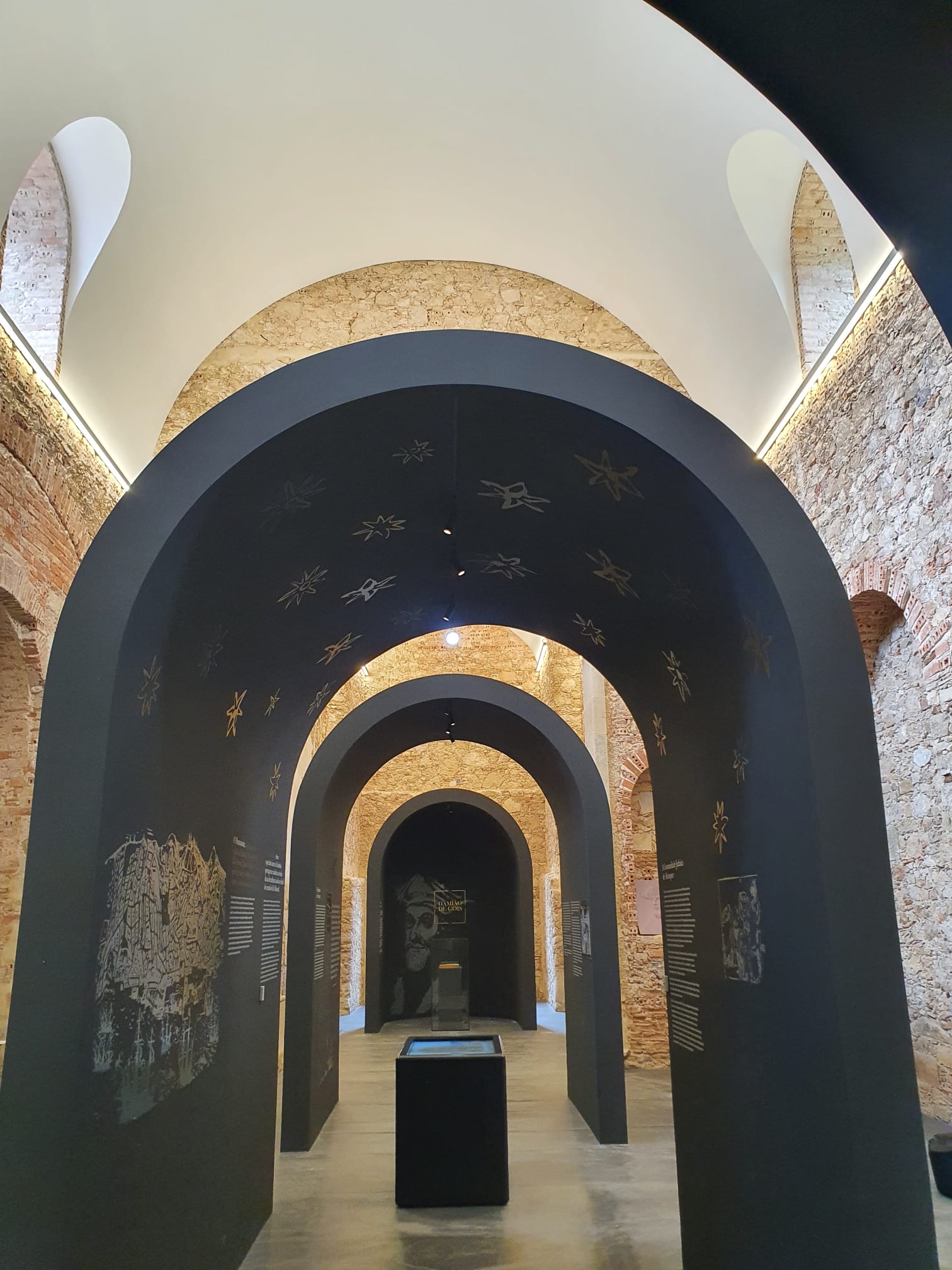
We begin with a walk through the upper part of the city, going through the picturesque alleys of the Jewish quarter and the remains of the 13th century castle. In this area there is also a fascinating museum dedicated to Damião de Gois and the victims of the Inquisition, located on the ruins of the church where he was baptized and buried. Damião de Gois was a key figure in the modernization of Portuguese medieval culture. The museum includes several documents and interactive installations to learn about his life and work and appreciate his importance as a humanist, artist and royal advisor. If there are not many people on the day of the visit, it is worth staying for a chat with the museum’s curator. This historian did his doctoral thesis on Damião himself, and can offer unique details about his life and times, quite an example of the cultural richness offered by the coexistence of Christian, Jewish and Mozarabic cultures; something that even today, in the 21st century, is so hard to find again.

Less than 100 meters from the Damião museum is also the Wine Museum. There is a representation of the more than forty wineries that are in the Alenquer area, a wine bar for tastings, and a cultural space with explanations and instruments to discover everything that surrounds wine production. If you had not booked a visit to one of the wineries, the museum itself can help organize an afternoon visit to one of them.

At lunchtime, one of the most recommended places is the Casta 85 restaurant, with its pleasant terrace overlooking the Alenquer river.

Among the wineries to visit, Quinta do Carneiro and Quinta do Monte D’Oiro stand out, with a good combination of tradition, reputation, and friendliness.

And for more information about Alenquer, you can check the viveralenquer.pt website, although our recommendation is to take advantage of the fact that the city is not very big, get lost in its alleys and discover for yourself the many secret corners of this little gem.

Kefir or dessert

In many Portuguese restaurants, when they offer a daily menu, they usually give the option of finishing with coffee or dessert. It is often difficult to choose because both coffees and desserts here are usually of very good quality.

The decision is sometimes conditioned by the amount of food previously eaten, which means that you cannot squeeze anything else in, and you end up opting for a coffee. Sometimes you may also be trying, usually unsuccessfully, to control the number of calories. It is true that some of the most common and more delicious desserts in Portuguese cuisine, such as serradura (based on whipped cream and biscuits), baba de camelo (with condensed milk), or bolo de bolacha (with biscuits as the main ingredient), tend to be more calorific as they often include substantial amount of refined sugar.

That is why lately some new options are starting to get more attention. An interesting choice, already present in some supermarkets but still not in many restaurants, are desserts based on kefir, a natural probiotic with many positive effects on the organism. The most known benefit is that it helps regulate the intestinal flora, improving the digestion and the regularity of the transit. Along with it or, perhaps, for that reason, by releasing the immune system of tasks related to intestinal activity, it usually improves resistance to colds and minor infections.

Kefir can be eaten natural, like yogurt. But precisely because it is similar to yogurt, but more complete, it fits very well for various desserts that are both tasty and healthier. For example, if you beat it with honey and the juice of a lemon, you can have a creamy and delicious dessert. Mixed with banana, berries, and granola, you get a complete and very healthy breakfast, similar to the popular açaí bowls with yogurt served in some of the trendiest NY shops. The frozen yogurt stores MyIced, which opened in Leiria in 2012 and continue their expansion throughout Portugal, are an excellent example of constant innovation to offer new products that are delicious but also healthier and sugar-free.

And you? Have you tried new desserts in Portugal that you can highly recommend?

Shopping Day Out in the Oeste Region

Many cities and towns in the Oeste region of Portugal regularly host street markets, with excellent stands offering a wide range of food, clothing, flowers or antiques. During December, the variety usually increases with craft markets and festive activities. You can check out this link for information on 41 Christmas markets in the Centro region.

It is also common to find the most central streets of the cities to be pedestrian-only, or to have very restricted traffic, favoring a quieter walk, and concentrating in them the most popular shops of the local commerce.

In Portugal, we also often see many shopping centers, with a good combination of clothing, leisure, restaurants, and other services. In this type of setting, the client usually loses a bit of authenticity in exchange for comfort, free parking and a more comprehensive range of items offered. The two most popular in the Oeste region are the Arena Shopping of Torres Vedras and La Vie Shopping in Caldas de Rainha.

And for those who do not mind doing more kilometers or who want to spend part of a day in Lisbon doing some shopping, there are several excellent shopping centers in the capital. For its great value for money, we like the Freeport Lisboa Fashion Outlet, in Alcochete, on the south side of the Vasco de Gama bridge, which gathers the best fashion brands at very reasonable prices. Their concept is an open-air shopping center, so it is probably not the best option if the day is rainy, cold, or very windy. The alternative may be the Strada Outlet, near Odivelas, by the CRIL ring road. And other interesting options are the huge Centro Colombo, in Benfica, in front of the Estadio da Luz, the Vasco de Gama, next to the river, and the ones in the Loures area, where you have the largest Ikea in the Iberian Peninsula, a Decathlon and the Loures Shopping. The latter has the peculiarity that includes among its many services the presence of Trofa Saúde Hospital; they have probably thought that with all the great shopping on offer, clients will push themselves too far and it may be practical that assistance is close.

Probably the best advice would be to do as they say in some ads, consume but with responsibility and moderation.

In November, Lourinhã

The small village of Lourinhã is known worldwide for several reasons. It was where the first remains of dinosaurs from the Iberian Peninsula were found in 1863. More importantly, a unique specimen was discovered in 1949, which ended up being called Lourinhasaurio and which has been the object of a detailed scientific study.

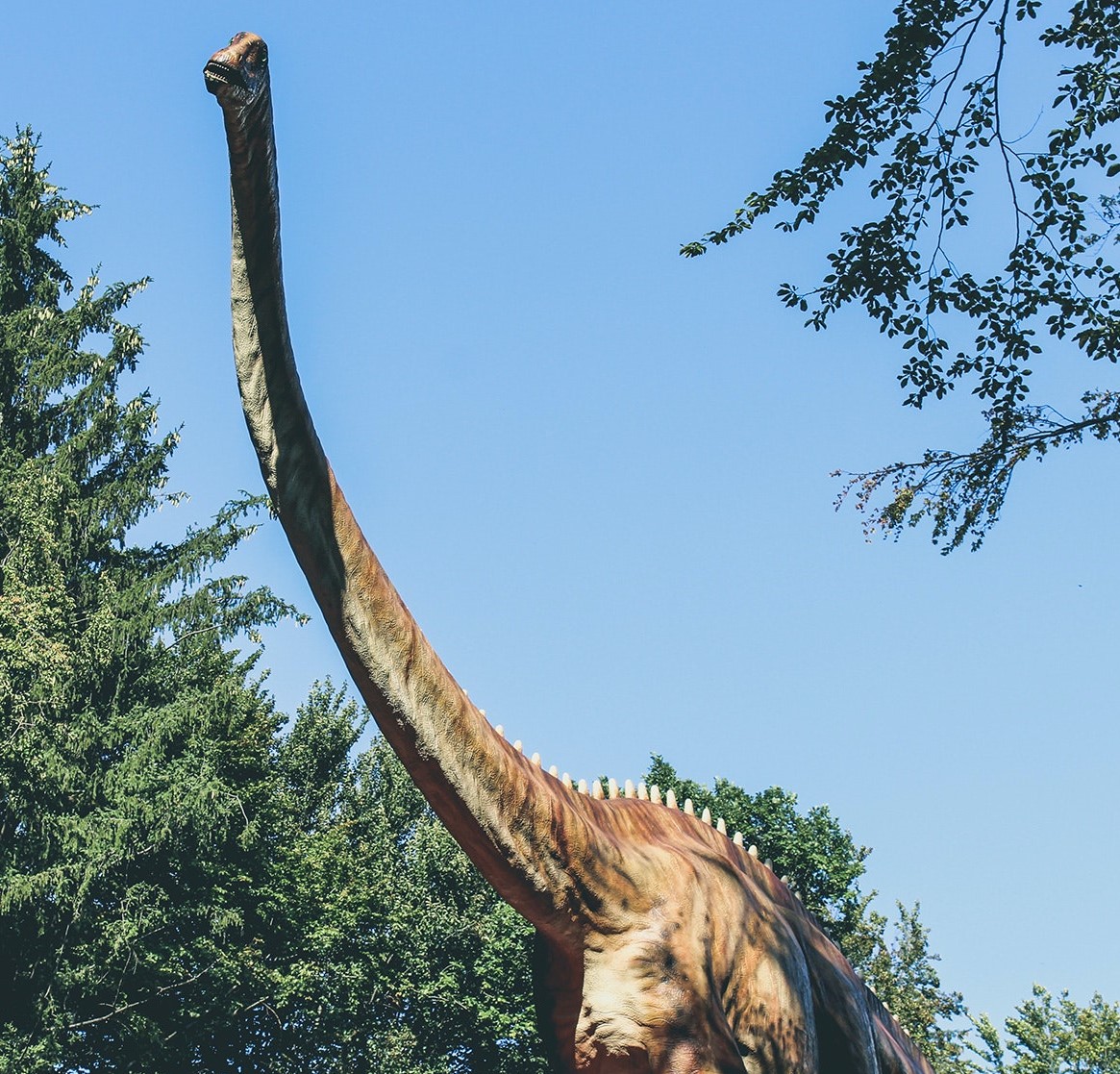
This intense relationship between the village of Lourinhã and the world of dinosaurs led to the opening in 2018 of one of the largest open-air parks in the world dedicated to these animals, the Dino Parque. Throughout 10 hectares of verdant forest, there are full-size reproductions of well known dinosaurs; allowing visitors an intimate knowledge of the natural environment of how these animals were. The park also includes educational and playground areas, where children can work on stones and find small fossils.

The park is open all year round, but November is an excellent option because it allows a quieter visit, with fewer visitors than on holiday weeks. The trees in the area are also in the full splendor of autumn, with a spectacular color palette. And you can also time the visit to coincide with the Quinzena Gastronómica Aguardente DOC Lourinhã, which is now in its tenth edition and takes place in most restaurants in the city.

For those who do not know the aguardente of Lourinhã, it is a great opportunity to try it, first in its liquid format, which is highly appreciated because in Europe there are only three DOC brandies: Cognac, Armagnac and Lourinhã. At the same time, you can also sample it in the many recipes of both sweet and savory dishes that use it during these gastronomic days and bring out some exceptional and surprising flavors.

An exciting option for a whole day trip could be visiting the Dino Parque in the morning, having lunch at one of the restaurants in the city, and going for a leisurely walk in the afternoon. It could take you to the beach of Porto das Barcas, a virgin beach in a small bay, with calmer and clearer waters than other more open beaches in the area.

A small paradise to burn off the calories from lunch, watch the sunset from the beach and complete a perfect day outdoors for children and adults.

The best beaches in the Oeste region

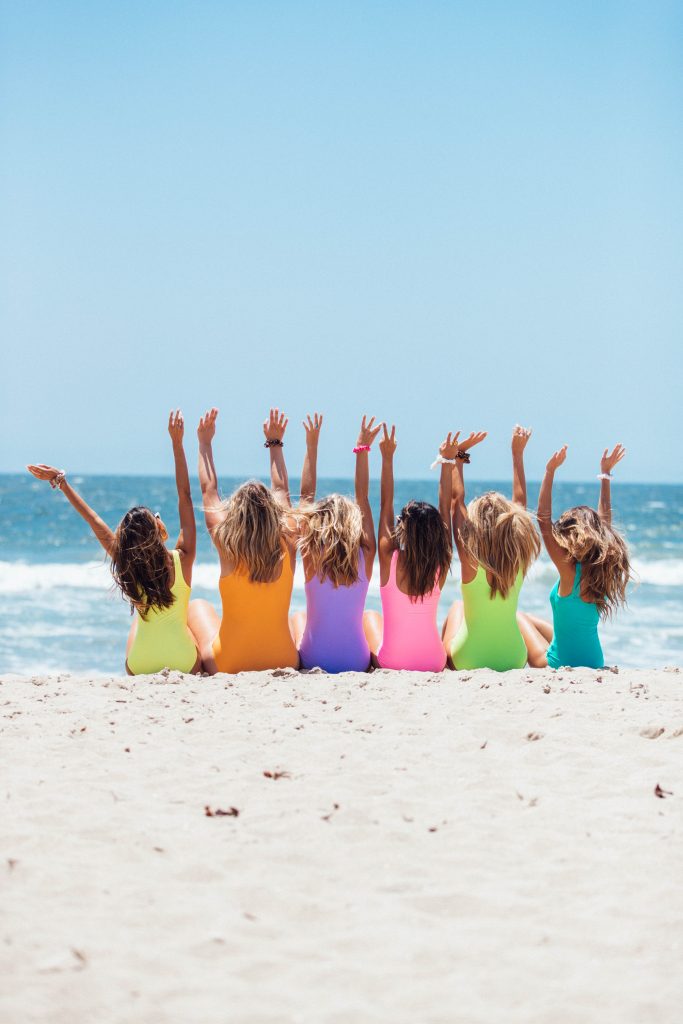
It is challenging to recommend beaches because not everyone likes the same things. Therefore, when someone asks us for advice on choosing a beach destination in the Oeste region, we always ask them first about their goals before answering. For those looking for surfing and fun, we usually suggest Baleal, Peniche, or Santa Cruz. For those who prefer family beaches and calm waters, we point them towards São Martinho or Nazaré. For those who want to have it all, towards the resorts around the lagoa de Óbidos. And for those who like bathing in warmer waters… towards a good spa.

And, for that very reason, we believe that it is best if our list of beaches does not have a ranking, as, for some, the top 1 may be a beach that, for others, is one of the least desirable. The ones that follow appear, as the cast in Woody Allen’s films, in alphabetical order:

– Baleal. The small peninsula of Baleal and its two beaches is a popular with the international crowd, especially with surfers from all over the world. It is also a recommended option for beginners, since it always has different difficulty levels spread across the various sections of the peninsula. The accommodation on offer between Baleal and Peniche is extensive, especially in apartments and youth hostels. For those looking for a good higher- end option, the MH Peniche is a very good hotel and has an excellent location, being close to both the beaches and the restaurant district.

Bom Sucesso. The Bom Sucesso beach, on the southern side of the lagoa de Óbidos, has a wide sandy area, and calm, transparent waters, perfect for children’s games. Furthermore, it has the bonus of walking between the dunes to the open sea and enjoying the waves. There are several resorts in the area that offer an excellent level of accommodation. Our personal experience and opinion, suggest none offers such a complete experience as the Bom Sucesso Resort, with its distinctive design element but still complete with the main amenities of the other resorts.

Física. Surfing destination, bustling and fun, with all the services and entertainment of the touristic town of Santa Cruz. The Noah Surf House has different accommodation options and has developed the boho-eco-chic concept like no other.

Nazaré. Praia Norte is a must during the winter, to watch the pros taming the largest waves in the world. In the summer, the Nazaré main beach is a top-rated family destination, with all the services and entertainment one would expect. For those who prefer a somewhat quieter accommodation, away from the city center, the Vale d’Azenha hotel, with its modern architecture and characteristic style, may be a good option.

– Porto das Barcas. It is a beautiful beach, usually quiter, in an area still under development. Accommodations are cosy and family-friendly, highlighting the Silver Coast Vacation Inn.

Porto Novo. This beach is in an area with very low density, near the small towns of Vimeiro and Maceira, but the Well Hotel & Spa, right by the beach, has sufficient attractions and services to enjoy a complete stay.

Supertubos. Its perfect waves host the Surf World League in October and make this beach an absolute mecca for European surfers. It has a wide range of accommodation and good surf schools. For those who may prefer to stay this time in a hotel rather than in a Volkswagen minivan, the MH Atlántico is an excellent option.

It is impossible to condense 100 km of beaches in a few lines, but we hope we have helped you with this small selection, which you can expand by sharing your preferences in the comments. Come on, dive in…

How to travel to the Oeste region and how to pay e-tolls

In 1973 the Spanish railway company Renfe made a tv advert in which a father went on a work trip, and while saying goodbye to his sleeping children, they thought, “Dad come by train.” It was a way of transmitting the safety offered by the trains of that time compared to other means of transport.

Unfortunately, in the Oeste region of Portugal, we have railway infrastructure now that is still quite similar to that shown in the old advert. The poor condition does not offer much certainty or reasonable travel times and is the fallback option for most travelers. A much needed update of the infrastructure has been announced in 2021, to be ready in 2023, but it will retain travel times longer than by bus and is regarded with pessimism. We call upon the authorities at every level to act more boldly and expedite the enhancement of the current rudimentary infrastructure.

Therefore, it is not surprising that the most common option for those who come from Spain and Northern Europe is almost always the car, as there are good highways from most Spanish cities. The A8, which runs from North to South throughout the Oeste region, also offers reasonable prices and low traffic density. As it is a traditional highway, you pick up a ticket at specific entrance points and only pay at the toll booths located by the highway exits by credit card or cash. On the other hand, some highways, such as the A23, that cross the country diagonally from Guarda in the North to Torres Novas in the Center, require some extra knowledge, as they can only be paid electronically. The easiest way to pay is to register online the vehicle and a credit card on this official website and the card will be automatically charged as you pass under electronic gates at various points on the highway. It is also possible to buy pre-paid cards at highway service areas or CTT shops, or you can buy the pre-paid cards online. Finally, there are also machines to register the vehicle and the card, but only at the beginning of the four main highways (Vilar Formoso A23, Viana do Castelo A28, Vilareal de Santo Antonio A22, and Chaves A24).

For those who come from other countries, the plane also offers reasonable solutions. Both Lisbon airport, just over 45 minutes from most points in the region, and Porto in less than two hours offer many regular and low-cost flights to medium and long-range destinations. In high season, the queues at the rent-a-car desks of the airports are usually a nightmare and many people look for other options or alternative points to rent the vehicle but that story probably deserves its own post.

The more adventurous could think of solutions by helicopter, by small planes or by gyroplane, as the authors of this beautiful vídeo around the lagoa and the village of Óbidos did. For these, the offer is not very extensive. Still, it covers most of the region, with asphalt tracks in Torres Vedras, Fatima and Santarem and dirt tracks in Atouguia da Baleia, Óbidos and Lourinhã.

So, who knows, perhaps the best solution is to come by catamaran, à la Greta style, as there are plenty of docks, small bays and kilometers of pristine beaches for easy access.

Better air quality helps you live longer and better

Studies about countries with the highest life expectancy always mention common elements such as good nutrition, a reliable health system, plenty of physical activity, and active social life.

In longevity, as in happiness and many other things, money is not always the most crucial factor. For example, it is significant that the United States, despite having high income per capita, always appears in the middle of the ranking and has never been rated highly in that respect. Inequalities in access to healthcare, and high rates of obesity and violent crime, are undoubtedly the cause of this poor result.

An interesting study by the University of Chicago provides a new vital factor in considering life expectancy: pollution levels. Analyzing microparticle data in the air and comparing the life expectancy in the population of a region of China more exposed to pollution against another area with lower pollution levels, the study reaches devastating conclusions about the effect of pollution on life expectancy.

The study showed areas with high air pollution could result in a decrease of up to six years in life expectancy. Or, in other words, the mere fact of living in an area with poor air quality can mean a significantly earlier death for inhabitants of that area. The authors emphasize that these data suggest that pollution is a more relevant factor in mortality rates than elements we know to be harmful such as tobacco addiction.

The Iberian Peninsula generally gets good results in the University of Chicago study, with only a few months of loss of life derived from pollution. However, as the study identifies combustion derived from transport, heating, and power plants based on fossil fuels as the leading causes of these problems, it can easily be inferred that large cities and highly industrialized regions will be where life expectancy is more adversely impacted by pollution.

The good news is that the damage caused by pollution on the body is not permanent and can be remedied in certain situations. In the same way that research has shown the lungs of an ex-smoker can, a few years after stopping smoking, recover most of their initial good condition, eliminating or reducing exposure to significant air pollution also allows our body to clean itself and heal slowly.

Praia de Baleal

And that is the positive message that we wanted to share today. That we still have the chance to improve our life expectancy. If we are citizens of the European Union, it is as simple as buying a plane ticket and coming to live in Portugal, which due to strong sea breezes, low industrial density and transport, and the high percentage of renewable energy in electricity production, is one of the best places in the world to recover our lungs and general health. In many cases, we can even benefit from substantial tax advantages, which is also a factor of increased wellbeing for many people. And if you are from outside the European Union, you can move in via the golden visa, a visa regime that grants access to EU residence with an investment of 500,000 euros in real estate or 1 million euros in financial assets. It may seem a lot, but how much do we value each year of our life? And what about our children’s lives?

If we add to that the quieter pace of life, excellent food, the possibilities to do all kinds of sports, and the kindness of the people here, we see that the equation adds all the recommended elements. So perhaps we should reformulate the previous question towards the famous song: tell me quando, quando, quando.

Trick or… healthy treat? Tips for a healthier Halloween

Increasingly so, the global influence of American movies and TV series has made widespread in Europe the tradition of children going in groups through nearby homes on the night of October 31 asking for sweets. Since many parents would prefer that their children reduce their sugar intake, today we ask if it is really essential that they receive candy. Let’s open the debate to think together if there is any way to improve the situation a bit.

If we go back in history, we see that the idea derives from European medieval traditions, in which food was asked on All Saints’ Day. In Portugal, it spread especially after November 1, 1756, on the first anniversary of the terrible earthquake that struck Lisbon and left many people in difficult circumstances. The people asked for the so-called pão-por-Deus (bread for God’s sake) and positive verses were recited to those who acquiesced:

Esta casa cheira a broa,                                This house smells like sweet bread,

Aqui mora gente boa.                                    Good people live here.

Esta casa cheira a vinho,                              This house smells like wine,

Aqui mora algum santinho.                            A little saint lives here.

And also negative verses for those who refused:

Esta casa cheira a alho,                                This house smells like garlic,

Aqui mora um espantalho.                             A scarecrow lives here.

Esta casa cheira a unto,                                This house smells like pig’s fat,

Aqui mora algum defunto.                             Corpses are living here.

Little by little the tradition was lost, except in the areas of Fatima and Famalicão, where it is still present, although holding with difficulties against the progress of the American Halloween and their sweets.

In several areas of Spain near Portugal there are also similar traditions on All Saints Day. In Zamora, Salamanca, Cáceres and Badajoz, where the tradition is usually called carbote or calbote, chestnuts are roasted in the fields, and children do the chaquetía and go by the houses receiving chestnuts and fruits.

So we see that at least there is a historical basis to explain convincingly to the children the possible improvements in this matter. The key would rest then in good products and marketing. For example, if we roast the chestnuts and have them hot by the time the children arrive, we can “sell” them the advantage of keeping their hands warm for the rest of the night, which is usually already cold at that time. Or we can cook a homemade cake and offer them a piece with some hot cocoa. In fact, in medieval England the tradition was to give them soul cake, which many point to as the most direct origin of the American tradition.

Another good alternative could be preparing small fruit smoothies. Smoothies tend to be well received by children and both the parents and them might welcome the injection of vitamins and energy to continue the night journey.

And finally, there are those who suggest pieces of fruit cut with a triangular shape and a stick below to grab them, which is another fun way to eat something healthy.  

These are just a few ideas. Surely this dynamic community can offer more suggestions to those parents looking for healthier options…

The rain in Spain stays mainly in the plain; tips for rainy days in Portugal

My Fair Lady was a musical film released in the 60s, directed by George Cukor, with Audrey Hepburn and Rex Harrison in the leading roles. It received good reviews and numerous awards, including the Oscar for best film.

Although in Spain the exhibition of films in its original version is gradually increasing, it was previously only possible to see the films in a dubbed version. In the case of musical films, such as My Fair Lady, the lyrics of the songs were also translated, which was sometimes a real challenge to get them to fit the original music. In order to maintain the metric or the rhythm, the translators needed to make small changes to the original lyrics. In the case of one of the songs of My Fair Lady, which in English was called “The rain in Spain”, the change was radical and became “La lluvia en Sevilla es una pura maravilla” (the rain in Seville is a pure marvel). The reason in this case was to fit the circumstances of the scene where the song was featured.

This scene was where the character of Eliza Doolittle had difficulties with the correct pronunciation of the letters “ai”, which in English sometimes adopts the sound [ei] and so the teacher uses the phrase “the rain in Spain stays mainly in the plain” as a speech exercise to help Eliza improve her pronunciation. The problem is that in Spanish in the phrase “the rain in Spain stays mainly in the plain” did not rhyme well and there was not much challenge as a speech exercise since those words are pronounced as they are written. Hence, and it did not have much logical argument to keep to the original lyrics. The writers therefore chose to refocus the sentence on the pronunciation of the double “l”, which not everyone pronounces in the same way.

It must be said that the problem with the phrase and the song was not only in the Spanish version. In the German version, the song changed to “Es grünt so grün wenn Spaniens Blüten blühen“, which means “The greenness is so green when the flowers bloom in Spain”. In Italian it was “La rana in Spagna gracida in campagna“, that would be “The frog in Spain croaks in the field”. However, none of these versions has been as successful as the Spanish one, where the phrase penetrated deep into popular culture and even today, more than 60 years after the premiere of the film, it is still common to hear it when a rainy day arrives in Seville.

Well, paraphrasing this anecdote it could be said that “The rain in Portugal, can also be practical.” To begin with, because it is that rain that keeps the green landscapes so lush which is a characteristic attraction of the Portuguese geography. This is also what allows Portugal to be one of the leading countries in renewable energy, thanks to abundant hydroelectric power. On a more personal level, because it allows you to stay at home, light the fireplace and enjoy a quiet afternoon filled with the fragrance of a rainy day. Or even embark on a journey of discovering some places and activities less known by tourists which can guarantee a great afternoon of family fun.

We can start with one of the newest, the Quantum Park, in Lisbon, which offers one of Europe’s largest indoor surfaces of trampolines, climbing areas, skate ramps, and basketball courts.

Another classic for rainy days is the Oceanário de Lisboa, which in 2018 was chosen as the best aquarium in the world by Tripadvisor, and always offers plenty of quality and interesting activities for the whole family.

For those who are in the Oeste region and do not want to make it all the way to Lisbon, there are also closer plans which are equally enjoyable. The Bowling Caldas, next to the municipal sports area, offers bowling, games, karaoke and, sometimes, even live music. And in that same line, another interesting plan is the Indoor Karting Caldas da Rainha, which has a small but fun kart track, and an area with snooker and karaoke.

A different kind of excursion is to visit the grutas Mira de Aire, which are located a few kilometers from Fatima and constitute the largest group of caves in Portugal. At the time when its commercial exploitation began in the 70s, there was less sensitivity for the preservation of nature, and some people may think that the caves have too much human intervention. But the experience is still very interesting and the children love the adventurous element.

Then there is always surfing, which you can continue enjoying quite as much, as you end up more or less equally wet with rain or without it. And even golf; under the rain is a little less pleasant, but you can still play, and if you choose the links of Praia del Rey or West Cliffs, you can get into an experience very similar to what the inventors of this sport in the British Isles would have had in their time (and which the Ryder Cup contestants have had to face from time to time on the British courses).

And, to close as we started, one of our favorite plans is to go to the La Vie shopping center in Caldas, and see a good movie. Most of the films are in the original version, with subtitles in Portuguese. The restaurants in this shopping center share a food court, which allows everyone to choose what they want, for the whole family to find something to their liking and for the rainy afternoon to finish with very good grades.

We open the forum and welcome more ideas for rainy days.