Nave Lagoa

Batalha: from the rainforest to the monastery

There are days that seem to capture everything we look for in a getaway: nature, good food, and a touch of history. The Batalha region, in central Portugal, offers exactly that.

Morning: getting (pleasantly) lost in the “Amazon” of Maceira

We start early, with that familiar excitement of knowing we’re about to hike… even if we’re not entirely sure where the trail will lead. That’s part of the charm.

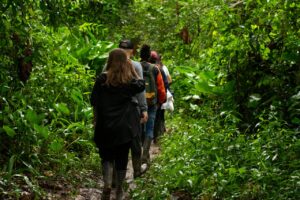
The so-called “Amazon Trail,” near Maceira, isn’t a tropical rainforest — but it comes surprisingly close. The name comes from the dense, humid vegetation that follows a small stream, creating an unexpectedly lush and refreshing environment.

The route can vary from short versions (around 1 km) to longer, more complete loops of several kilometers. They’re not always perfectly marked, but easy enough to follow if you pay attention.

Along the way, you’ll find:

  • Giant ferns and moss everywhere
  • Shaded paths perfect for hot days
  • Silence broken only by the sound of running water… and embrace getting a little lost. Here, “being lost” usually means discovering the best hidden spot on the trail.
  • Wear comfortable shoes… and embrace getting a little lost. Here, “being lost” usually means discovering the best hidden spot on the trail.


Lunch: rewarding the effort (properly)

After the hike comes the most anticipated moment: food.


Around Batalha, you’ll find plenty of excellent options for traditional Portuguese cuisine. A good local restaurant here usually means:

  • generous portions
  • well-seasoned meat or fresh fish
  • and, of course, desserts that completely ruin any diet plans


Pick a local spot in the village of Batalha or nearby — it’s hard to go wrong.

If you want to start getting into the right mood for the afternoon, try the Mosteiro do Leitão restaurant, one of the best options in the area.


Afternoon: a journey through time at Batalha Monastery

With a full stomach, it’s time for the highlight of the day: the Monastery of Batalha.

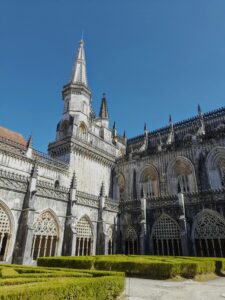
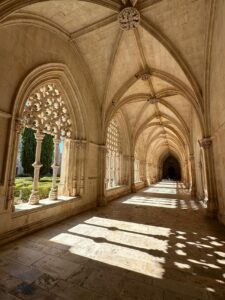
This impressive monument is not just beautiful — it’s a national symbol. It was built to celebrate the Portuguese victory at the Battle of Aljubarrota in 1385 and is now a UNESCO World Heritage Site.

As you step inside, be ready for:

  • stunning Gothic details
  • cloisters that look like something out of a movie
  • a sense of scale that makes you lower your voice without even noticing

Don’t miss the Unfinished Chapels — one of the most photogenic and intriguing parts of the complex.

Useful tip: visit in the late afternoon. The golden light on the façades makes everything even more special (and your photos almost unfairly beautiful).

Final tip: bring extra battery on your phone — not for navigation, but because you’ll want photos of everything… including dessert.

December 6th Daytrip: Traditions, Flavors, and Adrenaline in the Oeste region

If you’re looking for the perfect getaway for December 6th, here’s an irresistible itinerary through the heart of the Oeste region. Start the day in Rio Maior, where the Salt Nativity Scenes transform the already magical Salinas landscape into a unique Christmas setting — delicate, handcrafted, and full of charm.


As lunchtime approaches, head to Alcobaça and book a table at the classic António Padeiro. The restaurant, recommended by the Michelin guide, combines tradition and criativity, with dishes that comfort even on the coldest days. A perfect break before the grand finale of the day.


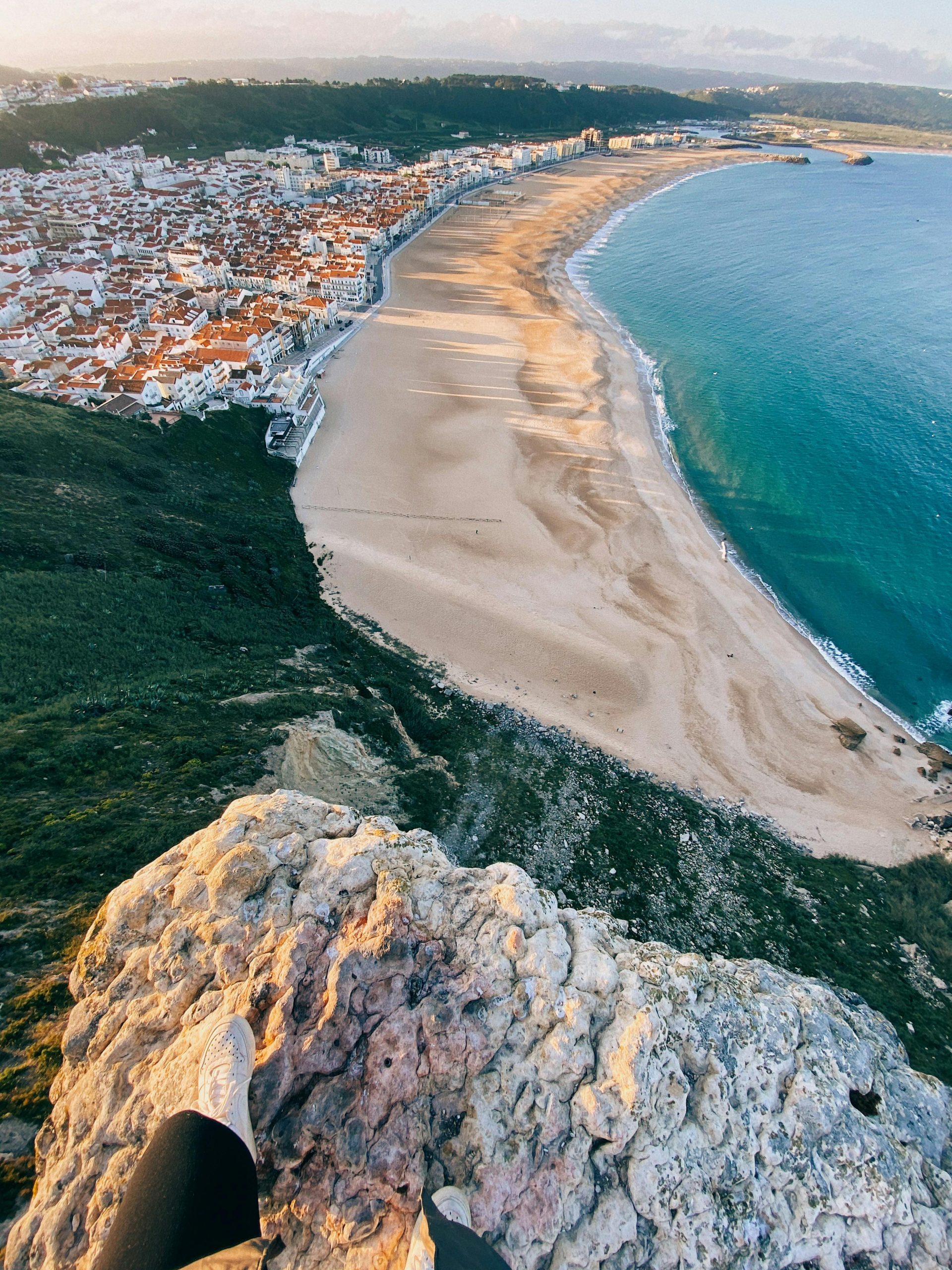
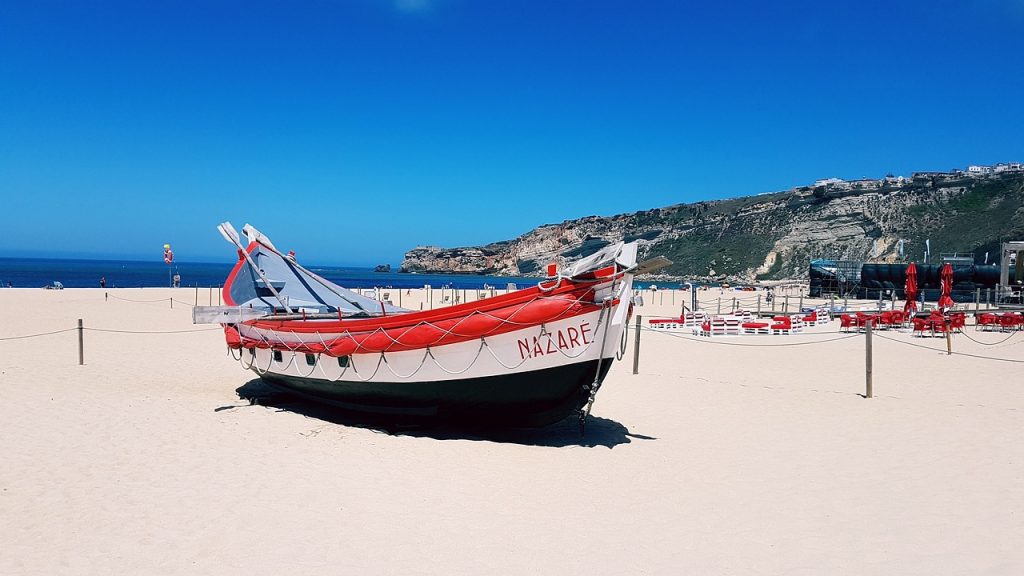
End your day trip in Nazaré, where the giant waves promise to show all their force again in the coming days. Up at the Sitio, the view from the lighthouse is breathtaking — a mix of raw nature and pure spectacle, making any visit worthwhile.


One day, three stops, and memories for much longer. Is there a better way to welcome December?

Team Building: The Key to Stronger, More Collaborative Teams

In an increasingly dynamic and competitive business world, the success of an organization depends, to a large extent, on the cohesion and collaboration between teams. This is where team building activities come into play – powerful tools for strengthening ties within an organization, improving communication and fostering a healthier and more productive work environment.

In our spaces we frequently host corporate events with team building activities, both outdoors and indoor events, and we have witnessed remarkable transformations after just one day of well-structured activities. When a team shares challenges, celebrates joint victories and learns to trust its members outside the usual work context, a connection is created that is difficult to achieve within an office.

Team building activities are especially effective for:

  • Improving interpersonal communication
  • Strengthen trust and the spirit of mutual help
  • Stimulate creativity and problem-solving
  • Increase motivation and a sense of belonging to the company

Óbidos: The Perfect Setting for Outdoor Activities

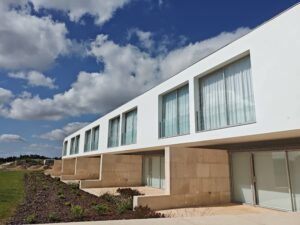
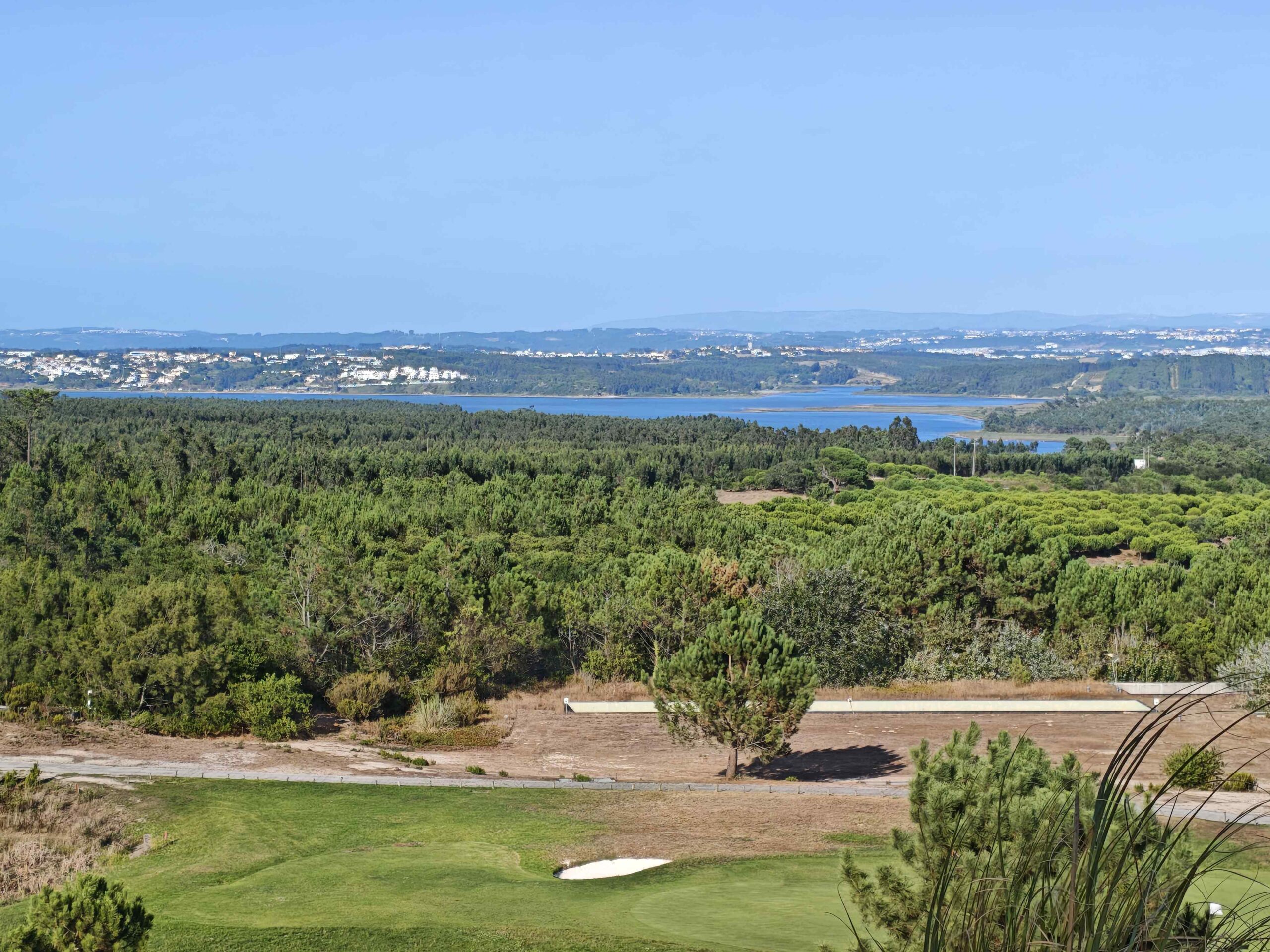
If there is a place in Portugal that combines nature, tranquility and versatility for corporate events, it is the Lagoa de Óbidos area. This natural paradise, between the medieval village of Óbidos and the Atlantic coast, offers a unique setting for team building activities in direct contact with nature, and the spaces of Nave Lagoa are the perfect complement both for briefings and work meetings, as well as to have an indoor plan b in case the weather complicates the activity.


The possibilities are practically endless:

  • Canoeing on the lagoon, encouraging coordination and teamwork
  • Hiking and orientation, ideal for developing leadership and strategy skills
  • Multi-adventure challenges with physical and mental tests
  • Outdoor workshops, where creativity flourishes in relaxed environments
  • Corporate picnics or themed dinners, for moments of relaxation and informal conviviality

With the cool breeze, the sound of nature and an inspiring landscape, employees feel refreshed and more connected to each other. It is an investment not only in the well-being of the team, but also in the productivity of the company. If you are looking for an effective and attractive way to strengthen your team, talk to us and we will think with our expert team building partners about the best activity for your team.

Plogging?

A few years ago, a small video of a child asking “what do you practice?” went viral all over the world.

With his expressiveness and eloquence he managed to get many people to pay attention to the message, simple but deep: based on practice you get to become an expert in anything; if you practice joy and happiness you will be joyful and happy; but if you practice anger or disappointment you will also be very good at it and you will be able to find reasons for anger at all times.

If you do not know the video, it is worthwhile to click on the link, dedicate a couple of minutes to see it and then take a good walk to think about the idea, because we can all always learn and improve.

The content of the message is not so recent, it is from the famous Indian guru Prem Rawat, who has been spreading messages of peace and well-being throughout the world for fifty years and leads a foundation for development.

The message is also especially important for those who are parents because their children often follow their example and learn through what they see them doing. It is estimated that about half of the abusive adults witnessed or suffered situations of abuse in their homes when they were children. It is a terrible statistic. But it also has the other side, which does not appear on the news, and is infinitely more numerous, all those parents who have been a good example for their children and have managed to instill positive values.

Well, today’s entry seeks to make better known a very interesting initiative, in which we can all participate and give a positive example for future generations. The idea started in Sweden in 2016 and has spread rapidly throughout Europe. It is called plogging, a word that comes from combining the term jogging and the Swedish expression plocka upp, which means collecting litter. It is that simple, it is just about running and carrying a bag, so if we see some litter we can make a squat, pick it up, and keep running. Obviously, the goal is not to collect a lot of garbage, but that little by little we all become aware and avoid generating and dispersing so much waste. And that one day, when going out to run, there is nothing to pick up.

There is a Facebook page as a platform to facilitate meetings and photo-blogging, but in parallel there are now also many local initiatives, organizing meetings and activities in each area.

In a similar line, in Portugal, it is very remarkable the activity of the Brigada do Mar organization, which carries out cleaning campaigns on beaches and has had more than 50,000 volunteers taking part. And public-private initiatives are also emerging, such as those with the company Sirplaste of Porto de Mos, or Revalor in Alcobaça, which are collecting, recycling and giving new uses to tons of plastics collected in the sea and beaches. But success will really come when our children see that we try not to generate so much waste and that we treat correctly the waste we generate and never litter nature. And then, to the question “what do you practice?” we will be able to answer that we try to take care of the planet in which we live. Because as the popular slogan says, “there is no planet b“.

Marvão, a hidden gem

Marvão is a small town on the border between Spain and Portugal, near Castelo de Vide and Valencia de Alcántara, on the main road from Cáceres. It is not in the Oeste region of Portugal, but we thought it deserved a post on this blog for three reasons: first, because due to its history, charm and location, it is a common stopping point on car trips from the rest of Europe to the Portuguese coast; second, because it has several very interesting restaurants and activities for a weekend getaway; and third, for a new, fun and different experience that can be done in the area, and that allows you to feel like Buster Keaton in The General for a few hours.

Starting at the end, if we like to pedal in the middle of nature and we have a couple of hours, we should try Rail Bike Marvão, which offers routes in two-seater pedal vehicles that roll along the now disused train tracks. The tour allows you to enjoy this area of great natural beauty in a different way, in the surroundings of the Tajo Internacional park, a Biosphere reserve.

Another very interesting activity is a visit to the Melara Picada Nunes Museum, where they offer 75-minute guided tours that include a practical explanation about the history and production of olive oil, a small tasting and they give us a sample of their liquid gold.

Among the restaurants by the Sever river, there are some very interesting, like  JJ Videira, Sever or Milhomens. And we should not leave Marvão without going up to the castle and enjoying its incredible 360º views of the Alentejo and Extremadura, those two regions now so united that they even participate together in European projects with the acronym ALEX, breaking that old phrase of José Saramago that Spain and Portugal are two Siamese brothers who were born joined at the back and have never seen each other’s faces. Nowadays this is no longer the case, there is increasing knowledge and appreciation between both peoples and Marvão is an excellent meeting point to prove it.

Base Jumping in Portugal

BASE is an acronym formed with the initials of the words Building, Antenna, Span, Earth, the four types of places from which this modality of jumps is practiced. The German Dominik Loyen and the Swedish David Thomasson, shared the passion for the BASE jump and fate wanted both to die trying to jump in the same place, on the cliffs of Nazaré, one in 2018 and the other in 2013.

Dominik is number 359 and David is number 207 in the BASE fatality list published by the specialized magazine Blinc. The list collects data from the year 1981 as a reminder and warning that BASE jump is a high risk activity, which must be done responsibly and with solid previous experience in jumps with parachutes from airplanes.

In fact, every time there is a death of this kind, the debate on whether these high-risk sports should be banned reopens. In Portugal, as in most European countries, it is not considered in itself an illegal activity although those who surreptitiously access some of the enclosures closed to the public from which the jumps try to be executed can face fines and penalties. The basic rights and freedoms of every individual to dispose of their life take priority as long as they do not jeopardize the property or rights of others.

And the truth is that for many it is a risk worth it. Most of those who practice it admit that they feel fear before jumping but that it pays off when they land and they feel the tremendous outburst of joy that comes when they see that the jump has gone well. Others say that the feeling of freedom that these jumps produce is something difficult to equal.

For those who want to know more about skydiving and the different ways of jumping, one hour North of Lisbon, in the Leiria area, operates the company Get High, initiated by one of the best-known Portuguese jumpers, Mario Pardo, who has jumped from emblematic places such as the bridge 25 de Abril or the Padrão dos Descobrimentos in Lisbon. Also, in Lisbon and in Porto there is a growing offer of indoor skydiving, where you can experience in a wind tunnel what to expect in the air.

Finally, for those who prefer to follow this topic a bit more from the sidelines, the documentary Sunshine Superman is very interesting, about the life of Carl Boenish, one of the founders of the BASE jumping movement. The BASE jump has also been very present in action movies, such as Drop Zone, with Wesley Snipes, or the impossible missions 2 and 3, with Tom Cruise. And for those who prefer reading, The Great Book of Base, by Matt Gerdes, is a good option to learn more about this subject and The Moment of Letting Go, by Jessica Redmerski, would be the alternative for those who prefer romantic literature.

New trends in corporate events for 2024

The world of corporate events is always evolving, but in recent years this evolution seems even faster and surprising. With new technologies and changes in the expectations of participants, the sector is adapting to offer more participatory, immersive and innovative experiences. Let’s see three trends that we think will shape the world of corporate events this year.

Going Hybrid: The Future is Digital and In-Person

The pandemic has accelerated the adoption of hybrid events, combining in-person and virtual elements. In 2024, this approach can become even more integrated and permanent. Companies perceive that the flexibility offered by hybrid events does not only meet the needs of a diversified audience, but also increases participation, which is always positive. Streaming tools, engaging virtual interaction and immersive digital environments will be the order of the day. The professionals in the sector that will succeed will be those who manage to plan events with technologies that provide an experience that brings participants together, regardless of where they are, and that are better are promoting engagement and activity.

Sustainability as a Strategic Priority

With increasing environmental awareness, sustainability around us is a fundamental concern in all sectors, including corporate events. In 2024, sustained practices will become even more evident. Companies will seek to reduce their carbon footprint through conscious policies, from location selection to waste management. Events outside cities, with greater presence of nature and pure air, will be increasingly required. The integration of sustainable practices not only meets the expectations of the participants, but also strengthens the corporate image and the ESG commitment of companies.

Immersive and Personalized Experiences

In a world saturated with information, corporate event organizers seek to offer new experiences. In 2024, there will be more immersive and personalized experiences to engage the public. It can involve the incorporation of virtual reality (VR) or augmented reality (AR) in in-person and virtual events, providing unique and immersive experiences. But it can also be from a back to basics concept, with fun and traditional teambuildings, that can also manage to truly create an atmosphere of collaboration in the teams.

Also, personalization will be key – from agendas adapted to individual interests to exclusive offers. Technology will play a crucial role in creating these experiences, allowing participants to feel connected and involved in innovative ways.

In short, the corporate events sector will show in 2024 a more hybrid approach, a growing commitment to sustainability, and a search of new, immersive and personalized teambuilding experiences. As companies adapt to these trends, the result will be a new era of events that combines digital and in-person worlds, providing participants with memorable experiences aligned with constantly evolving expectations. The Nave Lagoa team is looking forward to accompany our friends, partners and clients on this fascinating journey to infinity and beyond.

Christmas at the Oeste region

Today, let’s explore together the magic of the holiday season in the stunning West region of Portugal. With its charming traditions, picturesque landscapes, and welcoming atmosphere, our region offers a unique experience to celebrate the Christmas spirit. Here are some of the best activities to experience Christmas in the Oeste Region

Streets of Óbidos

Christmas Markets

In small cities like Óbidos and Caldas da Rainha, Christmas markets transform into true fairy tales. Narrow streets and historic squares are adorned with twinkling lights, while stalls offer local crafts, delicious treats, and unique gifts. The Christmas scenes in the small town of Marinhas de Sal, at Rio Maior, are made of the salt produced there; they seem like snow! It’s a perfect opportunity to find special souvenirs and feel the warmth of the season.

2. Christmas Concerts and Shows

The Oeste region comes alive with festive music during Christmas. From enchanting choirs in historic churches to open-air concerts in squares, there is a variety of performances for every taste. Don’t miss the chance to experience the thrill of a Christmas concert under the stars. https://www.visitportugal.com/pt-pt/destinos/centro-de-portugal

3. Dazzling Christmas Lights:

Cities and villages in the West region turn into true light paradises during the Christmas season. Historic buildings, streets, and squares are adorned with stunning decorations, creating a magical atmosphere that will surely enchant visitors of all ages. Vila Natal in Óbidos is always a must  https://obidosvilanatal.pt/

Vila Natal in Óbidos

4. Local Cultural Traditions:

Discover the unique traditions of our region during Christmas, such as religious celebrations like the Midnight Mass, and authentic cultural practices. Take the opportunity to taste traditional local delicacies, such as the “Bolo Rei” and the “Bolo Rainha”, characteristic delights of the season, similar to the Roscón de Reyes you can find in Spain at this time of the year.

5. Outdoor Ice Skating:

In some cities, like Torres Vedras and Óbidos, outdoor ice skating and ice sliding are a must-do experience for all ages. Glide on the rink while enjoying the twinkling lights around you, creating unforgettable memories for the season. By celebrating Christmas in Portugal’s Oeste region, we immerse in a charming experience that combines tradition, natural beauty, and human warmth. It´s a magical and unforgettable celebration in this enchanting part of the country. Happy holidays! 🎄

Surf events in the Oeste region

A tennis fan can hardly ever play on the Centre Court of Wimbledon or at Roland Garros. A golf fan will probably never have the opportunity to play in Augusta or St. Andrews. And football fans would surely be willing to pay absurd amounts of money to play one day at the Santiago Bernabeu or Wembley.

Exactly the opposite of surfing, which has the peculiarity that anyone can easily buy or rent a board and live first-hand the same waves of Ericeira, Supertubos or Nazaré, where three of the most important events in the world of surfing take place.

In the more than 100 km of coast of the Oeste region there is a wide range of possibilities of surfing, for all levels. And any day is fine to go and find good waves. But the end of the summer adds three world-class appointments for surfers: the World League events in Ericeira in October, in Peniche in March and the giant waves season in Nazaré, that runs from October to March.

Supertubos

The waves at Supertubos are considered the European version of the famous Hawaiian Pipeline, with the advantage that the seabed is sandy and without the dangerous reefs of the Hawaiian. On the other hand, you may need a much thicker websuit. In Ericeira the temperature is more or less the same but the town has that cool charm so appealing to those who start to know the surf world.

Ericeira

To regain strength, a very popular option in Peniche, right on the beach, a few meters from Supertubos, is the Xakra, whose tables are also a very popular spot all year round. In Ericeira, Furnas is the place to go, with its great views and its high quality.

The accommodation offer is also extensive. It covers all the spectrum, from the typical mini-vans of the youngest, to campsites near the beach, from hostels and apartments to bio-eco-resorts, and there are even some conventional hotels. For its good value for money we highlight two: the Kate Kero, in the center of Peniche, with good access to restaurants, shops and the bustle of the city; and the recently renovated MH Atlántico, for the opposite reasons, since it is right on the beach, and you can easily reach Consolação and Supertubos by foot and make the most of the waves from dusk to dawn.

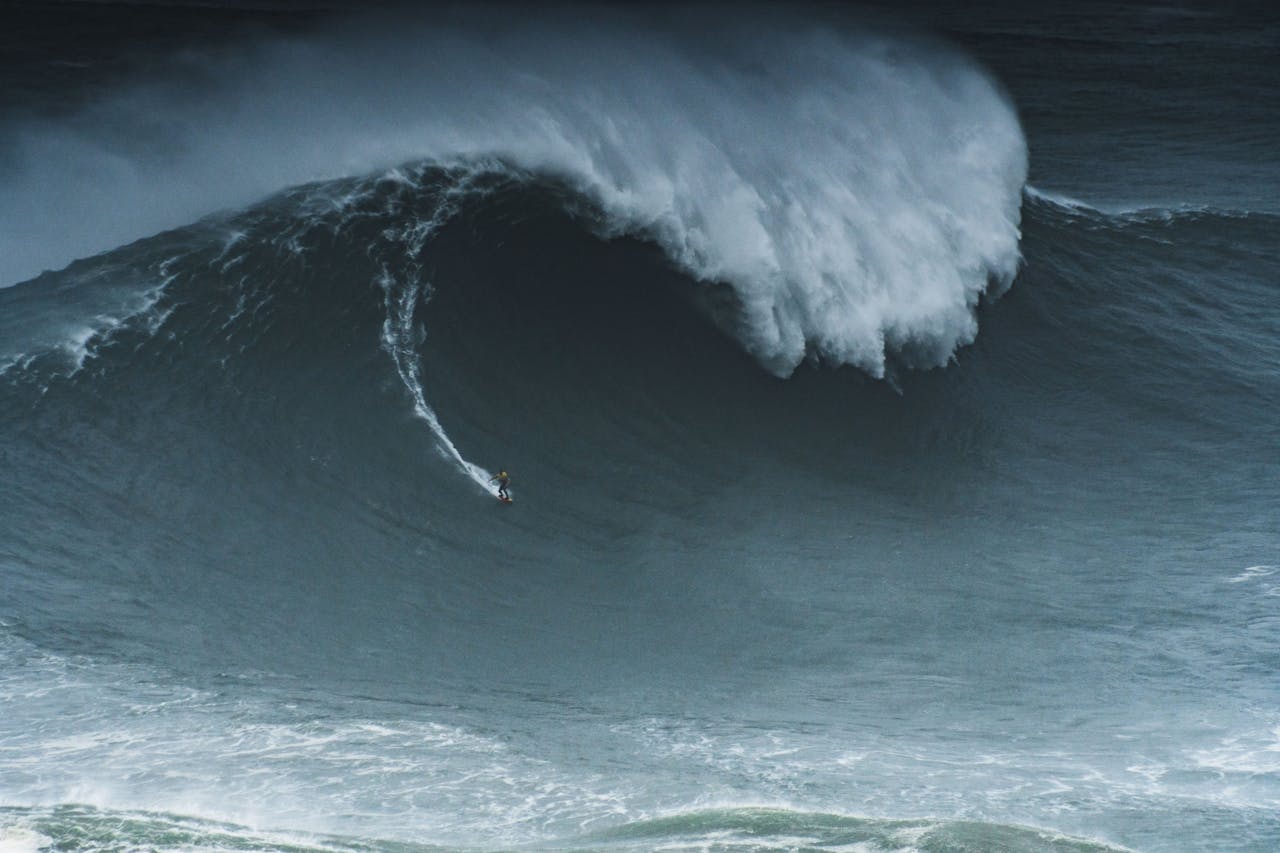
In Nazaré, the giant wave season in Praia Norte lasts from October to March although there may always be some big storms outside those dates that also allow you to watch the monster-waves up to 30 meters high, only suitable for expert surfers. At the end of October Nazaré also hosts the Big Wave Challenge annual awards, where all the big names of the big waves get together.

Nazaré

In this link there is a very interesting video of the World Surf League explaining how these giant waves are formed, due to a submarine canyon several kilometers long that is just south of the cape.

To stay in Nazaré, a good option, in the center, is the Hotel Magic. And to eat, our favorite options are Rosa dos Ventos and A tasquinha, although the excellent level makes the experience almost always great in most places. In fact, one of the biggest fans of this blog always remembers that in Nazaré he ate the best wild sea bass he has ever eaten.

Whether as a surfer or as a spectator, with accommodation in a minivan or in hotels, the waves and the collective good vibes are guaranteed and the experience is really worth it.

438,000 reasons to go to Santiago

In 2022, 438,000 people completed at least 100 kilometers walking or 200 by bike on the Route of Saint Jacques (Camino de Santiago). To understand the growing tendency of the figure, we can see that in 1990 the trip was done by 5,000 people and in 2000 by 55,000. In 2018 it was done by 327,000 and, although in 2020 and 2021 the figures suffered the impact of the COVID19 pandemic, in 2022 they returned stronger than ever and set a new all-time record of 438,000 pilgrims arriving to Santiago de Compostela.

But, what brings so many people to take the Camino to Santiago? In its medieval origins it was done mainly for spiritual reasons, seeking the intercession of the Apostle Santiago or the indulgence derived from the pilgrimage. And today many pilgrims still have a religious motive in their backpack. But for the great majority, the Camino is a journey within oneself, a time for reflection, shared effort and companionship. The Camino provides a very intense contact with nature through the landscape, but also with human nature through effort, kindness, hospitality, overcoming challenges and exchanging experiences with other walkers.

Its progressive revitalization during the second half of the 20th century has been associated with the latent desire in many people to recover the European roots, to go more slowly instead of running and to get things done with time and effort instead of instantly.

It can be explained in many ways but there will probably be 438,000 different reasons and they will all be good to go to this exceptional school of humanity for a few days.

One of the great wonders of the Camino is that it passes by almost all countries in Europe; there are more than 80,000 kilometers of marked ways. And although most of the people follow the so-called Camino Francés (the French Way) which crosses the Pyrenees and travels through northern Spain through Pamplona, ​​Burgos and León to Santiago, other alternative routes are becoming very popular too, because they are a bit less crowded and also a little closer to the simplicity and inner peace that one looks for in this adventure.

The Portuguese Caminho, from Lisbon to Santiago, is especially recommended for those who want to enjoy a more personal experience, with more nature and not that many crowds. The Caminho passes through Santarem, Coimbra and Porto as the most relevant cities and can be seen very well detailed on the Gronze website (https://www.gronze.com/camino-portugues).

The Convento de Cristo in Tomar

But we want to highlight a central section of it, which runs very close to the Oeste region, and which is especially recommended for those who want to live the part of the Caminho closest to nature. It is the stretch between Tomar and Coimbra. Tomar, the point of origin is a small city commanded by the Convento de Cristo, an imposing Templar castle, a UNESCO World Heritage Site, and one of the most beautiful examples of Manueline Gothic architecture. Coimbra is hustle, charm and small alleys to get lost. And, in between, 90 kilometers of Caminho through enchanted forests, along paths between fruit trees and small villages in which there is always a local willing to offer the pilgrim a few words of advice or any help needed. The signage is especially good, in part because the route is at the same time the Camino de Santiago going North and the Caminho de Fatima going South, so the signposts have the characteristic yellow arrow towards Santiago on one side and the blue arrow to Fatima on the other. That also causes interesting encounters between walkers in one direction and another, opposed in the direction, but united by a similar search.

Fátima and Santiago

And for those who want to have only an appetizer, with a child-friendly experience, you can consider visiting the Convento de Cristo in Tomar, eating at any of the nice restaurants in the pedestrian zone of the city, like O Tabuleiro for example, and making the first four kilometers, which run parallel to the Nabão river and are especially beautiful. Surely more than one after that appetizer will want to consider in the future trying other dishes of the Camino. Buen Camino!