O Dia da Terra é um evento anual em 22 de abril para demonstrar apoio à proteção ambiental.Earth Day is an annual event on April 22 to demonstrate support for environmental protection.
It was first held in 1970, when more than 20 million people went out on the streets of the U.S. to show their union behind this crucial cause.
Each year a theme or group of themes is selected to focus especially on them. This year one of the themes is Food and Environment, something we can all easily improve in our daily routines.
In Nave Lagoa we are fully committed with the environment and we try whenever is possible to work with local suppliers and natural ingredients, to achieve a gastronomic experience that is both delicious and sustainable. It is true that in the Oeste region of Portugal we are very fortunate, and we have a local gastronomy that is especially healthy, rich, and varied. But if we all make a small effort, within our own possibilities, the Earth will surely appreciate it and we will all end up benefiting from it.
Nave Lagoa will proudly take part again this year in Earth Hour, an initiative aimed at raising awareness about climate change. Started by WWF in Sidney in 2007, it is now followed by companies, institutions, and millions of people all over the world.
Let’s all try to switch off as many lights as possible to show how much we care about the future of our planet and to send a clear message to world leaders that it is time to act and adopt the policies that are needed to live in a more sustainable way and with more respect for our planet.
So, on Saturday, March 27, at 8:30 p.m., try to switch off your lights for an hour. Go for a walk, enjoy the stars, or prepare a cozy candlelight dinner with your loved ones. Every gesture, big or small, counts and shows that we care and that we want to connect more with nature and with our beautiful planet.
Today we are going to play a version of The Alphabet Game, or Pasapalabra (the Spanish equivalent), that seeks to raise awareness of a significant problem that most of us have which we sometimes forget about or do not give enough importance to. This problem is the constant attention we pay to our mobile phones. If we do not control such addiction, it quickly takes over all waking moments of our life and adversely affects our ability to carry out other essential activities properly. So what can we do about this creeping issue?
Starting with an O. Organization. Try to be organized and disciplined in the schedule and rules of use of your mobile devices. Do not check it while you work or study. Or program periods of at least half an hour of work or study and then five minutes of rest, like the Pomodoro technique. The mobile is a skilled thief of our time and concentration, but it is in our hands to avoid it.
With an E. Essential. Check periodically all the key apps you have downloaded and delete those that are not essential. As much as possible, avoid social networks.
With an S. Silence. Manage notifications, eliminating all sounds and leaving only the most essential alerts. It is tough to concentrate if you are constantly receiving notification sounds. The temptation to check the mobile when you hear the alert must be resisted. But again, it is in your power to eliminate such sounds and control when you look at the phone.
With a T. Temperance. Dictionaries usually define temperance as moderation, sobriety and continence. Applied to mobiles means that it is unnecessary to erase yourself from the digital world or live in a hippie eco-commune. But you should have a certain degree of self-control and a sufficient level of discipline to adopt good practices in the use of the mobile. Examples of such good practice include not using it when you are eating with other people or when you are in meetings with friends, turning it off at least one hour before going to bed, and not turning it on until an hour after getting up.
With an E. Experiences. Multiple studies have shown that for personal well-being it is fundamental to have new experiences. These do not usually come from having money, the latest generation mobile phone, a thousand virtual friends whom you infrequently interact with, or 500,000 likes. Multi-dimensional experiences, in the real world, with people of flesh and blood, enjoying nature, playing sports, trying new foods, discovering new places, learning new hobbies; these are the experiences that really bring you happiness and a variety of them coupled with the convenience of the mobile help enrich our lives more broadly.
Smartphones have managed to penetrate so much into our lives that it can be quite challenging to apply these tips but we can always go little by little, developing more self-discipline, asking for help from our friends and family so that it is a joint exercise in which everyone can support each other. And for moments of weakness, we can take the word that is read in the acrostic in our game, OESTE, because it is also scientifically proven that the Oeste region is conducive for outdoor activities, to enjoy the sea, nature, gastronomy and culture. Who knows, maybe we even end up inventing the word oestherapy to describe all the positive effects of coming here.
So, do you have any additional tips or ideas that you can share to manage our smartphones better?
The word mala usually has negative connotations in most Romance languages because it comes from the Latin word malus, the opposite of the good, bonus.
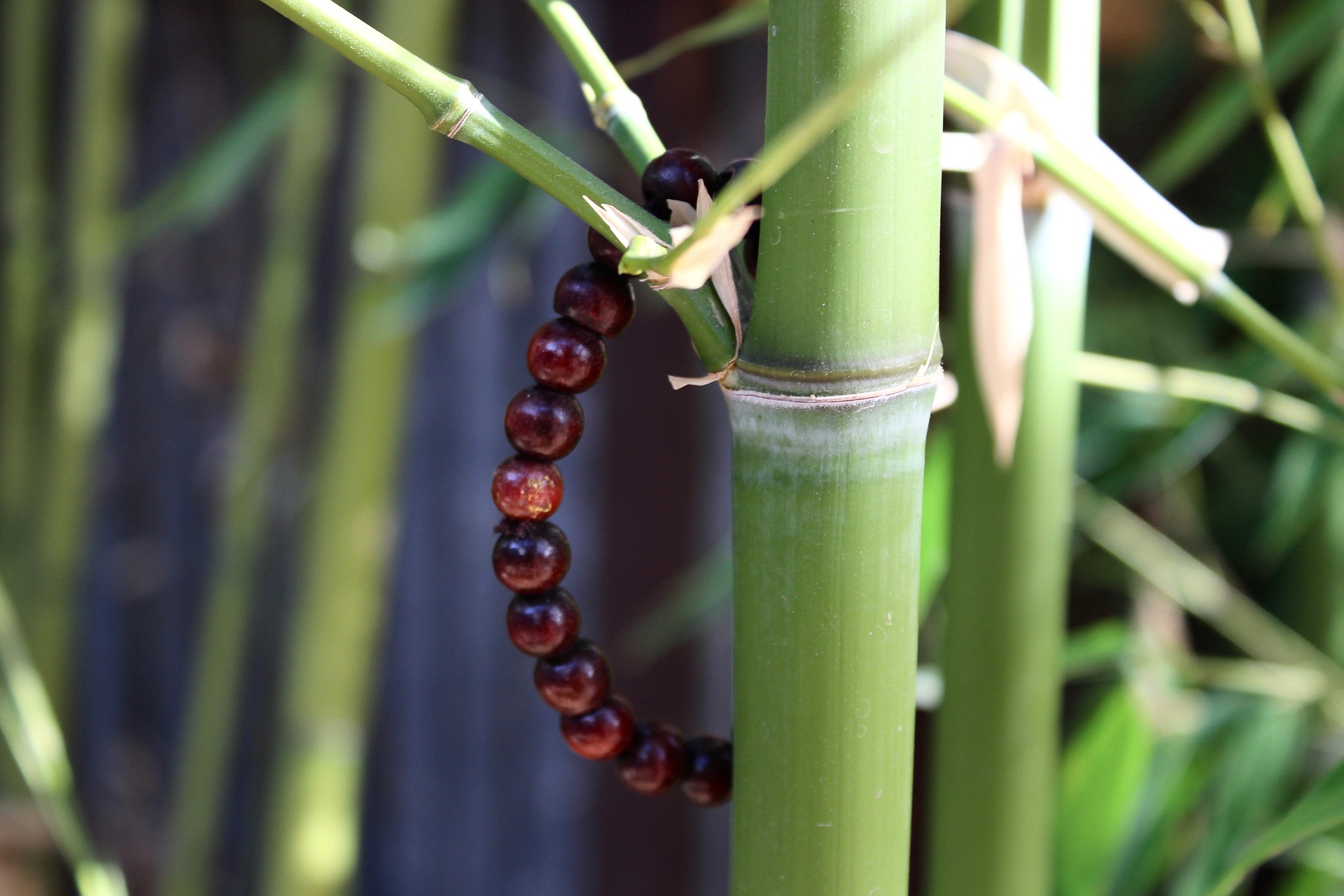
All that negativity that the word implies in the Latin languages and culture disappears entirely in the oriental culture, in which the word mala designates an object similar to a necklace, which is used regularly in Buddhist meditation. Some even consider it an element of surprising global unanimity because it is also present in Christian culture through the rosary and Islam through the dhikr.
The second is NO / AN, a small global village in itself since it is a Belgian company with a Finnish designer and employees of various nationalities that manufactures in Portugal (in Benedita, in the area between Rio Maior and Alcobaça).
Its high-quality designs are aimed at a more sophisticated fashion level, with prices on many occasions over 1,000 euros and a cosmopolitan audience that appreciates its originality and quality. Its differentiating bet begins with an explicit declaration of intention from its slogan “slow brand fashion bag”; moving it clearly away from fast fashion consumption to focus more on timeless products.
So our proposal today is a clear win-win. If we want to get away from the negativity that the word mala usually implies, from now on we have two much more exciting options. First, we can opt for the passionate concept of international design championed by companies like Toino Abel or NO/AN; or secondly, we can follow the way of spirituality, the tranquility and calming presence of those who use such beads for meditation. Indeed, there are more ways to do so; as always, additional ideas are appreciated. And, if someone wants to know more about this topic or even buy a basic meditation kit, check the Mala Prayer website where you can see different models of malas and also inspiring ideas to learn more about these issues and help improve your connection with the world that surrounds us, regardless of the religion that you profess.
From another origin but not so different in the end as we will see, we have the Portuguese word mala, which derives from the French malle and links to the English word mail, as an object with which the mail was transported. From there it has derived to the current use in Portuguese for a handbag, the accessory in which people usually carry their everyday objects.
The reason why we think that perhaps the final result ends up in a proximate solution is because there are a couple of companies that currently draw much attention and respect for their excellent combination of local and global elements, as well as tradition and modernity.
The first is Toino Abel, a small company of artisan origin, which makes handbags working with reeds, combining traditional shapes with modern colors and designs. They have achieved a global presence with their original creations through online sales and several physical stores that showcase their products throughout Europe.
They are based in the small village of Castanheira, near Alcobaça, where they are an institution and an example of how a traditional practice can be modernized and acquire an international dimension.
The second is NO / AN, a small global village in itself since it is a Belgian company with a Finnish designer and employees of various nationalities that manufactures in Portugal (in Benedita, in the area between Rio Maior and Alcobaça).
Its high-quality designs are aimed at a more sophisticated fashion level, with prices on many occasions over 1,000 euros and a cosmopolitan audience that appreciates its originality and quality. Its differentiating bet begins with an explicit declaration of intention from its slogan “slow brand fashion bag”; moving it clearly away from fast fashion consumption to focus more on timeless products.
So our proposal today is a clear win-win. If we want to get away from the negativity that the word mala usually implies, from now on we have two much more exciting options. First, we can opt for the passionate concept of international design championed by companies like Toino Abel or NO/AN; or secondly, we can follow the way of spirituality, the tranquility and calming presence of those who use such beads for meditation. Indeed, there are more ways to do so; as always, additional ideas are appreciated. And, if someone wants to know more about this topic or even buy a basic meditation kit, check the Mala Prayer website where you can see different models of malas and also inspiring ideas to learn more about these issues and help improve your connection with the world that surrounds us, regardless of the religion that you profess.
Studies about countries with the highest life expectancy always mention common elements such as good nutrition, a reliable health system, plenty of physical activity, and active social life.
In longevity, as in happiness and many other things, money is not always the most crucial factor. For example, it is significant that the United States, despite having high income per capita, always appears in the middle of the ranking and has never been rated highly in that respect. Inequalities in access to healthcare, and high rates of obesity and violent crime, are undoubtedly the cause of this poor result.
An interesting study by the University of Chicago provides a new vital factor in considering life expectancy: pollution levels. Analyzing microparticle data in the air and comparing the life expectancy in the population of a region of China more exposed to pollution against another area with lower pollution levels, the study reaches devastating conclusions about the effect of pollution on life expectancy.
The study showed areas with high air pollution could result in a decrease of up to six years in life expectancy. Or, in other words, the mere fact of living in an area with poor air quality can mean a significantly earlier death for inhabitants of that area. The authors emphasize that these data suggest that pollution is a more relevant factor in mortality rates than elements we know to be harmful such as tobacco addiction.
The Iberian Peninsula generally gets good results in the University of Chicago study, with only a few months of loss of life derived from pollution. However, as the study identifies combustion derived from transport, heating, and power plants based on fossil fuels as the leading causes of these problems, it can easily be inferred that large cities and highly industrialized regions will be where life expectancy is more adversely impacted by pollution.
The good news is that the damage caused by pollution on the body is not permanent and can be remedied in certain situations. In the same way that research has shown the lungs of an ex-smoker can, a few years after stopping smoking, recover most of their initial good condition, eliminating or reducing exposure to significant air pollution also allows our body to clean itself and heal slowly.
Praia de Baleal
And that is the positive message that we wanted to share today. That we still have the chance to improve our life expectancy. If we are citizens of the European Union, it is as simple as buying a plane ticket and coming to live in Portugal, which due to strong sea breezes, low industrial density and transport, and the high percentage of renewable energy in electricity production, is one of the best places in the world to recover our lungs and general health. In many cases, we can even benefit from substantial tax advantages, which is also a factor of increased wellbeing for many people. And if you are from outside the European Union, you can move in via the golden visa, a visa regime that grants access to EU residence with an investment of 500,000 euros in real estate or 1 million euros in financial assets. It may seem a lot, but how much do we value each year of our life? And what about our children’s lives?
If we add to that the quieter pace of life, excellent food, the possibilities to do all kinds of sports, and the kindness of the people here, we see that the equation adds all the recommended elements. So perhaps we should reformulate the previous question towards the famous song: tell me quando, quando, quando.
Some call it liquid gold. Many think it is the most important ingredient of the Mediterranean diet. Due to its high content of monounsaturated acids, it is unanimously considered an essential food in the healthy diet, a natural antioxidant. But when we arrive at the store, do we know how to distinguish good olive oils from others? Why are there such big differences in the price? Are there good options in the Oeste region for those who want to consume local products?
We will try to cover these questions in the following discussion, deliberately basic in some points, to help also our international friends to approach a product that outside the Mediterranean countries is still a relatively unfamiliar product. If we look at the consumption statistics per person, Greece, Spain, Italy, Portugal and Cyprus are at the top, with levels between 12 and 5 liters per person per year. But in France it does not reach two liters and in Germany or the United Kingdom it does not reach a liter. Outside of Europe, consumption is growing notably in Australia and the United States but still with modest amounts. The consumption in China is also growing, although obviously the figures per person are not significant given the size of the population; but it is easy to see the increasing importance that olive oil is achieving there if we see that in recent years the hectares planted with olive trees add the equivalent product as that of the province of Jaén (the main olive oil producer province in Spain), the vast majority of these new trees in the valley of the Bailong River, with a climate similar to the Mediterranean, and a name very appropriate to approach our culture (bailón means dance enthusiast in Spanish).
For those who come to the store and do not know anything about olive oil, the first thing to keep in mind is that the highest quality is the extra virgin olive oil, pure olive juice, with excellent flavor and the best nutritional properties. It is used a lot in salads or dishes that lend themselves to appreciating more that flavor. Perhaps the best way to try and get to know it is simply with bread and some salt, which is a very common breakfast in many homes in the Iberian Peninsula.
The next level of quality is the virgin olive oil and finally the refined, which is used more for stir-fries, as it withstands better the high temperatures and has a lower price.
As with grapes, with olives there are also different varieties, with different flavors. And also protected designations of origin, which must use the varieties of that particular area. There are many different flavors of olive oil and it is just a matter of trying and discovering the ones that suit more our tastes. The color is not very relevant in relation to the taste; normally it is greener if less mature olives are used and more yellow with more mature olives, but in both cases the flavor depends more on the variety of olives than on the color of the oil.
One point that is important to mention and that is different from wine is that the olive oil deteriorates over time and, especially, with light. Therefore, it is convenient to buy and consume the olive oil as close as possible to its commercialization date and keep the bottle stored out of the light. It is for this reason that the best brands tend to use dark glass bottles or wrap the bottle with an opaque plastic.
The Oeste region does not have large olive groves but in the neighboring region of Ribatejo it is a very important product and since medieval times there is evidence of Santarem as a major center of production of quality olive oil. Hence, among the six protected designations of origin in Portugal, one is precisely “Azeites de Ribatejo DOP”.
For those who want to try some of the olive oils that are produced in the area, you can start by three brands that have received several international awards and represent very well the excellence within the local producers.
The first recommendation is Cabeço das Nogueiras, from the young company SAOV, created in 2004 but which has already received several awards with its successful combination of technological innovation and traditional flavor. The second would be Casa Anadia, from a company with great olive oil tradition since the seventeenth century that makes a firm commitment to quality rather than quantity. And the third is Colheita das Lezírias, one of the premium options of the house Gallo, which is one of the most important olive oil companies in Portugal and has its headquarters in the city of Abrantes, next to the river Tajo.
The first one can be found for about 9 euros a bottle of 500 cc, exclusively in specialized olive oil stores and gourmet stores. The second one can be found in Continente, for about 7 euros a bottle of 500 cc. And the third one is the most mainstream and can be bought for about 6 euros a bottle of 750 cc.
But, returning to the similarities with wine, there are excellent extra virgin oils for very affordable prices, from 5-6 euros per liter, and our recommendation is that each person tries different options and varieties and finds the ones that best suit their tastes. There is a world of flavors to discover.
And you? Do you have any olive oil that you especially like? Any recommendations for our community?
A couple of semesters ago, a new university campus opened in the city of Carcavelos, on the coast between Lisbon and Cascais, offering several studies on business administration. They call it the Nova Way of Life. Its main difference to traditional universities is that the campus, or center as they like to refer it, seeks to merge economic studies with beach culture and new technologies, in the style of some Californian centers.
With the collaboration of leading companies such as Microsoft, Cisco and Axians, the idea is to get a very open center, with Wi-Fi throughout the space and even at the adjoining beach, to make it easier for students to make the most of new technologies at all times. For example, there is an ultra-modern Pingo Doce supermarket where students can buy items 24/7 and there are no cashiers, with users instead paying only by electronic means.
We will still have to wait a while to see how this new concept works but the Portuguese environment is certainly welcoming for the set-up of tech and innovative ventures, as the constant announcement of new openings is showing (Amazon, Google, Mercedes Benz and many more, as described in this article). But whatever the result of the new Carcavelos center, it is an interesting example for other Portuguese universities, which could take advantage of the proximity to the sea and the obvious connection between youth and surfing, to internationalize the offer and attract many more European and global students.
In Peniche, very close to the Cape Carvoeiro lighthouse, is located the Campus 4 of the Polytechnic University of Leiria, with an educational offer focused on marine biotechnology, food and bio-engineering and studies related to gastronomy and tourism management. It is not difficult to imagine that some of these classes or after-school activities could well take place on the beaches of Supertubos or Baleal, just 10 minutes from the campus. A relaxed environment and proximity to the sea provide countless advantages for physical well-being and intellectual stimulation.
The same could also apply to the campuses of Marinha Grande and Caldas da Rainha, which also have great bike lanes to reach the sea, making it easy for students who want to move around the area by bicycle. E-bikes are becoming a revolution in mobility and are the preferred mode of transportation for students, who value above all their sustainability, flexibility and low costs. Bearing in mind that European higher education students increasingly seek to complete their studies with some international experience, the Universities in Portugal should try to offer distinctive elements that make them stand out, be different and attractive, because it is proven that greater international diversity in classrooms is a factor that enriches and increases the quality and prestige of the center. Can there be something more attractive for young people from northern Europe, tired of cold days with little sunlight, than to study in shorts on the sunny and pristine sandy beaches of Portugal?
My Fair Lady was a musical film released in the 60s, directed by George Cukor, with Audrey Hepburn and Rex Harrison in the leading roles. It received good reviews and numerous awards, including the Oscar for best film.
Although in Spain the exhibition of films in its original version is gradually increasing, it was previously only possible to see the films in a dubbed version. In the case of musical films, such as My Fair Lady, the lyrics of the songs were also translated, which was sometimes a real challenge to get them to fit the original music. In order to maintain the metric or the rhythm, the translators needed to make small changes to the original lyrics. In the case of one of the songs of My Fair Lady, which in English was called “The rain in Spain”, the change was radical and became “La lluvia en Sevilla es una pura maravilla” (the rain in Seville is a pure marvel). The reason in this case was to fit the circumstances of the scene where the song was featured.
This scene was where the character of Eliza Doolittle had difficulties with the correct pronunciation of the letters “ai”, which in English sometimes adopts the sound [ei] and so the teacher uses the phrase “the rain in Spain stays mainly in the plain” as a speech exercise to help Eliza improve her pronunciation. The problem is that in Spanish in the phrase “the rain in Spain stays mainly in the plain” did not rhyme well and there was not much challenge as a speech exercise since those words are pronounced as they are written. Hence, and it did not have much logical argument to keep to the original lyrics. The writers therefore chose to refocus the sentence on the pronunciation of the double “l”, which not everyone pronounces in the same way.
It must be said that the problem with the phrase and the song was not only in the Spanish version. In the German version, the song changed to “Es grünt so grün wenn Spaniens Blüten blühen“, which means “The greenness is so green when the flowers bloom in Spain”. In Italian it was “La rana in Spagna gracida in campagna“, that would be “The frog in Spain croaks in the field”. However, none of these versions has been as successful as the Spanish one, where the phrase penetrated deep into popular culture and even today, more than 60 years after the premiere of the film, it is still common to hear it when a rainy day arrives in Seville.
Well, paraphrasing this anecdote it could be said that “The rain in Portugal, can also be practical.” To begin with, because it is that rain that keeps the green landscapes so lush which is a characteristic attraction of the Portuguese geography. This is also what allows Portugal to be one of the leading countries in renewable energy, thanks to abundant hydroelectric power. On a more personal level, because it allows you to stay at home, light the fireplace and enjoy a quiet afternoon filled with the fragrance of a rainy day. Or even embark on a journey of discovering some places and activities less known by tourists which can guarantee a great afternoon of family fun.
We can start with one of the newest, the Quantum Park, in Lisbon, which offers one of Europe’s largest indoor surfaces of trampolines, climbing areas, skate ramps, and basketball courts.
Another classic for rainy days is the Oceanário de Lisboa, which in 2018 was chosen as the best aquarium in the world by Tripadvisor, and always offers plenty of quality and interesting activities for the whole family.
For those who are in the Oeste region and do not want to make it all the way to Lisbon, there are also closer plans which are equally enjoyable. The Bowling Caldas, next to the municipal sports area, offers bowling, games, karaoke and, sometimes, even live music. And in that same line, another interesting plan is the Indoor Karting Caldas da Rainha, which has a small but fun kart track, and an area with snooker and karaoke.
A different kind of excursion is to visit the grutas Mira de Aire, which are located a few kilometers from Fatima and constitute the largest group of caves in Portugal. At the time when its commercial exploitation began in the 70s, there was less sensitivity for the preservation of nature, and some people may think that the caves have too much human intervention. But the experience is still very interesting and the children love the adventurous element.
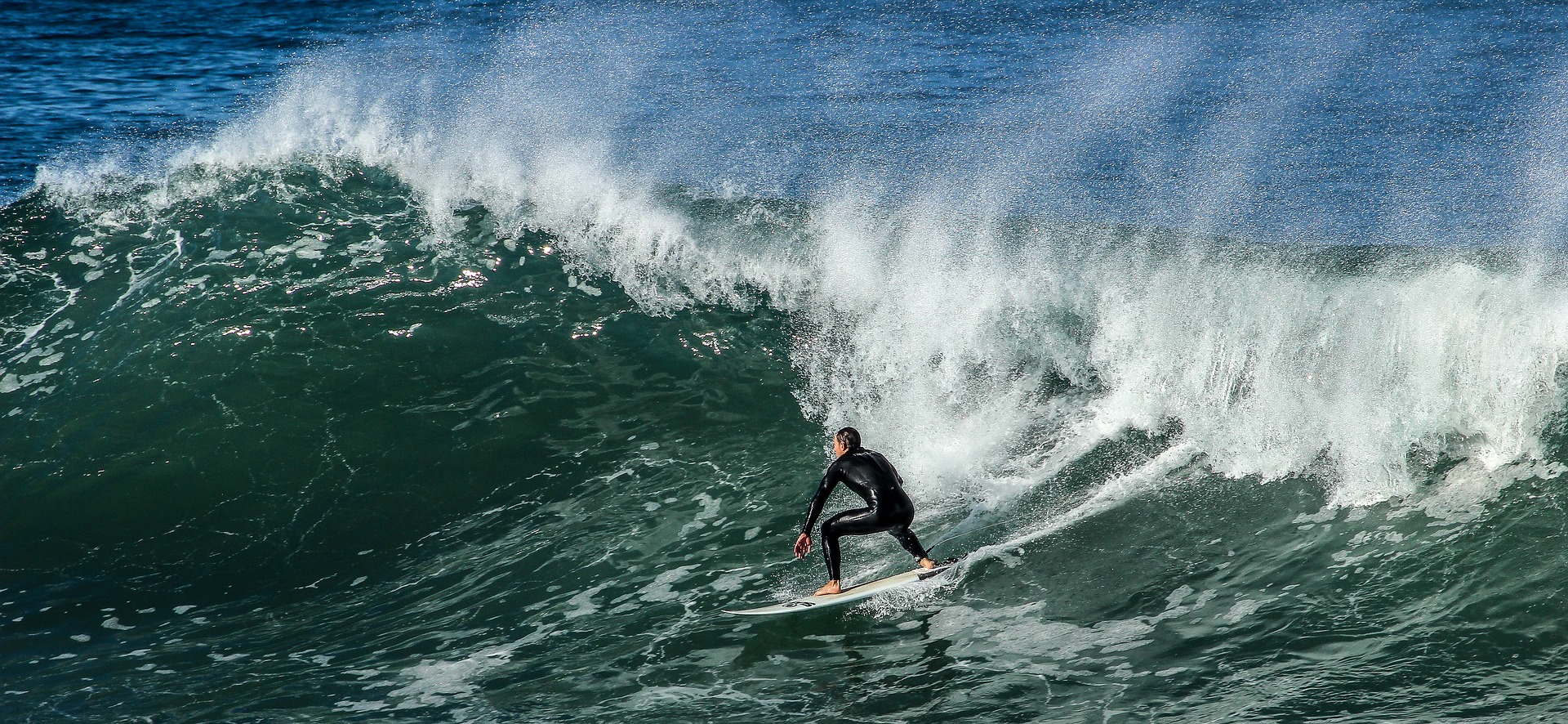
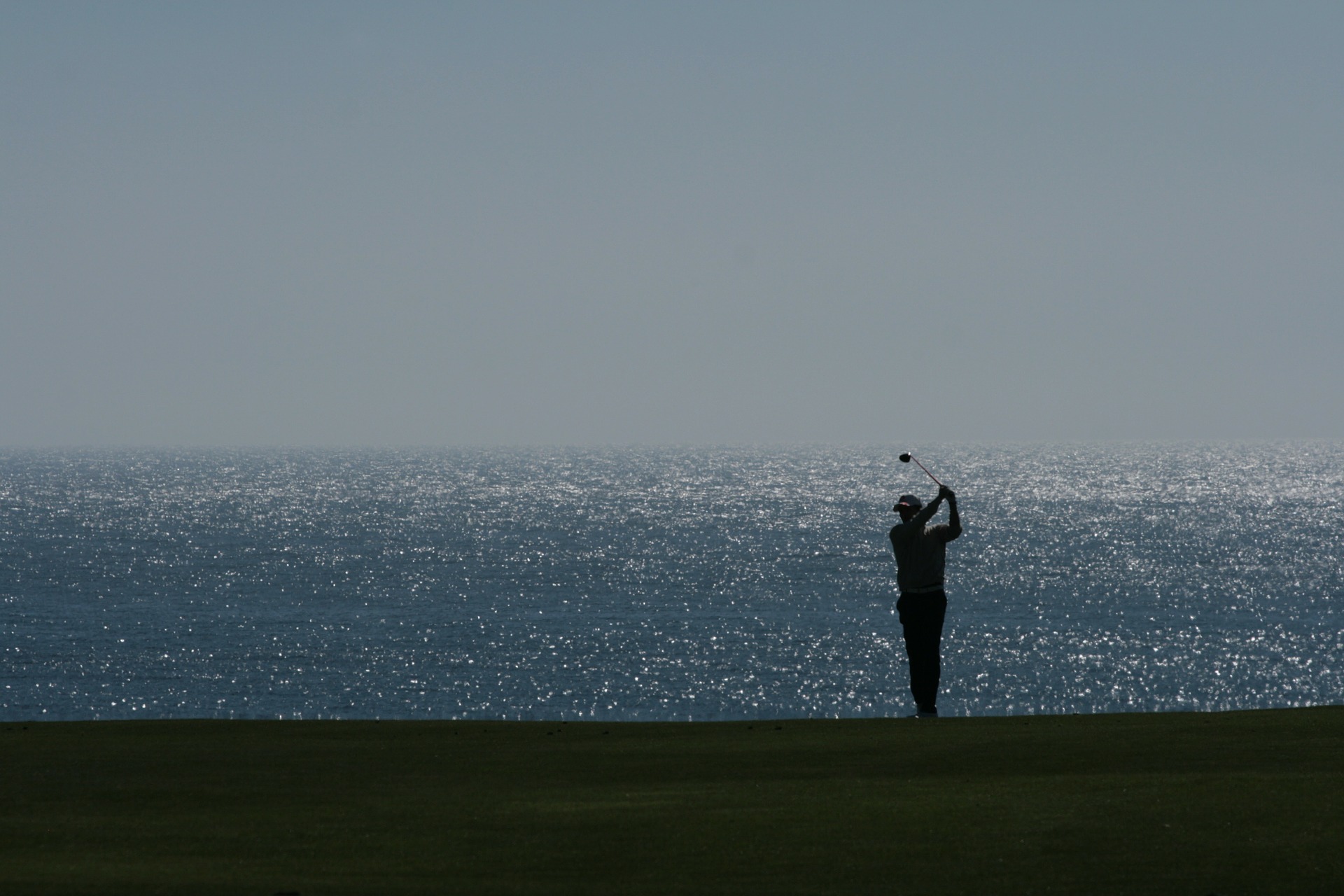
Then there is always surfing, which you can continue enjoying quite as much, as you end up more or less equally wet with rain or without it. And even golf; under the rain is a little less pleasant, but you can still play, and if you choose the links of Praia del Rey or West Cliffs, you can get into an experience very similar to what the inventors of this sport in the British Isles would have had in their time (and which the Ryder Cup contestants have had to face from time to time on the British courses).
And, to close as we started, one of our favorite plans is to go to the La Vie shopping center in Caldas, and see a good movie. Most of the films are in the original version, with subtitles in Portuguese. The restaurants in this shopping center share a food court, which allows everyone to choose what they want, for the whole family to find something to their liking and for the rainy afternoon to finish with very good grades.
We open the forum and welcome more ideas for rainy days.
There are many song lyrics that contain double meanings and associated profound treatises analyzing them. One song especially suitable for these warm summer days would be Cake by the Ocean, a big global hit in 2016 that has already become a summer classic. https://www.youtube.com/watch?v=vWaRiD5ym74
Portugal is probably the country where you can apply the song more completely. In its most literal interpretation, the name fits perfectly with the Portuguese tradition of eating on the beach the bolas de Berlim (Berlin balls), small buns of fried dough filled with custard cream that are offered by vendors during the summer season.
The love for this sweet is so widespread that some bakeries have specialized in it and have made their greatest attraction. Natario, from Viana do Castelo, sells more than 1,000 buns every day. Berlineta started as an itinerant lambretta-food-truck but now has has fixed stores in Caparica, Sesimbra, Carcavelos and in the train stations of Oriente and Santa Apolonia in Lisbon. Their angle is the variety of flavors, both in the dough (some as original as beetroot or carrot), as well as in the creams, with more than twenty flavors of cream to choose from.
On the beaches of the Oeste region, standing out out are those of Paulino Ribeiro, of the Santa Cruz bakery, on the beach of the same name, which have even been appreciated by the President of the Republic. Recently a younger competitor has opened with direct views of the beach, Farturas do Oeste, but it will not be easy for them to surpass Dom Paulino’s quality.
Another very recognizable name is that of Concha, the best bakery in São Martinho de Porto, which sells its bolas de Berlim all year round at José Bento da Silva 41.
Last but not least, the ones sold by Forno de Beco, a specialist in recovering traditional flavors from the small alley of Beco do Forno, in the center of Caldas da Rainha, are also very remarkable.
So, whether in the beach version or in a bakery, traditional or flavored, let’s take advantage of the good weather and long days and enjoy one of the most traditional Portuguese summer sweets.
The binge-watchers will remember The West Wing, a TV show that was very popular for seven seasons between the end of the last century and the beginning of the present. It was a political thriller starring Martin Sheen that offered a new perspective into the inner workings of the White House.
It was during those same years that took place the design and initial development of what is now one of the biggest attractions in Portugal and a real luxury for any golf lover: the four courses in the lagoa de Óbidos area. Praia del Rey, Guardian Bom Sucesso, Royal Obidos and West Cliffs are four excellent courses, all of them already decorated with numerous international awards and a good chance of many more with their rising reputation. It is truly amazing they offer golf players the opportunity to play in four world-class courses within a mere five-minute drive of each other. Paraphrasing the TV show, we could call them “The West Swing”.
Today, with many of you practicing again your swings for the holiday weeks ahead, we are going to present some of the features of these four courses and some ideas and tips for those who do not know them yet.
The first of the courses to open its doors was Praia del Rey, in 1997. Designed by Cabell B. Robinson, it combines holes between pine forests and links along the ocean. The wind can sometimes be the biggest challenge, so those who do not have time to play a full round may have to choose depending on the weather conditions of that day; the back nine have spectacular views of the Atlantic coast but they are also the most challenging if the wind is blowing.
Guardian Bom Sucesso opened in 2008, with the advantage of being located in a stunning design and architecture resort, with houses crafted by some of the best architects in the world. Another curious element in Bom Sucesso is that, being in the universe of the European Tour, it regularly hosts professional events and activities, which allows the amateur player to see how closely, or far away, their cards are from those of the professionals. Here you can see for example the card of the players who played the Q School of the European Tour in October 2018 and 2019.
The course was designed by Donald Steel and although it has some interesting and complicated holes, overall it can be said that it has a level of difficulty somewhat lower than that of the neighboring courses, especially since it is less exposed to the wind. From the tee of the spectacular 17th hole we can enjoy the best views of the entire area.
The third course in chronological order was Royal Óbidos. It was the last course designed by the great Seve Ballesteros and has some holes that confirm Seve’s promise to create a wonderful place for golf here. If we can only do nine holes, it is worth choosing the front nine, which look towards the lagoa de Óbidos area and include the charismatic 3rd hole, a par 3 with an island green where it is necessary to combine the maximum precision in choosing the club and to avoid getting distracted by the beautiful views of the lagoon.
The last of the courses to open, in 2017, was West Cliffs, which started with great momentum after being chosen the “Best new course in the world” by the World Golf Awards. Designed by Cynthia Dye, the granddaughter of the legendary Pete Dye, it is a demanding course but one of great natural beauty among the dunes.
The four courses offer good deals to try a different one every day and they also offer special prices in the off-season and in the late afternoon games.
As if that wasn’t enough to whet the appetite of any keen golfer, it is necessary to mention two other interesting golf options. First, halfway between Óbidos and Lisbon, in the Torres Vedras area, is the Dolce Campo Real, an 18-hole course designed by Martin Ebert whilst he was still on the Donald Steel design team. The course opened in 2005 and has been gradually consolidating since. In 2016, it was chosen the best golf resort in Portugal in the Global Brand Awards. It is a different course, with many more trees, and slopes that can be a good workout for those looking for a good dose of exercise whilst indulging in their favourite pastime of golf.
And, finally, a less orthodox option but one that may also be of interest, would be the nine-hole course in Botado, next to the MH Atlántico hotel, 1 km south of Peniche. It is much less maintained, even a bit wild in some areas, but precisely because of this it benefits from having less players and it can be the ideal option for beginners or families with children that can go into the course without much pressure. And being next to the beaches of Supertubos and Consolação, it has some holes with views of the ocean very comparable to those of its neighbors of greater pedigree. In short, an interesting alternative to complete the golf options in this scenic area.
And you? Have you played in these courses? Do you have special memories of a hole in particular?