Nave Lagoa

How to identify a good Iberian ham

During the pre-holiday weeks there is a classic that always comes back, together with the lists of the best beaches and the best novels: an article on false friends on trips.

Between Portuguese and Spanish there are many more similarities than differences. The linguist Rosana Ortega says in her studies that up to 85% of both languages ​​is similar or easily understandable. But there is always some word or expression that can confuse us. Some do it in a funny way, like the “calças de ganga”, that a Spanish speaker may think is a shoe with a very low price and are actually jeans. Others, somewhat more complex, like when you hear about “um sucesso espantoso”, that in Spanish sounds like a terrible event, and is in fact a surprising success.

Mothers and grandmothers have always asked their children not to play with food. And it is a field in which, in general, there are usually not so many confusions. If anything, at the door of the Portuguese restaurants, where there is sometimes a “PUXE” sign that confuses both the Spaniards and the English, who may understand push when in fact it means the opposite. But once that small entry barrier is crossed, the menus are usually offered in several languages ​​and also the delicacies are usually known in their original language: caviar, champagne or lobster sound similar in many languages ​​and ensure a more than correct survival in a night of conquest. At least until the bill arrives. Or until the waiter asks if everything is fine and the Spanish responds using the adjective exquisito, which in Portuguese is written with an s, esquisito, and is more commonly used when something has a strange taste.

Actually, the only big problem with the food could happen with the Iberian ham. In that area, involuntarily, the Portuguese may have hit the nail on its head by using the word presunto, a derivative of the participle of the Latin verb siccare (to dry). To Spaniards the term always generates certain doubts and smiles when they see it across the border because presunto in Spanish is the adjective that is used for those arrested criminals who have not been convicted yet.

But, if we think about it, it is the Spaniards themselves who may have fueled this possible mistrust, having traditionally very badly resolved the identification between a good ham and a presumed one. For years, the use of the “Iberian” denomination has been too wide, and sometimes the trial and error was essential to know if we were dealing with a good ham, the Iberian purebred that has grown in the pastures and has been fed mainly with acorn. Since 2014, better official regulations and a code of exclusive colors and terms have been introduced to avoid confusion. Thus, a black seal is used to distinguish hams of 100% Iberian race fed with acorns in the field. The name pata negra is also reserved for these hams. With red seal is identified the pig hams fed in the field with acorn but of mixed race. With green seal, animals fed with feed and acorn. And with white seal, animals fed exclusively with feed.

There will always be those who try to skirt the rules and take advantage of the gray areas but the taste and texture of a good ham is unmistakable and the price is always parallel to its quality, so the best advice in this case is to forget the bargains, the gangas in Spanish, that can end up leaving us a strange taste, esquisito in Portuguese.

We open the forum on this subject using a traditional Spanish proverb: have you ever been given a cat instead of a hare (gato por liebre)? Something that seemed to be a bargain has turned out to be something very different?

I will leave a light on

Lighthouse keeping has always been a challenging profession, suitable only for the more seasoned, for those capable of living in isolated places and under very harsh weather conditions. Nowadays, as the operation of the lighthouses has become more automatic, they have stopped needing personnel living permanently in them and new technologies have also made them less essential in navigation and have lost some prominence.

But they still keep intact their romantic and adventurous aura. That is why the initiative of the Portuguese government to open most of them for visits is highly appreciated. In the Oeste region we currently have only two lighthouses in operation, both very close to each other, one in Cape Carvoeiro in Peniche and the other just in front, in the Berlengas Islands.

But within a short distance to the north we also have those of Aveiro, Mondego (Figueira de Foz) and Penedo da Saudade (Marinha Grande). All of them can be visited every Tuesday, from 2pm to 5pm in summer and from 1.30pm to 4.30pm in winter. Before departing, it is convenient to check the website of the National Maritime Authority to verify that they are not closed for operational reasons or for any works.

And for those who prefer surfing the internet there is also the possibility of a virtual tour of the Bugio lighthouse, located in the middle of the mouth of the Tagus, near Lisbon.

So for those of us who sometimes need a light to guide us and an inspiring and different view of the sea, this could be an excellent plan for Tuesday afternoon. And if we go with children, surely we can imagine with them a great adventure of pirates and smugglers in that evocative environment. Obviously, in the playlist in the car, on our way to the lighthouse, we must not miss I will leave a light on, by Tom Walker.

Day trip to Alenquer

Alenquer is a small jewel of the Oeste region, offering various interesting activities to fill a day trip.

Wine has particular importance in the economic and cultural life of the municipality of Alenquer. Therefore, we would propose to spend half a day visiting the city and half a day at one of the wineries in the area.

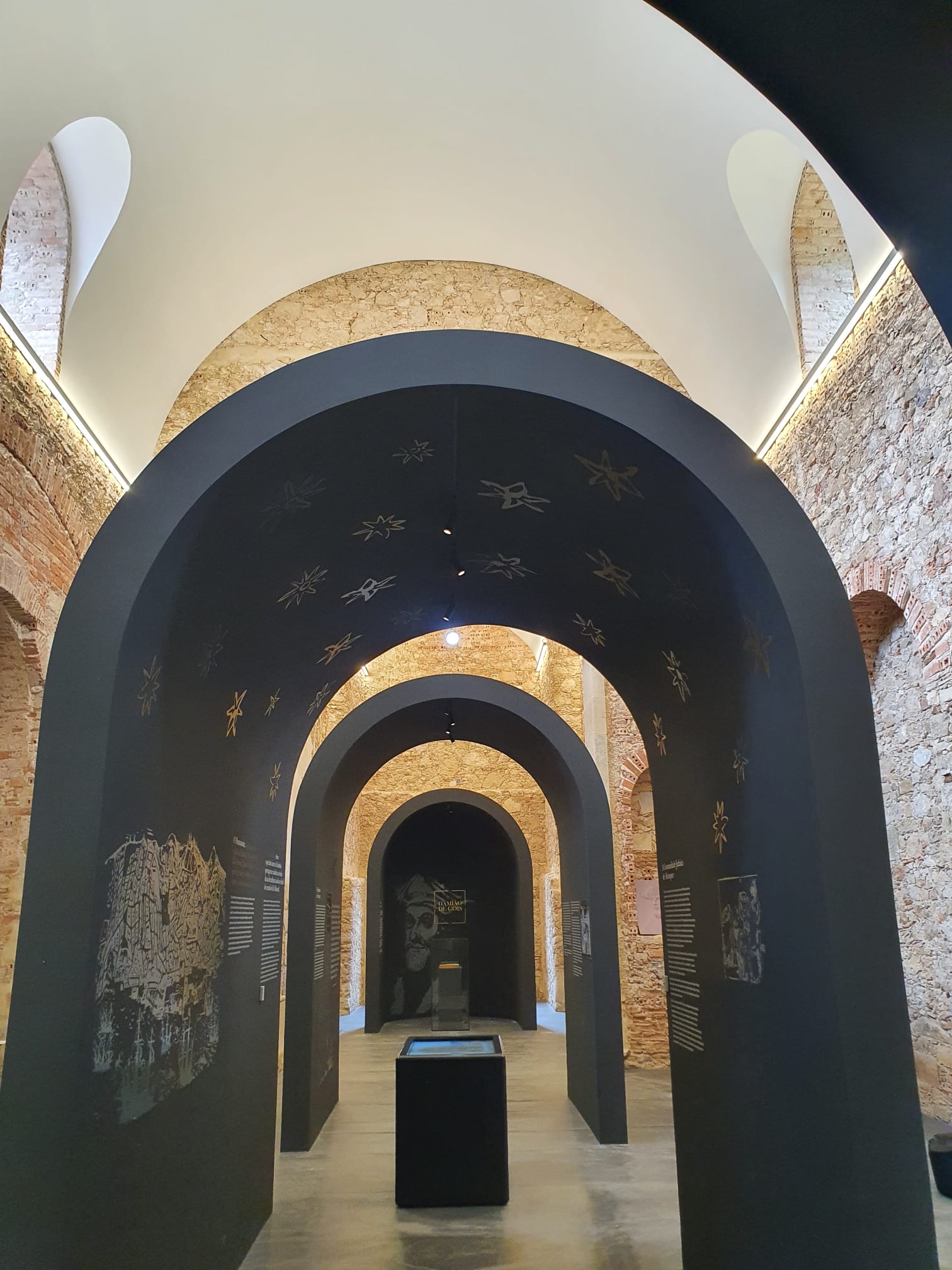
We begin with a walk through the upper part of the city, going through the picturesque alleys of the Jewish quarter and the remains of the 13th century castle. In this area there is also a fascinating museum dedicated to Damião de Gois and the victims of the Inquisition, located on the ruins of the church where he was baptized and buried. Damião de Gois was a key figure in the modernization of Portuguese medieval culture. The museum includes several documents and interactive installations to learn about his life and work and appreciate his importance as a humanist, artist and royal advisor. If there are not many people on the day of the visit, it is worth staying for a chat with the museum’s curator. This historian did his doctoral thesis on Damião himself, and can offer unique details about his life and times, quite an example of the cultural richness offered by the coexistence of Christian, Jewish and Mozarabic cultures; something that even today, in the 21st century, is so hard to find again.

Less than 100 meters from the Damião museum is also the Wine Museum. There is a representation of the more than forty wineries that are in the Alenquer area, a wine bar for tastings, and a cultural space with explanations and instruments to discover everything that surrounds wine production. If you had not booked a visit to one of the wineries, the museum itself can help organize an afternoon visit to one of them.

At lunchtime, one of the most recommended places is the Casta 85 restaurant, with its pleasant terrace overlooking the Alenquer river.

Among the wineries to visit, Quinta do Carneiro and Quinta do Monte D’Oiro stand out, with a good combination of tradition, reputation, and friendliness.

And for more information about Alenquer, you can check the viveralenquer.pt website, although our recommendation is to take advantage of the fact that the city is not very big, get lost in its alleys and discover for yourself the many secret corners of this little gem.

Kefir or dessert

In many Portuguese restaurants, when they offer a daily menu, they usually give the option of finishing with coffee or dessert. It is often difficult to choose because both coffees and desserts here are usually of very good quality.

The decision is sometimes conditioned by the amount of food previously eaten, which means that you cannot squeeze anything else in, and you end up opting for a coffee. Sometimes you may also be trying, usually unsuccessfully, to control the number of calories. It is true that some of the most common and more delicious desserts in Portuguese cuisine, such as serradura (based on whipped cream and biscuits), baba de camelo (with condensed milk), or bolo de bolacha (with biscuits as the main ingredient), tend to be more calorific as they often include substantial amount of refined sugar.

That is why lately some new options are starting to get more attention. An interesting choice, already present in some supermarkets but still not in many restaurants, are desserts based on kefir, a natural probiotic with many positive effects on the organism. The most known benefit is that it helps regulate the intestinal flora, improving the digestion and the regularity of the transit. Along with it or, perhaps, for that reason, by releasing the immune system of tasks related to intestinal activity, it usually improves resistance to colds and minor infections.

Kefir can be eaten natural, like yogurt. But precisely because it is similar to yogurt, but more complete, it fits very well for various desserts that are both tasty and healthier. For example, if you beat it with honey and the juice of a lemon, you can have a creamy and delicious dessert. Mixed with banana, berries, and granola, you get a complete and very healthy breakfast, similar to the popular açaí bowls with yogurt served in some of the trendiest NY shops. The frozen yogurt stores MyIced, which opened in Leiria in 2012 and continue their expansion throughout Portugal, are an excellent example of constant innovation to offer new products that are delicious but also healthier and sugar-free.

And you? Have you tried new desserts in Portugal that you can highly recommend?

Local warming

While we wait patiently for the politicians to find solutions for global warming, we should address another considerably smaller and local problem, but one no less important and which also generates many doubts and frequent family discussions: how to build a good fire to warm our homes during the winter days. Few things are as lovely as a cozy evening next to a good fire. And in the Oeste region of Portugal, many houses have a fireplace. The problem is that not everyone is familiar with the characteristics of the different types of wood or how to light the fire effectively. When doubts appear, we have fertile ground for heated arguments which defeat the nice ambience the fire will give.

So we will try to clarify some basic questions about this subject. The first commandment is that you will love the dry wood with all your heart. The key is not the type of wood or the size of the log; the key is that it is cut and dried for a year or that, at least, has spent a summer in the sun.

Second, we must place the elements to allow a good circulation of air since oxygen is essential to good combustion. So, if we are dealing with a heating unit with a door, it is critical that in the ignition phase, we open to the maximum the air inlet that is usually found in its lower part.

One of the most popular configurations to start the fire is to make a small pyramid in which we will place in the center a firestarter pill, around it a few crumpled papers, on them several small pieces of wood, barely one or two centimeters thick and between 10 and 20 centimeters long, or several dried pinecones, and on the upper section some larger branches. Once the fire is going strong, we can then start putting in the larger logs, which will give us a couple of hours of good heat.

As for the type of firewood that we must choose, in Portugal the most common are eucalyptus, olive, holm oak and cork oak. The holm oak and cork oak are the hardest, which will take longer to start but, in exchange, offer greater heat capacity and longer burn time. Therefore, a good strategy may be to start the fire first with a smaller log of olive tree; olive wood usually has more oily resin and burns more efficiently. Then we can continue with a medium-size log of eucalyptus, and when we have already a well-consolidated fire, we can place some thick logs of holm oak or cork oak. With this formula, we will have success and family peace guaranteed.

If what we are preparing is an outdoor barbecue, olive or orange tree logs are the most advisable to make paellas or to use with casseroles, as they give a good and lively flame, while the oak embers are the ones that give the best flavor for meat and fish. The eucalyptus wood has a special aroma, quite pleasant for indoor fireplaces but less advisable for cooking since it also releases sparks frequently.

Regarding shopping, the first advice is to try to go to a specialized firewood provider. They have adequate spaces to dry and keep firewood and they can advise us accurately depending on our objectives. In all the towns and cities there is usually some provider of this type but sometimes they are small shops, without presence on the internet, and to locate them it is necessary to ask the local people.

If we try to buy on a bank holiday or at a late hour and so it is impossible to go to one of these local specialists, we can always resort to the supermarket options. But given that there we will have much less certainty about how young or dry the logs are, it is better to go for the briquette type options that are now widely available.

The briquettes are compacted cylinders of sawdust and wood, of similar size or something smaller than the traditional burning logs. Their biggest advantage is that they are very dry and burn well. In return, they are more expensive and do not last as long as normal logs.

And the last option, if we have no other choice, would be the logs sold at supermarkets and gas stations, which usually come in bundles or bags. They are the ones that will normally have less time cut and a higher degree of humidity. Arriving at a house that has been closed for some time, with a cold flue, and to try to start a fire with this type of logs can generate great frustration, to the point of believing that what we have been sold are logs with a layer of flame-retardant coating. In those cases you have to be very patient and try to put special effort in the first phase; using more papers, more dried pinecones and smaller branches, which help build a good amount of heat before placing these “fireproof” logs. And if you still do not get the intended result, we can always resort to the alcohol trick, which basically consists of having a few shots that will warm us inside, will make us happy on the outside and, most likely, will allow us to forget about wanting a fire in the first place.

Shopping Day Out in the Oeste Region

Many cities and towns in the Oeste region of Portugal regularly host street markets, with excellent stands offering a wide range of food, clothing, flowers or antiques. During December, the variety usually increases with craft markets and festive activities. You can check out this link for information on 41 Christmas markets in the Centro region.

It is also common to find the most central streets of the cities to be pedestrian-only, or to have very restricted traffic, favoring a quieter walk, and concentrating in them the most popular shops of the local commerce.

In Portugal, we also often see many shopping centers, with a good combination of clothing, leisure, restaurants, and other services. In this type of setting, the client usually loses a bit of authenticity in exchange for comfort, free parking and a more comprehensive range of items offered. The two most popular in the Oeste region are the Arena Shopping of Torres Vedras and La Vie Shopping in Caldas de Rainha.

And for those who do not mind doing more kilometers or who want to spend part of a day in Lisbon doing some shopping, there are several excellent shopping centers in the capital. For its great value for money, we like the Freeport Lisboa Fashion Outlet, in Alcochete, on the south side of the Vasco de Gama bridge, which gathers the best fashion brands at very reasonable prices. Their concept is an open-air shopping center, so it is probably not the best option if the day is rainy, cold, or very windy. The alternative may be the Strada Outlet, near Odivelas, by the CRIL ring road. And other interesting options are the huge Centro Colombo, in Benfica, in front of the Estadio da Luz, the Vasco de Gama, next to the river, and the ones in the Loures area, where you have the largest Ikea in the Iberian Peninsula, a Decathlon and the Loures Shopping. The latter has the peculiarity that includes among its many services the presence of Trofa Saúde Hospital; they have probably thought that with all the great shopping on offer, clients will push themselves too far and it may be practical that assistance is close.

Probably the best advice would be to do as they say in some ads, consume but with responsibility and moderation.

In November, Lourinhã

The small village of Lourinhã is known worldwide for several reasons. It was where the first remains of dinosaurs from the Iberian Peninsula were found in 1863. More importantly, a unique specimen was discovered in 1949, which ended up being called Lourinhasaurio and which has been the object of a detailed scientific study.

This intense relationship between the village of Lourinhã and the world of dinosaurs led to the opening in 2018 of one of the largest open-air parks in the world dedicated to these animals, the Dino Parque. Throughout 10 hectares of verdant forest, there are full-size reproductions of well known dinosaurs; allowing visitors an intimate knowledge of the natural environment of how these animals were. The park also includes educational and playground areas, where children can work on stones and find small fossils.

The park is open all year round, but November is an excellent option because it allows a quieter visit, with fewer visitors than on holiday weeks. The trees in the area are also in the full splendor of autumn, with a spectacular color palette. And you can also time the visit to coincide with the Quinzena Gastronómica Aguardente DOC Lourinhã, which is now in its tenth edition and takes place in most restaurants in the city.

For those who do not know the aguardente of Lourinhã, it is a great opportunity to try it, first in its liquid format, which is highly appreciated because in Europe there are only three DOC brandies: Cognac, Armagnac and Lourinhã. At the same time, you can also sample it in the many recipes of both sweet and savory dishes that use it during these gastronomic days and bring out some exceptional and surprising flavors.

An exciting option for a whole day trip could be visiting the Dino Parque in the morning, having lunch at one of the restaurants in the city, and going for a leisurely walk in the afternoon. It could take you to the beach of Porto das Barcas, a virgin beach in a small bay, with calmer and clearer waters than other more open beaches in the area.

A small paradise to burn off the calories from lunch, watch the sunset from the beach and complete a perfect day outdoors for children and adults.

The best beaches in the Oeste region

It is challenging to recommend beaches because not everyone likes the same things. Therefore, when someone asks us for advice on choosing a beach destination in the Oeste region, we always ask them first about their goals before answering. For those looking for surfing and fun, we usually suggest Baleal, Peniche, or Santa Cruz. For those who prefer family beaches and calm waters, we point them towards São Martinho or Nazaré. For those who want to have it all, towards the resorts around the lagoa de Óbidos. And for those who like bathing in warmer waters… towards a good spa.

And, for that very reason, we believe that it is best if our list of beaches does not have a ranking, as, for some, the top 1 may be a beach that, for others, is one of the least desirable. The ones that follow appear, as the cast in Woody Allen’s films, in alphabetical order:

– Baleal. The small peninsula of Baleal and its two beaches is a popular with the international crowd, especially with surfers from all over the world. It is also a recommended option for beginners, since it always has different difficulty levels spread across the various sections of the peninsula. The accommodation on offer between Baleal and Peniche is extensive, especially in apartments and youth hostels. For those looking for a good higher- end option, the MH Peniche is a very good hotel and has an excellent location, being close to both the beaches and the restaurant district.

Bom Sucesso. The Bom Sucesso beach, on the southern side of the lagoa de Óbidos, has a wide sandy area, and calm, transparent waters, perfect for children’s games. Furthermore, it has the bonus of walking between the dunes to the open sea and enjoying the waves. There are several resorts in the area that offer an excellent level of accommodation. Our personal experience and opinion, suggest none offers such a complete experience as the Bom Sucesso Resort, with its distinctive design element but still complete with the main amenities of the other resorts.

Física. Surfing destination, bustling and fun, with all the services and entertainment of the touristic town of Santa Cruz. The Noah Surf House has different accommodation options and has developed the boho-eco-chic concept like no other.

Nazaré. Praia Norte is a must during the winter, to watch the pros taming the largest waves in the world. In the summer, the Nazaré main beach is a top-rated family destination, with all the services and entertainment one would expect. For those who prefer a somewhat quieter accommodation, away from the city center, the Vale d’Azenha hotel, with its modern architecture and characteristic style, may be a good option.

– Porto das Barcas. It is a beautiful beach, usually quiter, in an area still under development. Accommodations are cosy and family-friendly, highlighting the Silver Coast Vacation Inn.

Porto Novo. This beach is in an area with very low density, near the small towns of Vimeiro and Maceira, but the Well Hotel & Spa, right by the beach, has sufficient attractions and services to enjoy a complete stay.

Supertubos. Its perfect waves host the Surf World League in October and make this beach an absolute mecca for European surfers. It has a wide range of accommodation and good surf schools. For those who may prefer to stay this time in a hotel rather than in a Volkswagen minivan, the MH Atlántico is an excellent option.

It is impossible to condense 100 km of beaches in a few lines, but we hope we have helped you with this small selection, which you can expand by sharing your preferences in the comments. Come on, dive in…

How to travel to the Oeste region and how to pay e-tolls

In 1973 the Spanish railway company Renfe made a tv advert in which a father went on a work trip, and while saying goodbye to his sleeping children, they thought, “Dad come by train.” It was a way of transmitting the safety offered by the trains of that time compared to other means of transport.

Unfortunately, in the Oeste region of Portugal, we have railway infrastructure now that is still quite similar to that shown in the old advert. The poor condition does not offer much certainty or reasonable travel times and is the fallback option for most travelers. A much needed update of the infrastructure has been announced in 2021, to be ready in 2023, but it will retain travel times longer than by bus and is regarded with pessimism. We call upon the authorities at every level to act more boldly and expedite the enhancement of the current rudimentary infrastructure.

Therefore, it is not surprising that the most common option for those who come from Spain and Northern Europe is almost always the car, as there are good highways from most Spanish cities. The A8, which runs from North to South throughout the Oeste region, also offers reasonable prices and low traffic density. As it is a traditional highway, you pick up a ticket at specific entrance points and only pay at the toll booths located by the highway exits by credit card or cash. On the other hand, some highways, such as the A23, that cross the country diagonally from Guarda in the North to Torres Novas in the Center, require some extra knowledge, as they can only be paid electronically. The easiest way to pay is to register online the vehicle and a credit card on this official website and the card will be automatically charged as you pass under electronic gates at various points on the highway. It is also possible to buy pre-paid cards at highway service areas or CTT shops, or you can buy the pre-paid cards online. Finally, there are also machines to register the vehicle and the card, but only at the beginning of the four main highways (Vilar Formoso A23, Viana do Castelo A28, Vilareal de Santo Antonio A22, and Chaves A24).

For those who come from other countries, the plane also offers reasonable solutions. Both Lisbon airport, just over 45 minutes from most points in the region, and Porto in less than two hours offer many regular and low-cost flights to medium and long-range destinations. In high season, the queues at the rent-a-car desks of the airports are usually a nightmare and many people look for other options or alternative points to rent the vehicle but that story probably deserves its own post.

The more adventurous could think of solutions by helicopter, by small planes or by gyroplane, as the authors of this beautiful vídeo around the lagoa and the village of Óbidos did. For these, the offer is not very extensive. Still, it covers most of the region, with asphalt tracks in Torres Vedras, Fatima and Santarem and dirt tracks in Atouguia da Baleia, Óbidos and Lourinhã.

So, who knows, perhaps the best solution is to come by catamaran, à la Greta style, as there are plenty of docks, small bays and kilometers of pristine beaches for easy access.

Happy Earth Day!

O Dia da Terra é um evento anual em 22 de abril para demonstrar apoio à proteção ambiental.Earth Day is an annual event on April 22 to demonstrate support for environmental protection.

It was first held in 1970, when more than 20 million people went out on the streets of the U.S. to show their union behind this crucial cause.

Each year a theme or group of themes is selected to focus especially on them. This year one of the themes is Food and Environment, something we can all easily improve in our daily routines.

In Nave Lagoa we are fully committed with the environment and we try whenever is possible to work with local suppliers and natural ingredients, to achieve a gastronomic experience that is both delicious and sustainable. It is true that in the Oeste region of Portugal we are very fortunate, and we have a local gastronomy that is especially healthy, rich, and varied. But if we all make a small effort, within our own possibilities, the Earth will surely appreciate it and we will all end up benefiting from it.

Happy Earth Day!