Nave Lagoa

Olive oil, liquid gold

Some call it liquid gold. Many think it is the most important ingredient of the Mediterranean diet. Due to its high content of monounsaturated acids, it is unanimously considered an essential food in the healthy diet, a natural antioxidant. But when we arrive at the store, do we know how to distinguish good olive oils from others? Why are there such big differences in the price? Are there good options in the Oeste region for those who want to consume local products?

We will try to cover these questions in the following discussion, deliberately basic in some points, to help also our international friends to approach a product that outside the Mediterranean countries is still a relatively unfamiliar product. If we look at the consumption statistics per person, Greece, Spain, Italy, Portugal and Cyprus are at the top, with levels between 12 and 5 liters per person per year. But in France it does not reach two liters and in Germany or the United Kingdom it does not reach a liter. Outside of Europe, consumption is growing notably in Australia and the United States but still with modest amounts. The consumption in China is also growing, although obviously the figures per person are not significant given the size of the population; but it is easy to see the increasing importance that olive oil is achieving there if we see that in recent years the hectares planted with olive trees add the equivalent product as that of the province of Jaén (the main olive oil producer province in Spain), the vast majority of these new trees in the valley of the Bailong River, with a climate similar to the Mediterranean, and a name very appropriate to approach our culture (bailón means dance enthusiast in Spanish).

For those who come to the store and do not know anything about olive oil, the first thing to keep in mind is that the highest quality is the extra virgin olive oil, pure olive juice, with excellent flavor and the best nutritional properties. It is used a lot in salads or dishes that lend themselves to appreciating more that flavor. Perhaps the best way to try and get to know it is simply with bread and some salt, which is a very common breakfast in many homes in the Iberian Peninsula.

The next level of quality is the virgin olive oil and finally the refined, which is used more for stir-fries, as it withstands better the high temperatures and has a lower price.

As with grapes, with olives there are also different varieties, with different flavors. And also protected designations of origin, which must use the varieties of that particular area. There are many different flavors of olive oil and it is just a matter of trying and discovering the ones that suit more our tastes. The color is not very relevant in relation to the taste; normally it is greener if less mature olives are used and more yellow with more mature olives, but in both cases the flavor depends more on the variety of olives than on the color of the oil.

One point that is important to mention and that is different from wine is that the olive oil deteriorates over time and, especially, with light. Therefore, it is convenient to buy and consume the olive oil as close as possible to its commercialization date and keep the bottle stored out of the light. It is for this reason that the best brands tend to use dark glass bottles or wrap the bottle with an opaque plastic.

The Oeste region does not have large olive groves but in the neighboring region of Ribatejo it is a very important product and since medieval times there is evidence of Santarem as a major center of production of quality olive oil. Hence, among the six protected designations of origin in Portugal, one is precisely “Azeites de Ribatejo DOP”.

For those who want to try some of the olive oils that are produced in the area, you can start by three brands that have received several international awards and represent very well the excellence within the local producers.

The first recommendation is Cabeço das Nogueiras, from the young company SAOV, created in 2004 but which has already received several awards with its successful combination of technological innovation and traditional flavor. The second would be Casa Anadia, from a company with great olive oil tradition since the seventeenth century that makes a firm commitment to quality rather than quantity. And the third is Colheita das Lezírias, one of the premium options of the house Gallo, which is one of the most important olive oil companies in Portugal and has its headquarters in the city of Abrantes, next to the river Tajo.

The first one can be found for about 9 euros a bottle of 500 cc, exclusively in specialized olive oil stores and gourmet stores. The second one can be found in Continente, for about 7 euros a bottle of 500 cc. And the third one is the most mainstream and can be bought for about 6 euros a bottle of 750 cc.  

But, returning to the similarities with wine, there are excellent extra virgin oils for very affordable prices, from 5-6 euros per liter, and our recommendation is that each person tries different options and varieties and finds the ones that best suit their tastes. There is a world of flavors to discover.

And you? Do you have any olive oil that you especially like? Any recommendations for our community?

Trick or… healthy treat? Tips for a healthier Halloween

Increasingly so, the global influence of American movies and TV series has made widespread in Europe the tradition of children going in groups through nearby homes on the night of October 31 asking for sweets. Since many parents would prefer that their children reduce their sugar intake, today we ask if it is really essential that they receive candy. Let’s open the debate to think together if there is any way to improve the situation a bit.

If we go back in history, we see that the idea derives from European medieval traditions, in which food was asked on All Saints’ Day. In Portugal, it spread especially after November 1, 1756, on the first anniversary of the terrible earthquake that struck Lisbon and left many people in difficult circumstances. The people asked for the so-called pão-por-Deus (bread for God’s sake) and positive verses were recited to those who acquiesced:

Esta casa cheira a broa,                                This house smells like sweet bread,

Aqui mora gente boa.                                    Good people live here.

Esta casa cheira a vinho,                              This house smells like wine,

Aqui mora algum santinho.                            A little saint lives here.

And also negative verses for those who refused:

Esta casa cheira a alho,                                This house smells like garlic,

Aqui mora um espantalho.                             A scarecrow lives here.

Esta casa cheira a unto,                                This house smells like pig’s fat,

Aqui mora algum defunto.                             Corpses are living here.

Little by little the tradition was lost, except in the areas of Fatima and Famalicão, where it is still present, although holding with difficulties against the progress of the American Halloween and their sweets.

In several areas of Spain near Portugal there are also similar traditions on All Saints Day. In Zamora, Salamanca, Cáceres and Badajoz, where the tradition is usually called carbote or calbote, chestnuts are roasted in the fields, and children do the chaquetía and go by the houses receiving chestnuts and fruits.

So we see that at least there is a historical basis to explain convincingly to the children the possible improvements in this matter. The key would rest then in good products and marketing. For example, if we roast the chestnuts and have them hot by the time the children arrive, we can “sell” them the advantage of keeping their hands warm for the rest of the night, which is usually already cold at that time. Or we can cook a homemade cake and offer them a piece with some hot cocoa. In fact, in medieval England the tradition was to give them soul cake, which many point to as the most direct origin of the American tradition.

Another good alternative could be preparing small fruit smoothies. Smoothies tend to be well received by children and both the parents and them might welcome the injection of vitamins and energy to continue the night journey.

And finally, there are those who suggest pieces of fruit cut with a triangular shape and a stick below to grab them, which is another fun way to eat something healthy.  

These are just a few ideas. Surely this dynamic community can offer more suggestions to those parents looking for healthier options…

Study and surf?? In Portugal, yes, we can!

A couple of semesters ago, a new university campus opened in the city of Carcavelos, on the coast between Lisbon and Cascais, offering several studies on business administration. They call it the Nova Way of Life. Its main difference to traditional universities is that the campus, or center as they like to refer it, seeks to merge economic studies with beach culture and new technologies, in the style of some Californian centers.

With the collaboration of leading companies such as Microsoft, Cisco and Axians, the idea is to get a very open center, with Wi-Fi throughout the space and even at the adjoining beach, to make it easier for students to make the most of new technologies at all times. For example, there is an ultra-modern Pingo Doce supermarket where students can buy items 24/7 and there are no cashiers, with users instead paying only by electronic means.

We will still have to wait a while to see how this new concept works but the Portuguese environment is certainly welcoming for the set-up of tech and innovative ventures, as the constant announcement of new openings is showing (Amazon, Google, Mercedes Benz and many more, as described in this article). But whatever the result of the new Carcavelos center, it is an interesting example for other Portuguese universities, which could take advantage of the proximity to the sea and the obvious connection between youth and surfing, to internationalize the offer and attract many more European and global students.

In Peniche, very close to the Cape Carvoeiro lighthouse, is located the Campus 4 of the Polytechnic University of Leiria, with an educational offer focused on marine biotechnology, food and bio-engineering and studies related to gastronomy and tourism management. It is not difficult to imagine that some of these classes or after-school activities could well take place on the beaches of Supertubos or Baleal, just 10 minutes from the campus. A relaxed environment and proximity to the sea provide countless advantages for physical well-being and intellectual stimulation.

The same could also apply to the campuses of Marinha Grande and Caldas da Rainha, which also have great bike lanes to reach the sea, making it easy for students who want to move around the area by bicycle. E-bikes are becoming a revolution in mobility and are the preferred mode of transportation for students, who value above all their sustainability, flexibility and low costs. Bearing in mind that European higher education students increasingly seek to complete their studies with some international experience, the Universities in Portugal should try to offer distinctive elements that make them stand out, be different and attractive, because it is proven that greater international diversity in classrooms is a factor that enriches and increases the quality and prestige of the center. Can there be something more attractive for young people from northern Europe, tired of cold days with little sunlight, than to study in shorts on the sunny and pristine sandy beaches of Portugal?

The rain in Spain stays mainly in the plain; tips for rainy days in Portugal

My Fair Lady was a musical film released in the 60s, directed by George Cukor, with Audrey Hepburn and Rex Harrison in the leading roles. It received good reviews and numerous awards, including the Oscar for best film.

Although in Spain the exhibition of films in its original version is gradually increasing, it was previously only possible to see the films in a dubbed version. In the case of musical films, such as My Fair Lady, the lyrics of the songs were also translated, which was sometimes a real challenge to get them to fit the original music. In order to maintain the metric or the rhythm, the translators needed to make small changes to the original lyrics. In the case of one of the songs of My Fair Lady, which in English was called “The rain in Spain”, the change was radical and became “La lluvia en Sevilla es una pura maravilla” (the rain in Seville is a pure marvel). The reason in this case was to fit the circumstances of the scene where the song was featured.

This scene was where the character of Eliza Doolittle had difficulties with the correct pronunciation of the letters “ai”, which in English sometimes adopts the sound [ei] and so the teacher uses the phrase “the rain in Spain stays mainly in the plain” as a speech exercise to help Eliza improve her pronunciation. The problem is that in Spanish in the phrase “the rain in Spain stays mainly in the plain” did not rhyme well and there was not much challenge as a speech exercise since those words are pronounced as they are written. Hence, and it did not have much logical argument to keep to the original lyrics. The writers therefore chose to refocus the sentence on the pronunciation of the double “l”, which not everyone pronounces in the same way.

It must be said that the problem with the phrase and the song was not only in the Spanish version. In the German version, the song changed to “Es grünt so grün wenn Spaniens Blüten blühen“, which means “The greenness is so green when the flowers bloom in Spain”. In Italian it was “La rana in Spagna gracida in campagna“, that would be “The frog in Spain croaks in the field”. However, none of these versions has been as successful as the Spanish one, where the phrase penetrated deep into popular culture and even today, more than 60 years after the premiere of the film, it is still common to hear it when a rainy day arrives in Seville.

Well, paraphrasing this anecdote it could be said that “The rain in Portugal, can also be practical.” To begin with, because it is that rain that keeps the green landscapes so lush which is a characteristic attraction of the Portuguese geography. This is also what allows Portugal to be one of the leading countries in renewable energy, thanks to abundant hydroelectric power. On a more personal level, because it allows you to stay at home, light the fireplace and enjoy a quiet afternoon filled with the fragrance of a rainy day. Or even embark on a journey of discovering some places and activities less known by tourists which can guarantee a great afternoon of family fun.

We can start with one of the newest, the Quantum Park, in Lisbon, which offers one of Europe’s largest indoor surfaces of trampolines, climbing areas, skate ramps, and basketball courts.

Another classic for rainy days is the Oceanário de Lisboa, which in 2018 was chosen as the best aquarium in the world by Tripadvisor, and always offers plenty of quality and interesting activities for the whole family.

For those who are in the Oeste region and do not want to make it all the way to Lisbon, there are also closer plans which are equally enjoyable. The Bowling Caldas, next to the municipal sports area, offers bowling, games, karaoke and, sometimes, even live music. And in that same line, another interesting plan is the Indoor Karting Caldas da Rainha, which has a small but fun kart track, and an area with snooker and karaoke.

A different kind of excursion is to visit the grutas Mira de Aire, which are located a few kilometers from Fatima and constitute the largest group of caves in Portugal. At the time when its commercial exploitation began in the 70s, there was less sensitivity for the preservation of nature, and some people may think that the caves have too much human intervention. But the experience is still very interesting and the children love the adventurous element.

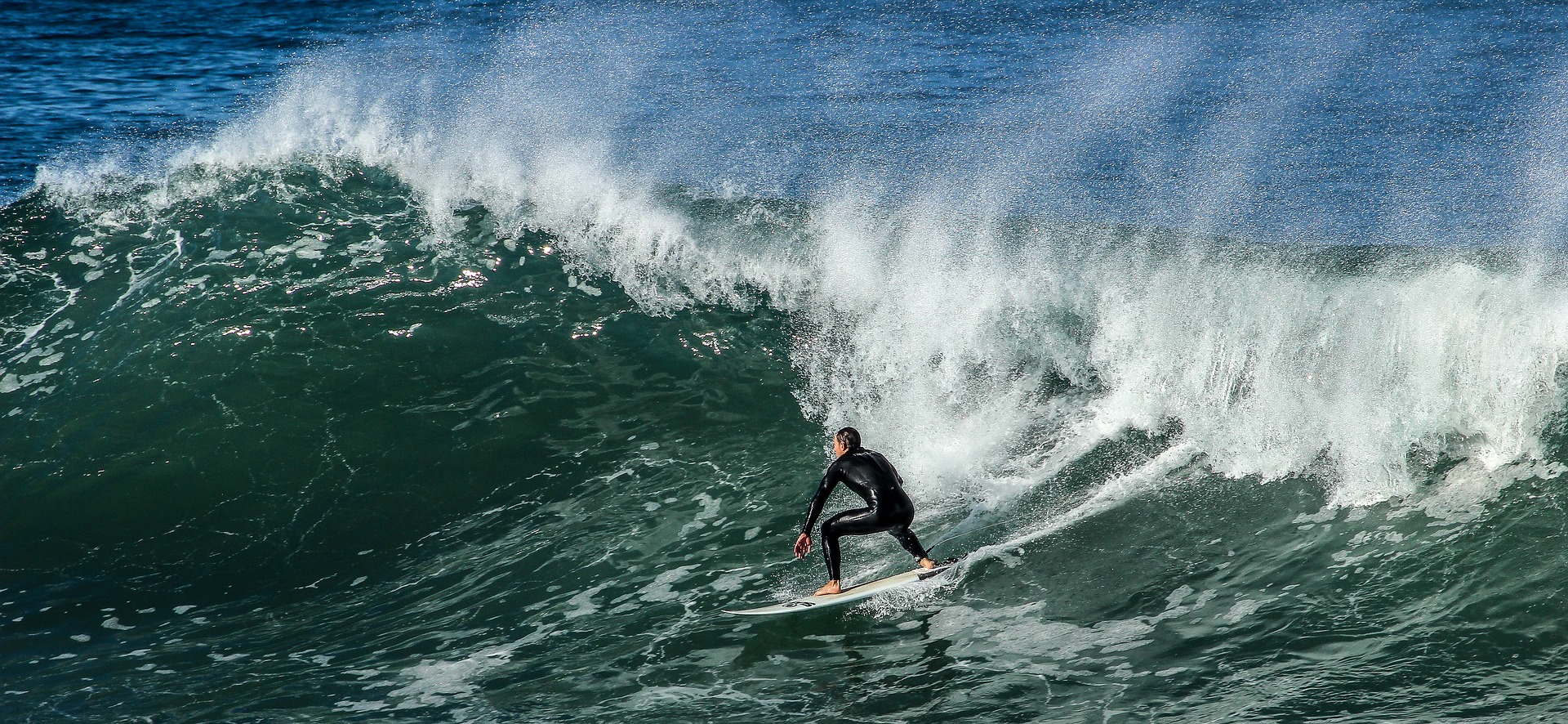
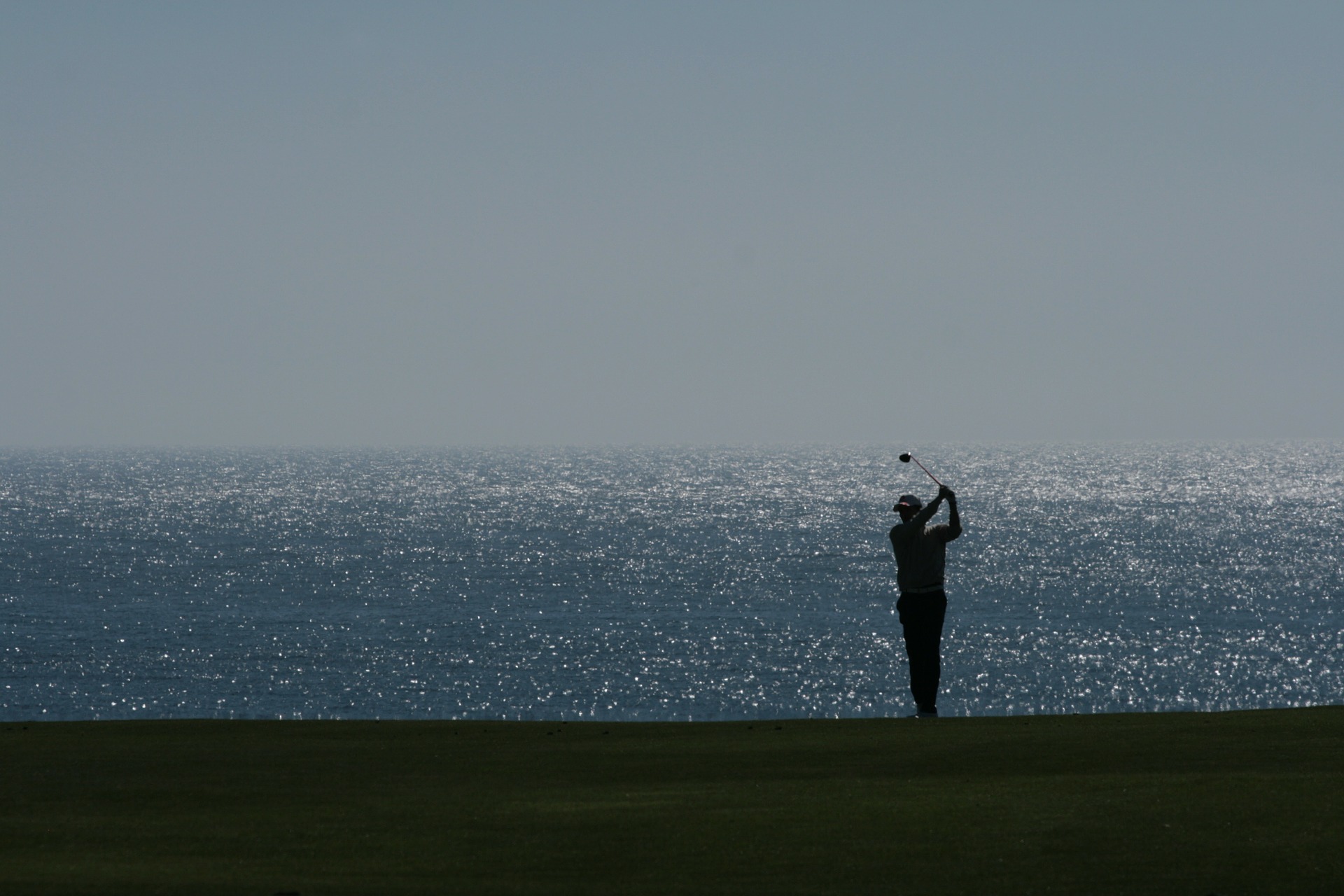
Then there is always surfing, which you can continue enjoying quite as much, as you end up more or less equally wet with rain or without it. And even golf; under the rain is a little less pleasant, but you can still play, and if you choose the links of Praia del Rey or West Cliffs, you can get into an experience very similar to what the inventors of this sport in the British Isles would have had in their time (and which the Ryder Cup contestants have had to face from time to time on the British courses).

And, to close as we started, one of our favorite plans is to go to the La Vie shopping center in Caldas, and see a good movie. Most of the films are in the original version, with subtitles in Portuguese. The restaurants in this shopping center share a food court, which allows everyone to choose what they want, for the whole family to find something to their liking and for the rainy afternoon to finish with very good grades.

We open the forum and welcome more ideas for rainy days.

The best Berlin balls; a cake by the ocean?

There are many song lyrics that contain double meanings and associated profound treatises analyzing them. One song especially suitable for these warm summer days would be Cake by the Ocean, a big global hit in 2016 that has already become a summer classic. https://www.youtube.com/watch?v=vWaRiD5ym74

Portugal is probably the country where you can apply the song more completely. In its most literal interpretation, the name fits perfectly with the Portuguese tradition of eating on the beach the bolas de Berlim (Berlin balls), small buns of fried dough filled with custard cream that are offered by vendors during the summer season.

The love for this sweet is so widespread that some bakeries have specialized in it and have made their greatest attraction. Natario, from Viana do Castelo, sells more than 1,000 buns every day. Berlineta started as an itinerant lambretta-food-truck but now has has fixed stores in Caparica, Sesimbra, Carcavelos and in the train stations of Oriente and Santa Apolonia in Lisbon. Their angle is the variety of flavors, both in the dough (some as original as beetroot or carrot), as well as in the creams, with more than twenty flavors of cream to choose from.

On the beaches of the Oeste region, standing out out are those of Paulino Ribeiro, of the Santa Cruz bakery, on the beach of the same name, which have even been appreciated by the President of the Republic. Recently a younger competitor has opened with direct views of the beach, Farturas do Oeste, but it will not be easy for them to surpass Dom Paulino’s quality.

Another very recognizable name is that of Concha, the best bakery in São Martinho de Porto, which sells its bolas de Berlim all year round at José Bento da Silva 41.

Last but not least, the ones sold by Forno de Beco, a specialist in recovering traditional flavors from the small alley of Beco do Forno, in the center of Caldas da Rainha, are also very remarkable.

So, whether in the beach version or in a bakery, traditional or flavored, let’s take advantage of the good weather and long days and enjoy one of the most traditional Portuguese summer sweets.

The best golf courses in the Oeste region

The binge-watchers will remember The West Wing, a TV show that was very popular for seven seasons between the end of the last century and the beginning of the present. It was a political thriller starring Martin Sheen that offered a new perspective into the inner workings of the White House.

It was during those same years that took place the design and initial development of what is now one of the biggest attractions in Portugal and a real luxury for any golf lover: the four courses in the lagoa de Óbidos area. Praia del Rey, Guardian Bom Sucesso, Royal Obidos and West Cliffs are four excellent courses, all of them already decorated with numerous international awards and a good chance of many more with their rising reputation. It is truly amazing they offer golf players the opportunity to play in four world-class courses within a mere five-minute drive of each other. Paraphrasing the TV show, we could call them “The West Swing”.

Today, with many of you practicing again your swings for the holiday weeks ahead, we are going to present some of the features of these four courses and some ideas and tips for those who do not know them yet.

The first of the courses to open its doors was Praia del Rey, in 1997. Designed by Cabell B. Robinson, it combines holes between pine forests and links along the ocean. The wind can sometimes be the biggest challenge, so those who do not have time to play a full round may have to choose depending on the weather conditions of that day; the back nine have spectacular views of the Atlantic coast but they are also the most challenging if the wind is blowing.

Guardian Bom Sucesso opened in 2008, with the advantage of being located in a stunning design and architecture resort, with houses crafted by some of the best architects in the world. Another curious element in Bom Sucesso is that, being in the universe of the European Tour, it regularly hosts professional events and activities, which allows the amateur player to see how closely, or far away, their cards are from those of the professionals. Here you can see for example the card of the players who played the Q School of the European Tour in October 2018 and 2019.

The course was designed by Donald Steel and although it has some interesting and complicated holes, overall it can be said that it has a level of difficulty somewhat lower than that of the neighboring courses, especially since it is less exposed to the wind. From the tee of the spectacular 17th hole we can enjoy the best views of the entire area.

The third course in chronological order was Royal Óbidos. It was the last course designed by the great Seve Ballesteros and has some holes that confirm Seve’s promise to create a wonderful place for golf here. If we can only do nine holes, it is worth choosing the front nine, which look towards the lagoa de Óbidos area and include the charismatic 3rd hole, a par 3 with an island green where it is necessary to combine the maximum precision in choosing the club and to avoid getting distracted by the beautiful views of the lagoon.

The last of the courses to open, in 2017, was West Cliffs, which started with great momentum after being chosen the “Best new course in the world” by the World Golf Awards. Designed by Cynthia Dye, the granddaughter of the legendary Pete Dye, it is a demanding course but one of great natural beauty among the dunes.

The four courses offer good deals to try a different one every day and they also offer special prices in the off-season and in the late afternoon games.

As if that wasn’t enough to whet the appetite of any keen golfer, it is necessary to mention two other interesting golf options. First, halfway between Óbidos and Lisbon, in the Torres Vedras area, is the Dolce Campo Real, an 18-hole course designed by Martin Ebert whilst he was still on the Donald Steel design team. The course opened in 2005 and has been gradually consolidating since. In 2016, it was chosen the best golf resort in Portugal in the Global Brand Awards. It is a different course, with many more trees, and slopes that can be a good workout for those looking for a good dose of exercise whilst indulging in their favourite pastime of golf.

  And, finally, a less orthodox option but one that may also be of interest, would be the nine-hole course in Botado, next to the MH Atlántico hotel, 1 km south of Peniche. It is much less maintained, even a bit wild in some areas, but precisely because of this it benefits from having less players and it can be the ideal option for beginners or families with children that can go into the course without much pressure. And being next to the beaches of Supertubos and Consolação, it has some holes with views of the ocean very comparable to those of its neighbors of greater pedigree. In short, an interesting alternative to complete the golf options in this scenic area.

And you? Have you played in these courses? Do you have special memories of a hole in particular?

Destination wedding: let’s marry in Óbidos

The historical journey through the swimsuits and how they have progressively reduced their size, from the demure full-body suits of the early twentieth century, to the swimsuit in one piece, the arrival of the bikini in the 60s, and a certain revival of the swimsuit that is observed from time to time, has become an internet classic.

With weddings, there has also been a remarkable evolution lately. As recently as a few years ago, the most usual thing would be a big wedding in a church or a formal setting in the area of ​​the bride and groom’s residence. In the Sixties, some young people began to see that type of wedding as too conventional and chose not to marry. However, that generated certain legal complications and some Public Administrations began to create registers for civil unions or de facto couples, in which those who did not want to formally marry, could register and acquire similar rights to marriage. Today in most European countries both systems coexist, but there is a clear downward trend in the registration in these parallel registers, perhaps because the real difference lies between formalizing or not and not so much in doing so in one register or another. Or perhaps because in recent years new and varied ways of celebrating marriages have arisen: in more original places, on the beach, in the forest, in unique environments, which have made the concept of getting married more attractive.

One of these new formulas is the so-called destination wedding. It consists of celebrating the wedding away from the place of residence of the couple and turning the wedding into a cultural experience, original and different. It is often a logistical challenge but also an opportunity to share more intensely with friends and family the preparation, the celebration and even the trip itself.

In this type of wedding, the number of attendees is usually smaller because sometimes the distance often complicates a bit the attendance of the typical Aunt Agatha and Uncle Bill. But that smaller number also creates sometimes more intense moments, a group experience, more shared, in which we all end up being more participant rather than a mere guest.

Óbidos is a popular destination for this type of wedding, especially in spring and autumn, when the charm of its medieval walls and streets combines better with the romanticism that permeates every corner of the town, as seen for example in this image by the great team of wedding photographers Aguiam.

However, in the practical line that characterizes the Nave Lagoa team, it is important to point out to anyone who considers a wedding in Portugal that this is not Las Vegas; there are no express weddings here, and you have to start the procedures several months before the happy day to ensure that at the last moment you are not missing a translation or the apostille of an essential document.

We open the forum in case anyone wants to share their positive or negative experience around this exciting topic.