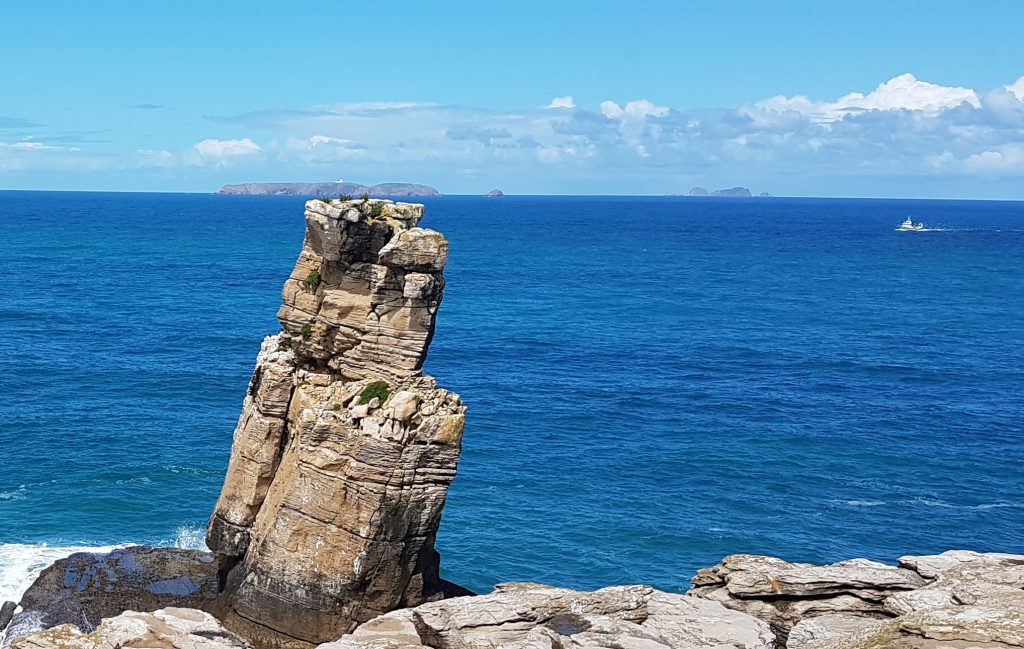
Nave Lagoa

Asian Travelers are back

All cultures appreciate the mixture of simplicity and depth that Chinese proverbs have been offering since ancient times. We especially like the one from Lao Zi that says that a journey of a thousand miles begins with the first step.

For decades China has been a disciplined and powerful but very self-centered country. But in the 21st century, for several internal and external reasons, China has taken off as a great global power, moving from an economy based on low-cost manufactures to a more complete one, in which new technologies have great importance. This has generated very powerful companies, with great export strength, which have started to gain a global presence that is more than remarkable. And it has also given rise to a growing middle class, with the capacity to travel and to enjoy previously impossible luxuries.

To understand the economic importance that these new travelers can have, according to the official information from the Ministry of Tourism of Portugal, in 2017 a Spanish tourist spent an average of 89 euros a day in Portugal, while a Chinese one spent 642 euros. That is, a Chinese tourist spent in one day what a Spanish did in a whole week. The pandemic meant a total stop in these trips but they resumed in 2023 and at an exceptionally high rate: in the ten days around the Chinese New Year there have been nearly 2 billion movements of Chinese citizens.

Therefore, it is not surprising that there is a growing interest in Europe to try to re-attract this type of tourists, to offer them something that makes them want to come back again and to recommend the trip to their millions of compatriots. And what attracts this type of traveler most?

In the first place, and surprising as it may seem, the weather. A day with blue skies and cool temperatures, with a light breeze, is one of the elements that can most attract an Asian traveler, who often suffers at home from hot humid days, with a sticky and uncomfortable heat. That is why it is easier to have a more positive experience in the cool summers of the Spanish and Portuguese Atlantic coast than in the Mediterranean ones. And for that reason perhaps the strategy of the Mediterranean areas should focus on trying to attract this type of visitor in the winters, in which its climate is mild and also its occupation is lower.

Secondly, they appreciate very positively the open landscapes, the forests, the big parks, the not too crowded beaches, the mountain trails. In general, the population density in large Asian cities is much higher than in Europe and that is why they would usually prefer to visit a natural park in Europe than a very monumental but very crowded city.
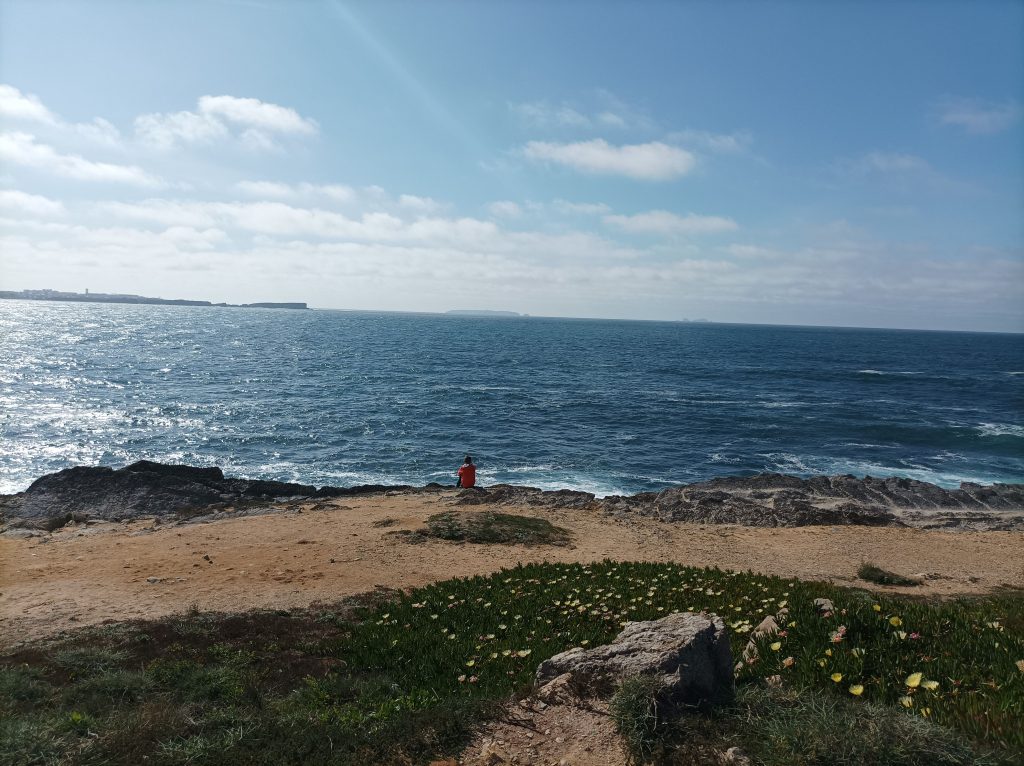
The beauty of the ocean

Third, they like Mediterranean culture very much. Our food, our wines, our lifestyle. That is why they value very positively having experiences that allow them to enjoy these elements first-hand. To be able to go to small restaurants where they serve simple and quality food, fresh fruits and vegetables, seafood and grilled fish. They appreciate gastronomy as a culture, as a way of understanding and knowing better the area and the people they are visiting. That is why it is not strange to see them also in the best restaurants because they look especially for that quality experience.

In this line, immersive experiences are increasingly successful, such as visits to wineries where they can see the whole process of elaboration and end with a wine tasting. Or attending popular festivities and being able to live the atmosphere and traditions with local people, imbuing themselves with the party.

Umbrella Sky Project – Águeda, Portugal

In 2017 the number of Chinese tourists who visited Portugal rose by 80% over 2016 and in 2018 it was again the country that most increased its number of visitors to Portugal. Which is not surprising if we take into account the mild climate, the beautiful landscapes and the great gastronomy of Portugal. And, in addition, compared to European tourism that is very seasonal, the Asian tends to be distributed more during the year, because it does not seek the sun and the beach and enjoys much more a quiet place, without large crowds and cool temperatures. Portugal has all to make the most of these advantages and for the beginning of a beautiful friendship. Or for Lao Zi’s first miles for the journey of a thousand miles that many millions of people could start in the coming years. Will we be ready to welcome them?

Berlengas

The human being is curious and adventurous by nature. And anyone who visits Cape Carvoeiro, on the westernmost tip of the Peniche peninsula, would probably be curious about some islands that are seen in the distance, about 10 km away. It is the archipelago of the Berlengas, a group of small islets, with three peculiar histories that interweave surprisingly with the present.

In the history of the islands there is a very relevant first date, 1465. It was in that year when King Afonso V issued an order prohibiting hunting in the Berlengas, in what was a pioneering and very novel decision of care and attention for the nature. Anyone who has visited or seen pictures of the islands, and their coves with turquoise and crystalline waters, understands well what King Afonso could see and feel to dictate an order so unusual at that time. The line to the present, and the future, takes us to more than five centuries later, when in 2011 UNESCO declared the Berlengas a biosphere reserve and confirmed what the king’s sensibility valued long before.

In the century following that of King Afonso, in 1513, with the help of Queen Leonor, a small monastery of San Geronimo monks was founded on the islands, seeking a place for their spiritual retreat and to help the victims of the numerous shipwrecks that generated that coast. Saving the distances, is what nowadays also look for the many retreats that in different points of the coast of Peniche offer interesting combinations of mindfulness, yoga, meditation and surfing. We hope that modern history is more favorable to these initiatives because the monastery and the poor monks ended in closure just a few years after its founding because the monastery was frequently attacked by pirates and their members taken as slaves. Surely they were ahead of their time and did not get everyone to see the peace, beauty and spirituality that inspires this Atlantic coast.

The third story connects the past and the present century through sea, football and technology. In 2018 the company Apple shot a short film about a supposed historical rivalry between the football teams of Baleal and Peniche, who preferred to settle their matches on a neutral pitch and chose to move to the Berlengas. You can watch the video in this link. The story, obviously fictional, is aimed at showing the technical excellence of the phone model with which the ad is recorded. But, in a certain way, it allows us to understand the difficulty of those who live from the sea and to value better all those who ventured to sail the waters and discover the mysteries that they hid. It is a story that connects the past and the present through the sea and these special islands. If watching the video makes you want to visit the islands, please note that from June 1, 2022, there is a 3-euro tourist tax, Berlengas Pass, destined to improve the infrastructures and ensure that the number of visitors do not exceed 550 per day.

I will leave a light on

Lighthouse keeping has always been a challenging profession, suitable only for the more seasoned, for those capable of living in isolated places and under very harsh weather conditions. Nowadays, as the operation of the lighthouses has become more automatic, they have stopped needing personnel living permanently in them and new technologies have also made them less essential in navigation and have lost some prominence.

But they still keep intact their romantic and adventurous aura. That is why the initiative of the Portuguese government to open most of them for visits is highly appreciated. In the Oeste region we currently have only two lighthouses in operation, both very close to each other, one in Cape Carvoeiro in Peniche and the other just in front, in the Berlengas Islands.

But within a short distance to the north we also have those of Aveiro, Mondego (Figueira de Foz) and Penedo da Saudade (Marinha Grande). All of them can be visited every Tuesday, from 2pm to 5pm in summer and from 1.30pm to 4.30pm in winter. Before departing, it is convenient to check the website of the National Maritime Authority to verify that they are not closed for operational reasons or for any works.

And for those who prefer surfing the internet there is also the possibility of a virtual tour of the Bugio lighthouse, located in the middle of the mouth of the Tagus, near Lisbon.

So for those of us who sometimes need a light to guide us and an inspiring and different view of the sea, this could be an excellent plan for Tuesday afternoon. And if we go with children, surely we can imagine with them a great adventure of pirates and smugglers in that evocative environment. Obviously, in the playlist in the car, on our way to the lighthouse, we must not miss I will leave a light on, by Tom Walker.