If you’re looking for the perfect getaway for December 6th, here’s an irresistible itinerary through the heart of the Oeste region. Start the day in Rio Maior, where the Salt Nativity Scenes transform the already magical Salinas landscape into a unique Christmas setting — delicate, handcrafted, and full of charm.
As lunchtime approaches, head to Alcobaça and book a table at the classic António Padeiro. The restaurant, recommended by the Michelin guide, combines tradition and criativity, with dishes that comfort even on the coldest days. A perfect break before the grand finale of the day.
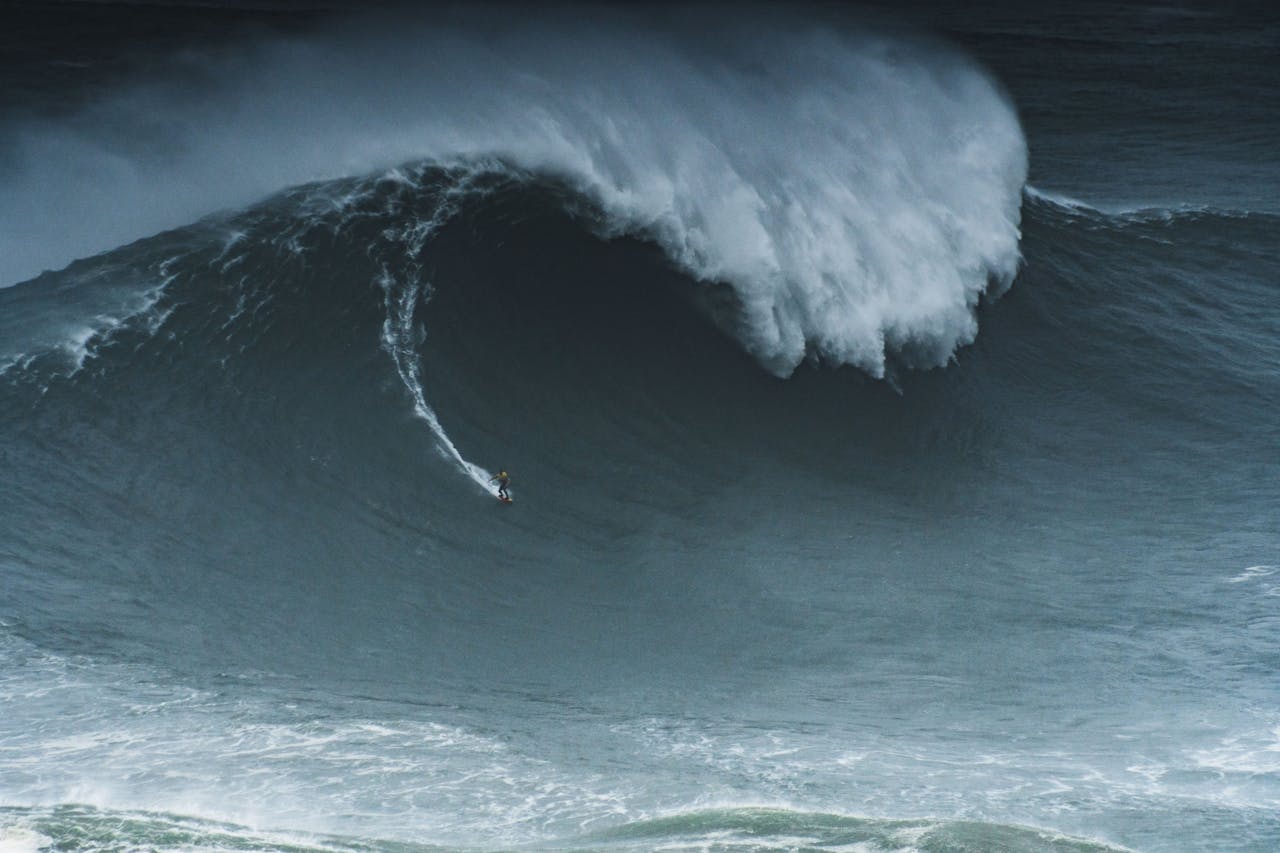
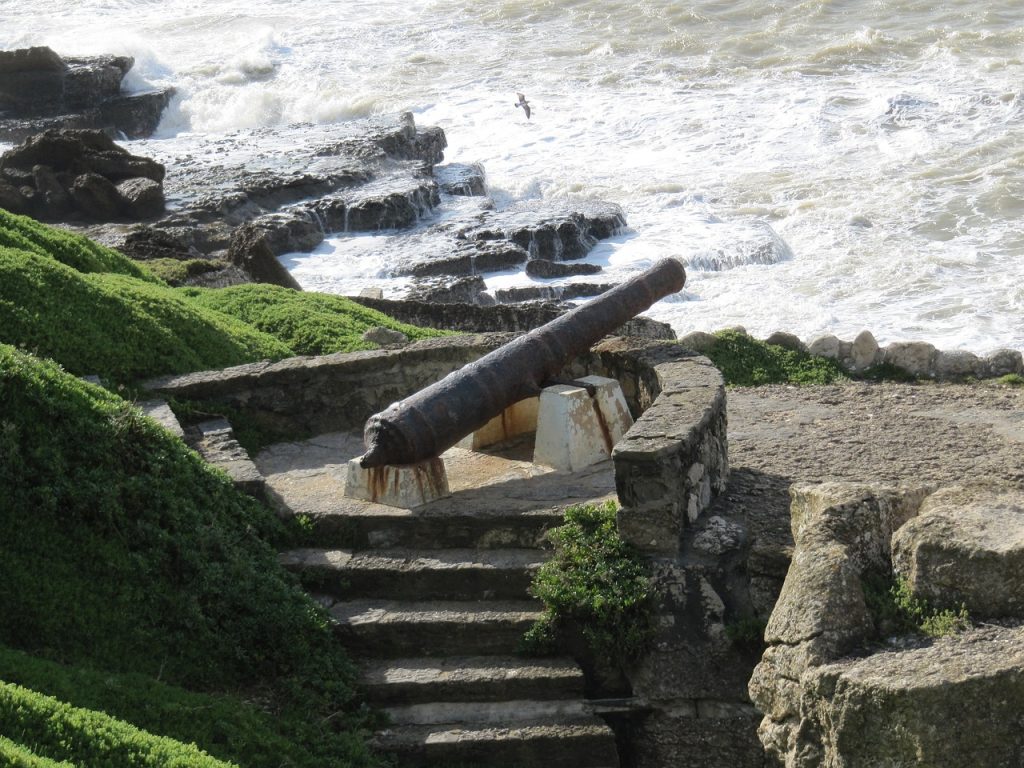
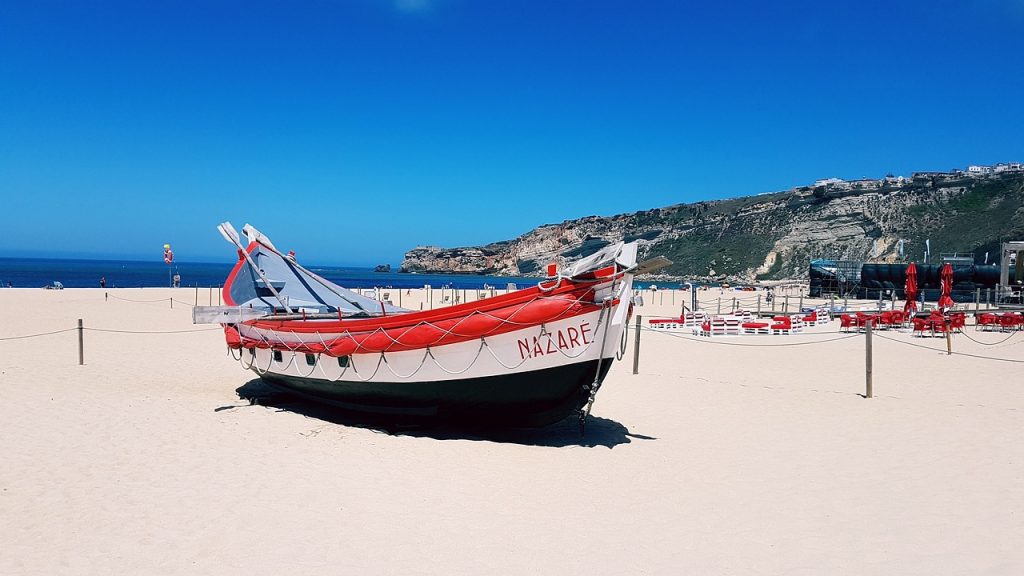
End your day trip in Nazaré, where the giant waves promise to show all their force again in the coming days. Up at the Sitio, the view from the lighthouse is breathtaking — a mix of raw nature and pure spectacle, making any visit worthwhile.
One day, three stops, and memories for much longer. Is there a better way to welcome December?
Marvão is a small town on the border between Spain and Portugal, near Castelo de Vide and Valencia de Alcántara, on the main road from Cáceres. It is not in the Oeste region of Portugal, but we thought it deserved a post on this blog for three reasons: first, because due to its history, charm and location, it is a common stopping point on car trips from the rest of Europe to the Portuguese coast; second, because it has several very interesting restaurants and activities for a weekend getaway; and third, for a new, fun and different experience that can be done in the area, and that allows you to feel like Buster Keaton in The General for a few hours.
Starting at the end, if we like to pedal in the middle of nature and we have a couple of hours, we should try Rail Bike Marvão, which offers routes in two-seater pedal vehicles that roll along the now disused train tracks. The tour allows you to enjoy this area of great natural beauty in a different way, in the surroundings of the Tajo Internacional park, a Biosphere reserve.
Another very interesting activity is a visit to the Melara Picada Nunes Museum, where they offer 75-minute guided tours that include a practical explanation about the history and production of olive oil, a small tasting and they give us a sample of their liquid gold.
Among the restaurants by the Sever river, there are some very interesting, like JJ Videira, Sever or Milhomens. And we should not leave Marvão without going up to the castle and enjoying its incredible 360º views of the Alentejo and Extremadura, those two regions now so united that they even participate together in European projects with the acronym ALEX, breaking that old phrase of José Saramago that Spain and Portugal are two Siamese brothers who were born joined at the back and have never seen each other’s faces. Nowadays this is no longer the case, there is increasing knowledge and appreciation between both peoples and Marvão is an excellent meeting point to prove it.
Today, let’s explore together the magic of the holiday season in the stunning West region of Portugal. With its charming traditions, picturesque landscapes, and welcoming atmosphere, our region offers a unique experience to celebrate the Christmas spirit. Here are some of the best activities to experience Christmas in the Oeste Region
Streets of Óbidos
Christmas Markets
In small cities like Óbidos and Caldas da Rainha, Christmas markets transform into true fairy tales. Narrow streets and historic squares are adorned with twinkling lights, while stalls offer local crafts, delicious treats, and unique gifts. The Christmas scenes in the small town of Marinhas de Sal, at Rio Maior, are made of the salt produced there; they seem like snow! It’s a perfect opportunity to find special souvenirs and feel the warmth of the season.
2. Christmas Concerts and Shows
The Oeste region comes alive with festive music during Christmas. From enchanting choirs in historic churches to open-air concerts in squares, there is a variety of performances for every taste. Don’t miss the chance to experience the thrill of a Christmas concert under the stars. https://www.visitportugal.com/pt-pt/destinos/centro-de-portugal
3. Dazzling Christmas Lights:
Cities and villages in the West region turn into true light paradises during the Christmas season. Historic buildings, streets, and squares are adorned with stunning decorations, creating a magical atmosphere that will surely enchant visitors of all ages. Vila Natal in Óbidos is always a must https://obidosvilanatal.pt/
Vila Natal in Óbidos
4. Local Cultural Traditions:
Discover the unique traditions of our region during Christmas, such as religious celebrations like the Midnight Mass, and authentic cultural practices. Take the opportunity to taste traditional local delicacies, such as the “Bolo Rei” and the “Bolo Rainha”, characteristic delights of the season, similar to the Roscón de Reyes you can find in Spain at this time of the year.
5. Outdoor Ice Skating:
In some cities, like Torres Vedras and Óbidos, outdoor ice skating and ice sliding are a must-do experience for all ages. Glide on the rink while enjoying the twinkling lights around you, creating unforgettable memories for the season. By celebrating Christmas in Portugal’s Oeste region, we immerse in a charming experience that combines tradition, natural beauty, and human warmth. It´s a magical and unforgettable celebration in this enchanting part of the country. Happy holidays! 🎄
A tennis fan can hardly ever play on the Centre Court of Wimbledon or at Roland Garros. A golf fan will probably never have the opportunity to play in Augusta or St. Andrews. And football fans would surely be willing to pay absurd amounts of money to play one day at the Santiago Bernabeu or Wembley.
Exactly the opposite of surfing, which has the peculiarity that anyone can easily buy or rent a board and live first-hand the same waves of Ericeira, Supertubos or Nazaré, where three of the most important events in the world of surfing take place.
In the more than 100 km of coast of the Oeste region there is a wide range of possibilities of surfing, for all levels. And any day is fine to go and find good waves. But the end of the summer adds three world-class appointments for surfers: the World League events in Ericeira in October, in Peniche in March and the giant waves season in Nazaré, that runs from October to March.
Supertubos
The waves at Supertubos are considered the European version of the famous Hawaiian Pipeline, with the advantage that the seabed is sandy and without the dangerous reefs of the Hawaiian. On the other hand, you may need a much thicker websuit. In Ericeira the temperature is more or less the same but the town has that cool charm so appealing to those who start to know the surf world.
Ericeira
To regain strength, a very popular option in Peniche, right on the beach, a few meters from Supertubos, is the Xakra, whose tables are also a very popular spot all year round. In Ericeira, Furnas is the place to go, with its great views and its high quality.
The accommodation offer is also extensive. It covers all the spectrum, from the typical mini-vans of the youngest, to campsites near the beach, from hostels and apartments to bio-eco-resorts, and there are even some conventional hotels. For its good value for money we highlight two: the Kate Kero, in the center of Peniche, with good access to restaurants, shops and the bustle of the city; and the recently renovated MH Atlántico, for the opposite reasons, since it is right on the beach, and you can easily reach Consolação and Supertubos by foot and make the most of the waves from dusk to dawn.
In Nazaré, the giant wave season in Praia Norte lasts from October to March although there may always be some big storms outside those dates that also allow you to watch the monster-waves up to 30 meters high, only suitable for expert surfers. At the end of October Nazaré also hosts the Big Wave Challenge annual awards, where all the big names of the big waves get together.
Nazaré
In this link there is a very interesting video of the World Surf League explaining how these giant waves are formed, due to a submarine canyon several kilometers long that is just south of the cape.
To stay in Nazaré, a good option, in the center, is the Hotel Magic. And to eat, our favorite options are Rosa dos Ventos and A tasquinha, although the excellent level makes the experience almost always great in most places. In fact, one of the biggest fans of this blog always remembers that in Nazaré he ate the best wild sea bass he has ever eaten.
Whether as a surfer or as a spectator, with accommodation in a minivan or in hotels, the waves and the collective good vibes are guaranteed and the experience is really worth it.
In 2022, 438,000 people completed at least 100 kilometers walking or 200 by bike on the Route of Saint Jacques (Camino de Santiago). To understand the growing tendency of the figure, we can see that in 1990 the trip was done by 5,000 people and in 2000 by 55,000. In 2018 it was done by 327,000 and, although in 2020 and 2021 the figures suffered the impact of the COVID19 pandemic, in 2022 they returned stronger than ever and set a new all-time record of 438,000 pilgrims arriving to Santiago de Compostela.
But, what brings so many people to take the Camino to Santiago? In its medieval origins it was done mainly for spiritual reasons, seeking the intercession of the Apostle Santiago or the indulgence derived from the pilgrimage. And today many pilgrims still have a religious motive in their backpack. But for the great majority, the Camino is a journey within oneself, a time for reflection, shared effort and companionship. The Camino provides a very intense contact with nature through the landscape, but also with human nature through effort, kindness, hospitality, overcoming challenges and exchanging experiences with other walkers.
Its progressive revitalization during the second half of the 20th century has been associated with the latent desire in many people to recover the European roots, to go more slowly instead of running and to get things done with time and effort instead of instantly.
It can be explained in many ways but there will probably be 438,000 different reasons and they will all be good to go to this exceptional school of humanity for a few days.
One of the great wonders of the Camino is that it passes by almost all countries in Europe; there are more than 80,000 kilometers of marked ways. And although most of the people follow the so-called Camino Francés (the French Way) which crosses the Pyrenees and travels through northern Spain through Pamplona, Burgos and León to Santiago, other alternative routes are becoming very popular too, because they are a bit less crowded and also a little closer to the simplicity and inner peace that one looks for in this adventure.
The Portuguese Caminho, from Lisbon to Santiago, is especially recommended for those who want to enjoy a more personal experience, with more nature and not that many crowds. The Caminho passes through Santarem, Coimbra and Porto as the most relevant cities and can be seen very well detailed on the Gronze website (https://www.gronze.com/camino-portugues).
The Convento de Cristo in Tomar
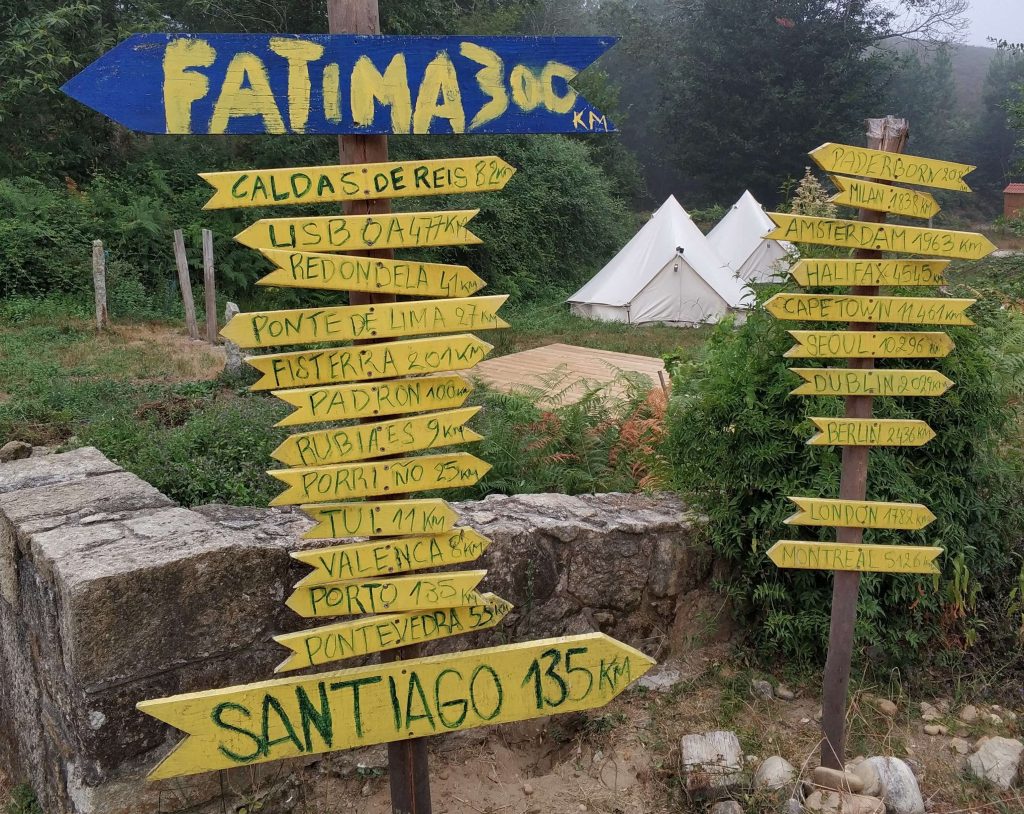
But we want to highlight a central section of it, which runs very close to the Oeste region, and which is especially recommended for those who want to live the part of the Caminho closest to nature. It is the stretch between Tomar and Coimbra. Tomar, the point of origin is a small city commanded by the Convento de Cristo, an imposing Templar castle, a UNESCO World Heritage Site, and one of the most beautiful examples of Manueline Gothic architecture. Coimbra is hustle, charm and small alleys to get lost. And, in between, 90 kilometers of Caminho through enchanted forests, along paths between fruit trees and small villages in which there is always a local willing to offer the pilgrim a few words of advice or any help needed. The signage is especially good, in part because the route is at the same time the Camino de Santiago going North and the Caminho de Fatima going South, so the signposts have the characteristic yellow arrow towards Santiago on one side and the blue arrow to Fatima on the other. That also causes interesting encounters between walkers in one direction and another, opposed in the direction, but united by a similar search.
Fátima and Santiago
And for those who want to have only an appetizer, with a child-friendly experience, you can consider visiting the Convento de Cristo in Tomar, eating at any of the nice restaurants in the pedestrian zone of the city, like O Tabuleiro for example, and making the first four kilometers, which run parallel to the Nabão river and are especially beautiful. Surely more than one after that appetizer will want to consider in the future trying other dishes of the Camino. Buen Camino!
Óbidos receives thousands of visitors all year round but at Easter the usual festive atmosphere stops for a couple of hours to solemnly welcome its main procession, the Burial of the Lord, which is celebrated on Good Friday night and is followed with devotion by many people dressed in costumes of the time. http://www.semanasantaobidos.pt/
2. Folar de Páscoa
In all the central area of the country, one of the most typical traditions at Easter is to eat the Folar de Páscoa, a sweet bread made with flour, eggs, sugar, and cinnamon. The Folar can be decorated also with hard-boiled eggs and is sometimes also eaten with cheese, ham, and a glass of wine. If you haven’t tried it yet, we especially like the one they prepare at the Atelier do Doce, between Caldas da Rainha and Alcobaça, which has received numerous awards. https://atelierdodoce.pt/produto/folar-de-bronze/
3. The waves of Peniche
Although there are more and more brave people who also dare to ride the waves during the winter, Easter traditionally marks the beginning of the surf season on the beaches of Peniche. The temperatures, both outside and in the water, are beginning to become more pleasant and thousands of surfers start or resume their passion for the waves.
Surf in Peniche
4. Flamingos in the Lagoa
The end of winter also normally marks the time when the wetlands are at their peak and it is easy to see some of the flamingo families that nest in the lagoa de Óbidos during the winter season.
Flamingos in the Lagoa de Óbidos
5. Sardoal
We end with a suggestion that is not geographically within the Oeste region but is very close, and it is perfect for a day trip. Sardoal is a small town on the A23, near Abrantes, with deep religious traditions. During the procession of the Bonfires, public lighting is turned off and there is only light from torches and hundreds of small lamps that are placed in the windows and balconies of the houses. The churches are decorated with carpets of flowers and in the Main Church they put also wheat germinated in the dark, which gives it a particular yellow tone.http://www.cm-sardoal.pt/images/CMS/SemanaSanta2023/cartaz_semana_santa_2023_final.jpg
All cultures appreciate the mixture of simplicity and depth that Chinese proverbs have been offering since ancient times. We especially like the one from Lao Zi that says that a journey of a thousand miles begins with the first step.
For decades China has been a disciplined and powerful but very self-centered country. But in the 21st century, for several internal and external reasons, China has taken off as a great global power, moving from an economy based on low-cost manufactures to a more complete one, in which new technologies have great importance. This has generated very powerful companies, with great export strength, which have started to gain a global presence that is more than remarkable. And it has also given rise to a growing middle class, with the capacity to travel and to enjoy previously impossible luxuries.
To understand the economic importance that these new travelers can have, according to the official information from the Ministry of Tourism of Portugal, in 2017 a Spanish tourist spent an average of 89 euros a day in Portugal, while a Chinese one spent 642 euros. That is, a Chinese tourist spent in one day what a Spanish did in a whole week. The pandemic meant a total stop in these trips but they resumed in 2023 and at an exceptionally high rate: in the ten days around the Chinese New Year there have been nearly 2 billion movements of Chinese citizens.
Therefore, it is not surprising that there is a growing interest in Europe to try to re-attract this type of tourists, to offer them something that makes them want to come back again and to recommend the trip to their millions of compatriots. And what attracts this type of traveler most?
In the first place, and surprising as it may seem, the weather. A day with blue skies and cool temperatures, with a light breeze, is one of the elements that can most attract an Asian traveler, who often suffers at home from hot humid days, with a sticky and uncomfortable heat. That is why it is easier to have a more positive experience in the cool summers of the Spanish and Portuguese Atlantic coast than in the Mediterranean ones. And for that reason perhaps the strategy of the Mediterranean areas should focus on trying to attract this type of visitor in the winters, in which its climate is mild and also its occupation is lower.
Secondly, they appreciate very positively the open landscapes, the forests, the big parks, the not too crowded beaches, the mountain trails. In general, the population density in large Asian cities is much higher than in Europe and that is why they would usually prefer to visit a natural park in Europe than a very monumental but very crowded city.
The beauty of the ocean
Third, they like Mediterranean culture very much. Our food, our wines, our lifestyle. That is why they value very positively having experiences that allow them to enjoy these elements first-hand. To be able to go to small restaurants where they serve simple and quality food, fresh fruits and vegetables, seafood and grilled fish. They appreciate gastronomy as a culture, as a way of understanding and knowing better the area and the people they are visiting. That is why it is not strange to see them also in the best restaurants because they look especially for that quality experience.
In this line, immersive experiences are increasingly successful, such as visits to wineries where they can see the whole process of elaboration and end with a wine tasting. Or attending popular festivities and being able to live the atmosphere and traditions with local people, imbuing themselves with the party.
Umbrella Sky Project – Águeda, Portugal
In 2017 the number of Chinese tourists who visited Portugal rose by 80% over 2016 and in 2018 it was again the country that most increased its number of visitors to Portugal. Which is not surprising if we take into account the mild climate, the beautiful landscapes and the great gastronomy of Portugal. And, in addition, compared to European tourism that is very seasonal, the Asian tends to be distributed more during the year, because it does not seek the sun and the beach and enjoys much more a quiet place, without large crowds and cool temperatures. Portugal has all to make the most of these advantages and for the beginning of a beautiful friendship. Or for Lao Zi’s first miles for the journey of a thousand miles that many millions of people could start in the coming years. Will we be ready to welcome them?
There are studies that have calculated that children smile on average 400 times a day while adults only smile between 30 and 40 times a day. There are also several studies that have analyzed that children are much more creative than adults because they see life as a game and are able to imagine playful situations in any scenario.
Fortunately, there are times in adults’ lives when they have the opportunity to recover some of that joy, sharing games with their children, nephews or grandchildren. For that, it is enough to let go, get some imagination and let yourself be carried away by the little ones.
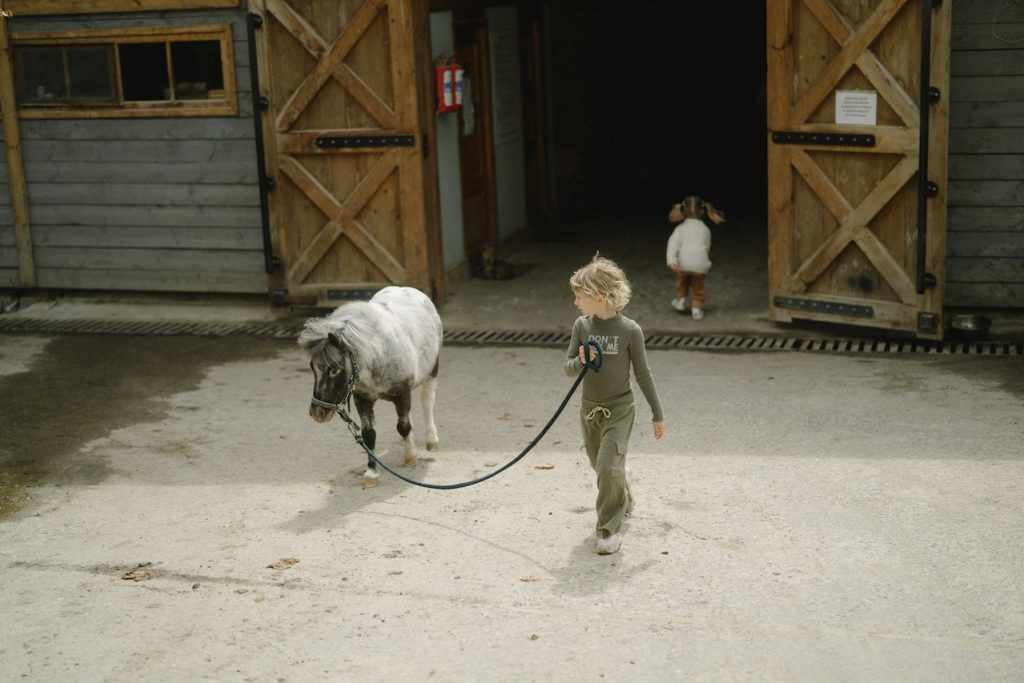
For several reasons, the Oeste region of Portugal is an ideal setting for children. In the first place, because it has a climate that favors all outdoor activities; the temperatures are mild all year round, never too cold or too hot. Second, because it has more than 100 km of coastline, with dozens of beaches, which are, as is known, the preferred scenario for children to play. And, thirdly, because it is still not a saturated destination, and does not have the long queues that always characterize the most typical children’s destinations.
So today our recommendation is that we all fit imaginary cowboy boots and hat, that we take our horses and that we throw ourselves to the great adventure of the conquest of the West.
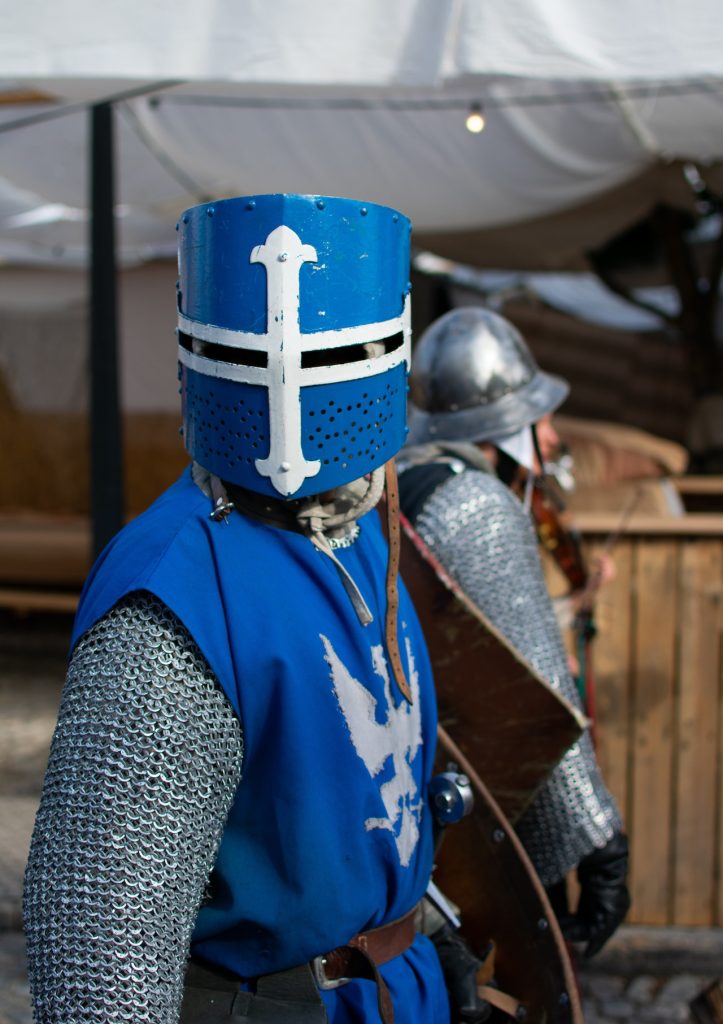
The route can begin in Óbidos, which with its castle and its walls can be the best inspiration for any adventure. If we need a certain atmosphere to warm up, the ideal moment would be in summer, while the medieval fair takes place, with its famous combats between knights. During those days, costumes are rented and anyone can feel for a few hours the lord of the castle.
Another very appropriate time to go to Óbidos with children would be in December, during Vila Natal, when the whole town becomes a large theme park of games and activities related to Christmas. You can check in the city council website for dates and schedules of these two events: www.cm-obidos.pt
The beaches of the region are known worldwide thanks to surfing. The Praia Norte in Nazaré, with its giant waves, and Supertubos in Peniche, with the World League events, are the most famous but almost all have a surf school and instructors to show you how to start with this spectacular sport. We tend to think that surfing is not suitable for small children but in reality, as soon as they know how to swim well, they can start jumping on the board and at those ages it is when their approach is simpler and more natural and they immediately dominate the movements. For the little ones, the ideal is to start on beaches with little waves, like Gamboa in Peniche, where the veteran Escola Surf Peniche offers its courses.
For those who do not dare to try it, another fun and different beach plan is the Parque Acuático of São Martinho do Porto, a set of slides and jumps that is installed during the summer in the sea, a few meters from the shore.
And for children and not so children, an option that never fails to make you have a good time with friends is a kart race. In the region there are several kart tracks, all quite good, such as the Kiro Kartódromo do Oeste in Bombarral, the Dino Kart in Lourinhã and the Euroindy near Batalha. There is even an option for rainy days, the Indoor Karting Caldas da Rainha, which is somewhat smaller but also great fun. It is advisable to check beforehand the minimum ages, although most of them have different options to welcome the smallest too.
We can continue our adventure in the Jurassic period, looking for fossils and discovering all the secrets of the dinosaurs in the Dino Parque de Lourinhã.
And finally, for those who want to make the most of the boots and hat that they put on at the beginning of this entry and prefer not to bring their own horse, there are also several first class equestrian centers where you can give free rein to the cowboy you carry inside. We highlight the Alfeizerão International Equestrian Center, with very complete facilities and all kinds of services, and the Quintas de Óbidos, which also has magnificent facilities and is gradually starting up after some very troubled beginnings due to the crisis.
With all these elements and a bit of our imagination we have more than assured the smiles of children and adults.
World Wine Tourism Day is celebrated yearly on the second Sunday of November as an initiative of the European network of wine cities to publicize their activities and experiences.
As we have already highlighted on several occasions in this blog, in the Oeste region of Portugal there are many interesting wineries that are worth visiting, in combination with the excellent gastronomy and cultural richness of the region.
In the Torres Vedras area, we especially recommend Adega Mae, which has several internationally awarded wines. And less than a kilometer from there, it is also interesting to visit the Quinta da Almiara, with its modern exterior design.
In the Óbidos and Bombarral area, we recommend Quinta do Sanguinhal, with its excellent value for money wines, and Quinta do Gradil, one of the oldest wineries in the area.
And in the Alenquer area, don’t miss the magnificent Quinta do Monte D’Oiro or the Quinta de Pancas, founded in 1495 and a pioneer in introducing French varieties to Portugal.
Brandy lovers also have an appointment in November with the Aguardente DOC Lourinhã Gastronomic Fortnight, which this year reaches its eleventh edition and is already a world reference. And in the Óbidos area, also stand out the original liquor tourism experiences proposed by Vila das Rainhas around its famous cherry liqueur.
Most of these visits are indoors and, therefore, perfect to enjoy during the autumn and winter months. So, let’s take advantage of these days and fully enjoy this array of wine tourism experiences that are offered in the Oeste region.
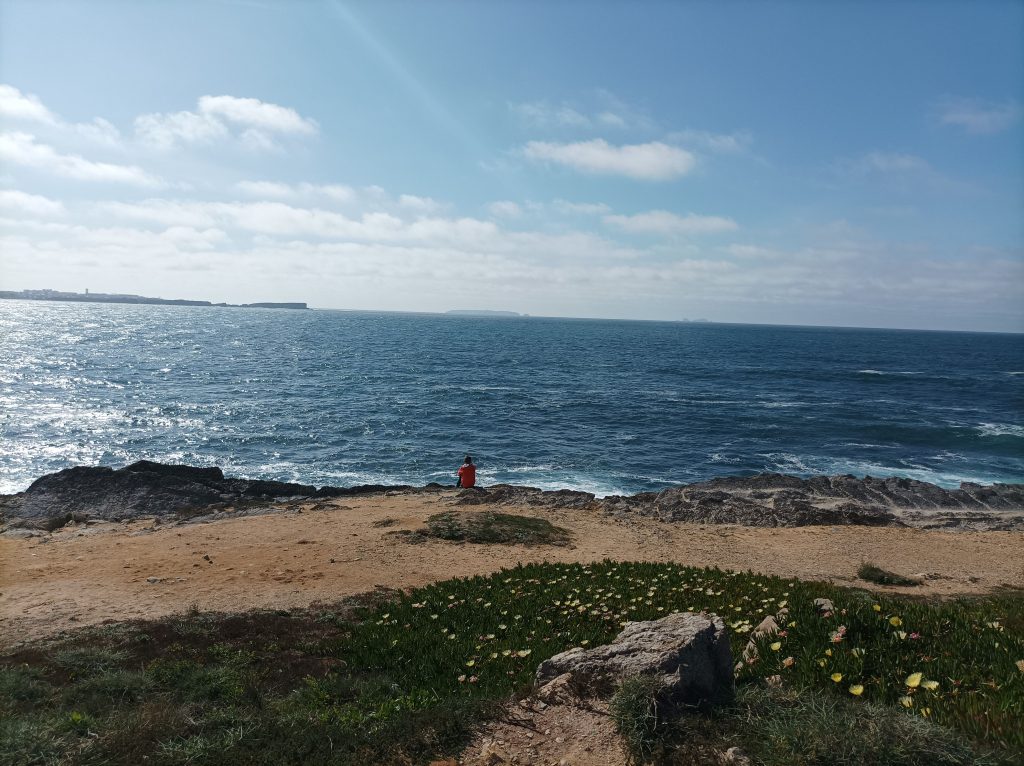
The human being is curious and adventurous by nature. And anyone who visits Cape Carvoeiro, on the westernmost tip of the Peniche peninsula, would probably be curious about some islands that are seen in the distance, about 10 km away. It is the archipelago of the Berlengas, a group of small islets, with three peculiar histories that interweave surprisingly with the present.
In the history of the islands there is a very relevant first date, 1465. It was in that year when King Afonso V issued an order prohibiting hunting in the Berlengas, in what was a pioneering and very novel decision of care and attention for the nature. Anyone who has visited or seen pictures of the islands, and their coves with turquoise and crystalline waters, understands well what King Afonso could see and feel to dictate an order so unusual at that time. The line to the present, and the future, takes us to more than five centuries later, when in 2011 UNESCO declared the Berlengas a biosphere reserve and confirmed what the king’s sensibility valued long before.
In the century following that of King Afonso, in 1513, with the help of Queen Leonor, a small monastery of San Geronimo monks was founded on the islands, seeking a place for their spiritual retreat and to help the victims of the numerous shipwrecks that generated that coast. Saving the distances, is what nowadays also look for the many retreats that in different points of the coast of Peniche offer interesting combinations of mindfulness, yoga, meditation and surfing. We hope that modern history is more favorable to these initiatives because the monastery and the poor monks ended in closure just a few years after its founding because the monastery was frequently attacked by pirates and their members taken as slaves. Surely they were ahead of their time and did not get everyone to see the peace, beauty and spirituality that inspires this Atlantic coast.
The third story connects the past and the present century through sea, football and technology. In 2018 the company Apple shot a short film about a supposed historical rivalry between the football teams of Baleal and Peniche, who preferred to settle their matches on a neutral pitch and chose to move to the Berlengas. You can watch the video in this link. The story, obviously fictional, is aimed at showing the technical excellence of the phone model with which the ad is recorded. But, in a certain way, it allows us to understand the difficulty of those who live from the sea and to value better all those who ventured to sail the waters and discover the mysteries that they hid. It is a story that connects the past and the present through the sea and these special islands. If watching the video makes you want to visit the islands, please note that from June 1, 2022, there is a 3-euro tourist tax, Berlengas Pass, destined to improve the infrastructures and ensure that the number of visitors do not exceed 550 per day.