In an increasingly dynamic and competitive business world, the success of an organization depends, to a large extent, on the cohesion and collaboration between teams. This is where team building activities come into play – powerful tools for strengthening ties within an organization, improving communication and fostering a healthier and more productive work environment.
In our spaces we frequently host corporate events with team building activities, both outdoors and indoor events, and we have witnessed remarkable transformations after just one day of well-structured activities. When a team shares challenges, celebrates joint victories and learns to trust its members outside the usual work context, a connection is created that is difficult to achieve within an office.
Team building activities are especially effective for:
Improving interpersonal communication
Strengthen trust and the spirit of mutual help
Stimulate creativity and problem-solving
Increase motivation and a sense of belonging to the company
Óbidos: The Perfect Setting for Outdoor Activities
If there is a place in Portugal that combines nature, tranquility and versatility for corporate events, it is the Lagoa de Óbidos area. This natural paradise, between the medieval village of Óbidos and the Atlantic coast, offers a unique setting for team building activities in direct contact with nature, and the spaces of Nave Lagoa are the perfect complement both for briefings and work meetings, as well as to have an indoor plan b in case the weather complicates the activity.
The possibilities are practically endless:
Canoeing on the lagoon, encouraging coordination and teamwork
Hiking and orientation, ideal for developing leadership and strategy skills
Multi-adventure challenges with physical and mental tests
Outdoor workshops, where creativity flourishes in relaxed environments
Corporate picnics or themed dinners, for moments of relaxation and informal conviviality
With the cool breeze, the sound of nature and an inspiring landscape, employees feel refreshed and more connected to each other. It is an investment not only in the well-being of the team, but also in the productivity of the company. If you are looking for an effective and attractive way to strengthen your team, talk to us and we will think with our expert team building partners about the best activity for your team.
We played in a previous entry with the idea that many people are even grateful when a rainy day comes in summer in Portugal and they have the perfect excuse to make different plans to the typical surf, beach and golf.
At the opposite extreme would be hot days. But, in one more example of how extremes meet, we see that practically all of the plans that we mentioned for those rainy days are also valid for days of extreme heat.
And there are also some additional ones. In an article in the Diario de Noticias during the August 2018 heat wave, Cabo Carvoeiro was cited as one of the coolest places in mainland Portugal:
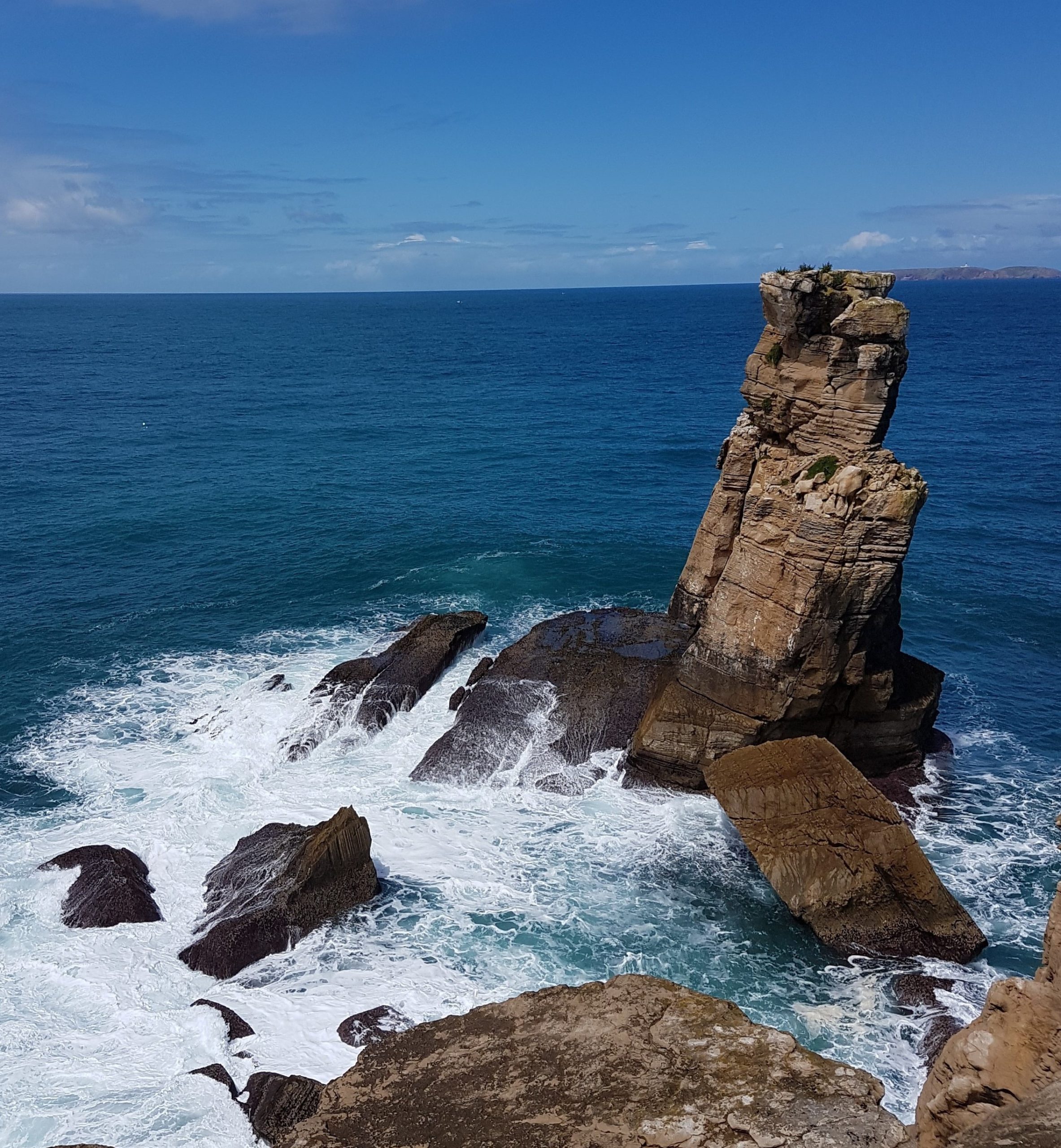
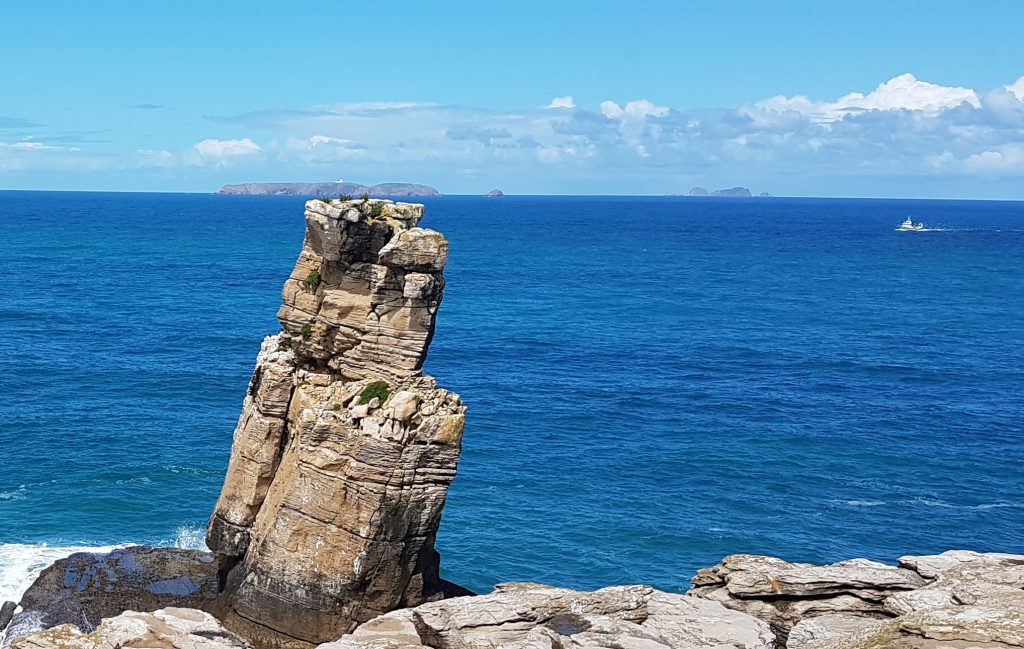
And it is true that anyone who has visited the cape, with its impressive cliffs and its marvelous views of the coast and the Berlengas Islands, will have noticed that in this space of wild fusion between land and sea almost always does, at least, a gentle cool breeze.
Another plan along the same lines would be the Foz de Arelho cliffs, with their views over the sea and the lake. The plan combines especially well with the pleasant chill-outs on the Foz de Arelho beach.
And also in that line of chill-out, the garden in Areias do Seixo, where you can enjoy in good company the always pleasant combination of the night, the fire and the stars.
Lighthouse keeping has always been a challenging profession, suitable only for the more seasoned, for those capable of living in isolated places and under very harsh weather conditions. Nowadays, as the operation of the lighthouses has become more automatic, they have stopped needing personnel living permanently in them and new technologies have also made them less essential in navigation and have lost some prominence.
But they still keep intact their romantic and adventurous aura. That is why the initiative of the Portuguese government to open most of them for visits is highly appreciated. In the Oeste region we currently have only two lighthouses in operation, both very close to each other, one in Cape Carvoeiro in Peniche and the other just in front, in the Berlengas Islands.
But within a short distance to the north we also have those of Aveiro, Mondego (Figueira de Foz) and Penedo da Saudade (Marinha Grande). All of them can be visited every Tuesday, from 2pm to 5pm in summer and from 1.30pm to 4.30pm in winter. Before departing, it is convenient to check the website of the National Maritime Authority to verify that they are not closed for operational reasons or for any works.
And for those who prefer surfing the internet there is also the possibility of a virtual tour of the Bugio lighthouse, located in the middle of the mouth of the Tagus, near Lisbon.
So for those of us who sometimes need a light to guide us and an inspiring and different view of the sea, this could be an excellent plan for Tuesday afternoon. And if we go with children, surely we can imagine with them a great adventure of pirates and smugglers in that evocative environment. Obviously, in the playlist in the car, on our way to the lighthouse, we must not miss I will leave a light on, by Tom Walker.
Some call it liquid gold. Many think it is the most important ingredient of the Mediterranean diet. Due to its high content of monounsaturated acids, it is unanimously considered an essential food in the healthy diet, a natural antioxidant. But when we arrive at the store, do we know how to distinguish good olive oils from others? Why are there such big differences in the price? Are there good options in the Oeste region for those who want to consume local products?
We will try to cover these questions in the following discussion, deliberately basic in some points, to help also our international friends to approach a product that outside the Mediterranean countries is still a relatively unfamiliar product. If we look at the consumption statistics per person, Greece, Spain, Italy, Portugal and Cyprus are at the top, with levels between 12 and 5 liters per person per year. But in France it does not reach two liters and in Germany or the United Kingdom it does not reach a liter. Outside of Europe, consumption is growing notably in Australia and the United States but still with modest amounts. The consumption in China is also growing, although obviously the figures per person are not significant given the size of the population; but it is easy to see the increasing importance that olive oil is achieving there if we see that in recent years the hectares planted with olive trees add the equivalent product as that of the province of Jaén (the main olive oil producer province in Spain), the vast majority of these new trees in the valley of the Bailong River, with a climate similar to the Mediterranean, and a name very appropriate to approach our culture (bailón means dance enthusiast in Spanish).
For those who come to the store and do not know anything about olive oil, the first thing to keep in mind is that the highest quality is the extra virgin olive oil, pure olive juice, with excellent flavor and the best nutritional properties. It is used a lot in salads or dishes that lend themselves to appreciating more that flavor. Perhaps the best way to try and get to know it is simply with bread and some salt, which is a very common breakfast in many homes in the Iberian Peninsula.
The next level of quality is the virgin olive oil and finally the refined, which is used more for stir-fries, as it withstands better the high temperatures and has a lower price.
As with grapes, with olives there are also different varieties, with different flavors. And also protected designations of origin, which must use the varieties of that particular area. There are many different flavors of olive oil and it is just a matter of trying and discovering the ones that suit more our tastes. The color is not very relevant in relation to the taste; normally it is greener if less mature olives are used and more yellow with more mature olives, but in both cases the flavor depends more on the variety of olives than on the color of the oil.
One point that is important to mention and that is different from wine is that the olive oil deteriorates over time and, especially, with light. Therefore, it is convenient to buy and consume the olive oil as close as possible to its commercialization date and keep the bottle stored out of the light. It is for this reason that the best brands tend to use dark glass bottles or wrap the bottle with an opaque plastic.
The Oeste region does not have large olive groves but in the neighboring region of Ribatejo it is a very important product and since medieval times there is evidence of Santarem as a major center of production of quality olive oil. Hence, among the six protected designations of origin in Portugal, one is precisely “Azeites de Ribatejo DOP”.
For those who want to try some of the olive oils that are produced in the area, you can start by three brands that have received several international awards and represent very well the excellence within the local producers.
The first recommendation is Cabeço das Nogueiras, from the young company SAOV, created in 2004 but which has already received several awards with its successful combination of technological innovation and traditional flavor. The second would be Casa Anadia, from a company with great olive oil tradition since the seventeenth century that makes a firm commitment to quality rather than quantity. And the third is Colheita das Lezírias, one of the premium options of the house Gallo, which is one of the most important olive oil companies in Portugal and has its headquarters in the city of Abrantes, next to the river Tajo.
The first one can be found for about 9 euros a bottle of 500 cc, exclusively in specialized olive oil stores and gourmet stores. The second one can be found in Continente, for about 7 euros a bottle of 500 cc. And the third one is the most mainstream and can be bought for about 6 euros a bottle of 750 cc.
But, returning to the similarities with wine, there are excellent extra virgin oils for very affordable prices, from 5-6 euros per liter, and our recommendation is that each person tries different options and varieties and finds the ones that best suit their tastes. There is a world of flavors to discover.
And you? Do you have any olive oil that you especially like? Any recommendations for our community?